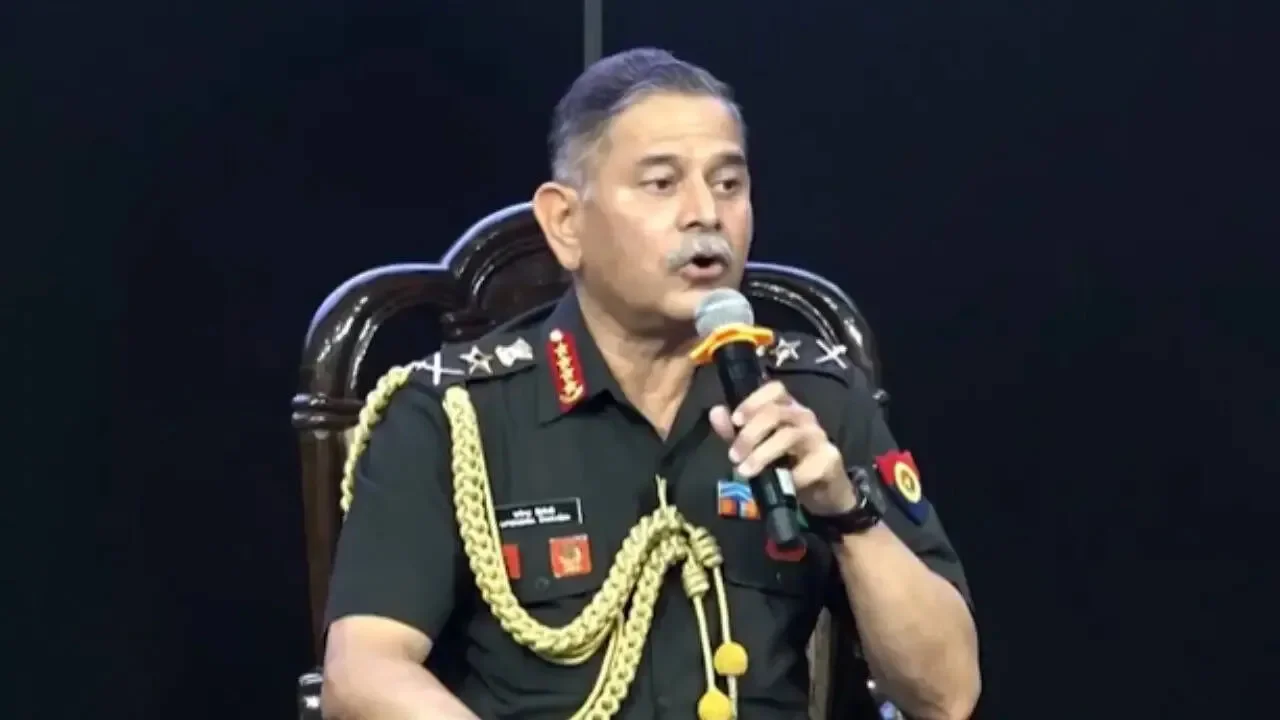
General Upendra Dwivedi, Chief of the Army Staff of India, delivered a stark warning to Pakistan on May 16, 2026, during a 'Sena Samvad' interaction at the Manekshaw Centre in New Delhi. The General stated that Islamabad must choose whether it intends to remain a 'part of geography' or shift into the realm of 'history'—a pointed rhetorical framing suggesting that continued support for cross-border militancy invites existential risks.
The statement signals a shift in Indian strategic signaling: Pakistan's tolerance for state-sponsored proxies is no longer viewed as a manageable nuisance, but as a condition that forces a binary outcome regarding the neighboring state's future stability.
Context and Escalation Triggers
The commentary follows the first anniversary of Operation Sindoor, a military engagement launched on May 7, 2025. The operation, which lasted roughly 88 hours, served as a retaliatory strike following a significant terror incident in Pahalgam on April 22, 2025.
Read More: AFP Reviews War Crime Claims Against Australian in Gaza
Operation Sindoor (May 2025): Included precision strikes by Indian forces on launchpads and infrastructure linked to Lashkar-e-Taiba (LeT) and Jaish-e-Mohammed (JeM) within Pakistan and Pakistan-occupied Kashmir (PoK).
Military Stance: General Dwivedi emphasized that while the kinetic engagement ended on May 10, 2025, through a military-to-military communication channel, the underlying threat remains unresolved.
| Metric | Details |
|---|---|
| Operational Trigger | Pahalgam Terror Attack (April 2025) |
| Conflict Duration | ~88 hours (May 7–10, 2025) |
| Primary Directive | Deterrence against future cross-border infiltration |
Strategic Landscape
While the Indian Army leadership maintains a posture of "modernization and proactive preparedness," there exists an internal dialogue within the Indian establishment regarding the utility of diplomatic windows.

Leaders from the Rashtriya Swayamsevak Sangh (RSS), such as Dattatreya Hosabale, have recently advocated for keeping communication channels with Islamabad active. Conversely, the military command’s focus remains anchored in the direct consequences of security provocations. The juxtaposition of these views highlights the complexity of India’s western frontier policy: the desire for stability weighed against the necessity of Deterrence in an era of Precision Warfare.
General Dwivedi did not specify a timeline for this choice, but the framing serves as a calculated escalation of National Security rhetoric aimed at influencing the decision-making apparatus in Rawalpindi and Islamabad.