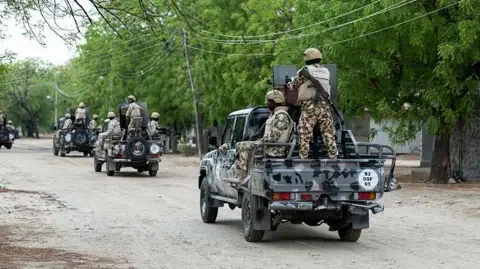
Washington D.C. / Abuja — A senior commander within the Islamic State group, identified as Abu-Bilal al-Minuki, has been killed in a coordinated operation involving United States and Nigerian forces. The strike, reportedly occurring in the Lake Chad Basin area of Nigeria, was confirmed by both U.S. Africa Command (AFRICOM) and the Nigerian State House.
The operation targeted al-Minuki, described by President Donald Trump as the global second-in-command of ISIS, and eliminated him along with "several of his lieutenants" and "his entire posse."
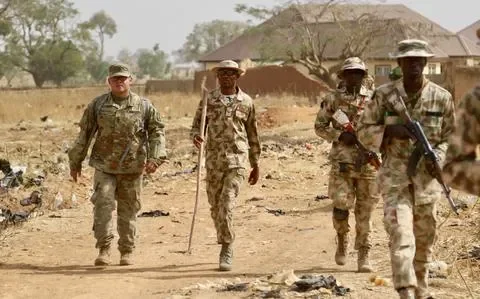
Nigerian President Bola Ahmed Tinubu issued a statement acknowledging the successful operation and thanking President Trump for his leadership. U.S. Defense Secretary Pete Hegseth further elaborated, stating that U.S. forces had been tracking al-Minuki for months, emphasizing his role in targeting Christians and his strategic involvement in ISIS's global media, financial operations, weapons, explosives, and drone development.
Read More: Secret Service Promotions After Butler Attack Criticized by Congress
A Calculated Blow to Extremism
The joint effort, a result of extensive intelligence gathering and reconnaissance over several months, is being presented by both nations as a significant victory in counterterrorism efforts. According to a spokesperson for the Nigerian President, the operation was initiated when al-Minuki was located, presenting an opportune moment for a strike.

AFRICOM detailed al-Minuki's extensive history of planning attacks and directing hostage-taking, underscoring his detrimental impact. The command also noted that no U.S. service members sustained harm during the mission. The Nigerian military described the operation as a "highly complex precision air-land operation" conducted over three hours in the early hours of Saturday, with no reported casualties or loss of assets on their side.
International Collaboration and Counterterrorism Pledges
President Trump lauded the operation as a "flawlessly executed" and "meticulously planned" mission, asserting that al-Minuki "thought he could hide in Africa." President Tinubu, speaking from the Africa CEO Forum in Kigali, Rwanda, previously defended Nigeria's increasing security cooperation with international partners, a stance reinforced by this recent joint action. The operation is seen as a demonstration of effective collaboration in combating shared threats.
Read More: AFP Reviews War Crime Claims Against Australian in Gaza