New Delhi Asserts Revisions to a United States Trade Document Accurately Represent Mutual Understandings Reached in a Joint Statement, Following Questions Raised About Initial Wording.
On February 10, 2026, the White House updated a factsheet detailing an interim trade framework between India and the United States. This revision prompted a statement from India's Ministry of External Affairs (MEA), asserting that the changes align with a joint statement previously issued by both nations. The MEA spokesperson clarified that the joint statement serves as the foundational document for their mutual understanding. This development followed an earlier joint statement on February 7, 2026, outlining the framework for an interim trade agreement.
Context of the Revisions and Official Response
The White House factsheet, initially released, contained language that differed from the agreed-upon joint statement. Specific references to India's supposed commitments on purchasing agricultural products, the inclusion of a digital services tax, and broader investment figures were altered in the revised version. These changes, particularly the removal of certain terms like 'pulses' and modifications to phrasing from "committed" to "intends" regarding India's actions, led to public scrutiny and questions within India.
Read More: Australia-US Trade Dispute: New Tariffs Cause Friction
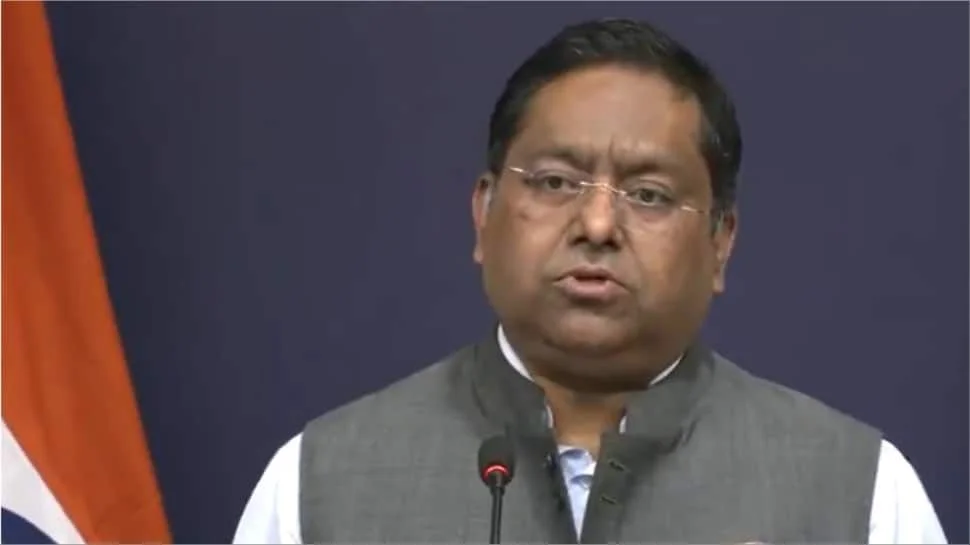
"The amendments in the US factsheet reflect the shared understandings contained in the Joint Statement. The Joint Statement is the framework and remains the basis of our mutual understanding in the matter." - Randhir Jaiswal, MEA Spokesperson.
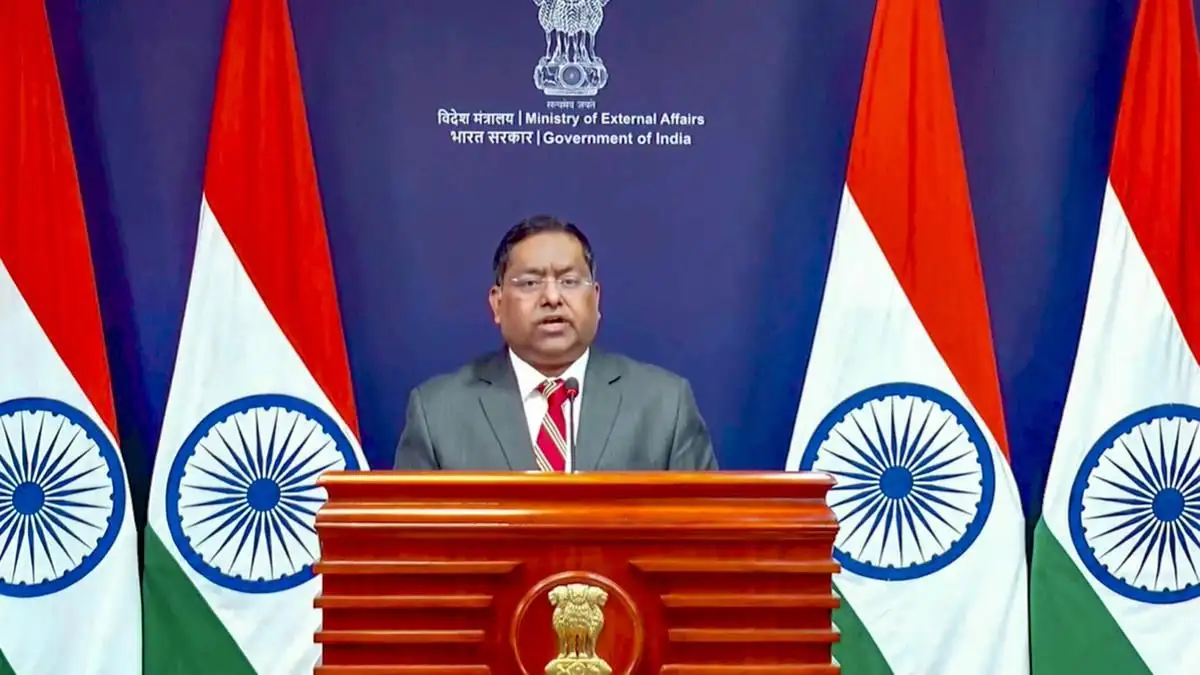
The MEA spokesperson, Randhir Jaiswal, addressed these points during a regular media briefing. He emphasized that the February 7 joint statement is the definitive framework and that the revised factsheet simply reflects this pre-existing understanding.

Examination of Factsheet Amendments
The amendments in the White House factsheet involved softening or removing language concerning specific trade elements:
Agricultural Purchases: Original references to India's "buying agricultural products" and specific mentions of 'pulses' were either removed or modified.
Digital Services Tax: Language stating "India will remove its digital services taxes" was changed to "India committed to negotiate a robust set of bilateral digital trade rules."
Investment Figures: Mentions of India's 'commitments' on investing $500 billion were also altered.
Tariff Reductions: The framework includes reciprocal reductions in tariffs. India agreed to reduce tariffs on US industrial goods and a range of agricultural products. The US, in turn, is to impose a reciprocal tariff of 18 percent on Indian goods, including textiles and apparel, leather, and plastics.
Divergent Interpretations and Stated Positions
While India maintains the revised factsheet is a reflection of mutual agreement, the nature of the amendments raises questions about initial perceptions and communication.
India's Stance: Accordance with Joint Statement
The MEA firmly states that the revised US factsheet accurately mirrors the understanding established in the February 7 joint statement.
The joint statement is presented as the paramount document guiding the trade framework.
The spokesperson's remarks indicate a desire to ensure clarity and adherence to the agreed-upon terms.
Areas of Public Questioning: Perceived Deviations
The initial inclusion of specific commitments in the US factsheet, which were later altered, led to domestic political questioning.
The modification of language regarding India's actions (e.g., "committed" to "intends") suggests a potential difference in emphasis or interpretation that required clarification.
Strategic Gains and Broader Geopolitical Context
Beyond the specific trade document, a senior US diplomat noted that India's actions in other areas, such as reducing Russian oil imports and deepening defense ties with Washington, are viewed as strategic gains for the US in the Indo-Pacific region. Assistant Secretary of State for South and Central Asian Affairs, S. Paul Kapur, testified to lawmakers that the US is observing shifts in India's energy sourcing patterns. This broader geopolitical perspective suggests that the bilateral trade discussions are situated within a larger strategic alignment between the two nations.
Read More: India IVF Costs And Social Barriers Limit Access In April 2026
Conclusion and Implications
The Ministry of External Affairs' clarification that amendments to the US factsheet on the India-US interim trade deal reflect "shared understandings" aims to reaffirm the integrity of the initial joint statement. The modifications, particularly concerning specific purchase commitments and digital tax language, suggest a process of refining and aligning public documentation with negotiated agreements. The MEA's consistent message is that the February 7 joint statement remains the operative framework. This stance seeks to mitigate concerns that the revised factsheet introduced new concessions or altered the core tenets of the interim trade agreement. The ongoing dialogue and potential for further adjustments highlight the dynamic nature of international trade negotiations.
Sources Used:
The New Indian Express: https://www.newindianexpress.com/nation/2026/Feb/12/amendments-in-us-fact-sheet-on-trade-deal-reflect-shared-understanding-mea - Provides MEA's confirmation and mentions US diplomat's comments on India's energy and defense shifts.
The Hindu: https://www.thehindu.com/news/national/mea-on-white-house-factsheet-amendments-mutual-understanding-india-us-interim-trade-deal/article70624076.ece - Details the specific language changes (pulses, agricultural products, digital service tax, investment figures) and the political questions raised.
Zee News: https://zeenews.india.com/india/amendments-in-india-us-trade-deal-factsheet-reflect-shared-understanding-mea-3016350.html - Reports on the MEA's statement and the softening of language on purchase commitments and tariffs.
Firstpost: https://www.firstpost.com/world/amendments-reflect-shared-understanding-india-on-us-fact-sheet-on-trade-deal-13979086.html - Confirms MEA's statement and mentions removal of references to agricultural goods and digital tax. Includes a tweet from ANI.
The Daily Jagran: https://www.thedailyjagran.com/world/india-reaction-to-us-dropping-pulses-from-white-house-trade-deal-factsheet-10298347 - Highlights the dropping of 'pulses' and the change from "committed" to "intends" and lists specific agricultural products.
The Tribune: https://www.tribuneindia.com/news/world/amendments-reflect-shared-understandings-mea-on-reports-of-changes-made-in-us-factsheet-on-interim-trade-deal-with-india/ - Details the changes in language regarding digital services taxes and reiterates the list of agricultural products and reciprocal tariffs.
The Hans India: https://www.thehansindia.com/news/national/mea-says-us-factsheet-on-india-us-trade-deal-amended-to-reflect-shared-understanding-1047929 - Reinforces MEA's clarification that the factsheet amendments align with the joint statement and emphasizes the joint statement as the guiding framework.