


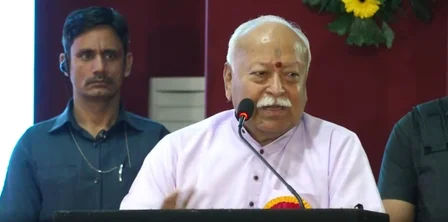
Rashtriya Swayamsevak Sangh (RSS) chief Mohan Bhagwat has articulated a vision where veterinarians play a more central role in India's economic progress, urging them to broaden their professional scope beyond traditional duties. Bhagwat's remarks, made at a national symposium, also touched upon the need for a balanced coexistence between humans, animals, and nature, and advocated for the establishment of a national veterinary council to guide and regulate the profession. The discourse has surfaced amidst discussions on complex issues like stray animal management, suggesting a desire for more nuanced and expert-driven solutions.
Context of the Statement
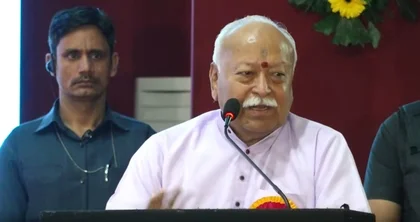
Mohan Bhagwat, a veterinary science graduate himself, spoke at the National Symposium on the 'Role of Canine in One Health: Building Partnership and Resolving Challenges'. His address on February 12, 2026, underscored a perceived underestimation of the veterinary sector's impact. Bhagwat's call for veterinarians to expand their outlook implies a belief that their expertise can be applied to a wider range of economic and societal challenges. This perspective was shared across multiple news outlets, indicating significant attention to his address.
Key Points of Mohan Bhagwat's Address
Bhagwat's address emphasized several interconnected themes:
Read More: India Changes How It Measures Prices with New Inflation List
Economic Contribution: He directly linked the veterinary profession to India's economic growth, suggesting their contributions are significant and perhaps undervalued.
Broadened Professional Scope: A core message was the appeal to veterinarians to look beyond conventional responsibilities and embrace a wider vision for their profession.
Balanced Coexistence: The RSS chief stressed the importance of humans, animals, and nature living in harmony, a concept he termed "balanced coexistence."
National Veterinary Council: He called for the creation of a separate, national-level veterinary council. Bhagwat stated that professional fields advance when guided and regulated by domain experts.
Addressing Contentious Issues: Referencing a recent Supreme Court verdict on stray dogs, Bhagwat advocated for "alternative approaches" and "balanced, humane measures" over extreme reactions, suggesting a need for expert-informed policies.
India's Global Role: Bhagwat also highlighted environmental concerns globally, proposing that India could offer unique, nature-aligned solutions rooted in its own philosophy.
Examining the Call for a National Veterinary Council
Bhagwat's proposal for a national veterinary council is rooted in the belief that expert guidance is crucial for professional advancement. He articulated that any field flourishes when governed by those with specialized knowledge.
Read More: Indian Players Out of Chennai Open Singles
Rationale: The establishment of such a council is presented as a mechanism to ensure that policies and standards are set by experienced professionals. This, in turn, is expected to foster the growth and efficacy of the veterinary sector.
Potential Impact: A dedicated national body could streamline regulations, promote research, and facilitate the integration of veterinary expertise into broader national strategies, including economic development.
The Concept of "Balanced Coexistence"
The principle of "balanced coexistence" as articulated by Bhagwat emphasizes a harmonious relationship between humans, animals, and the environment. This concept appears to inform his views on various issues, including animal management.
Ecological Harmony: Bhagwat suggested that India could offer the world unique solutions for minimizing ecological damage by adhering to principles of living in harmony with nature.
Human-Animal-Nature Nexus: The idea promotes a holistic view where the well-being of all components of the ecosystem is considered interconnected and essential.
Divergent Perspectives on Stray Animal Management
Bhagwat's reference to the Supreme Court's ruling on stray dogs and his call for "alternative approaches" highlight a sensitive and often divisive issue.
Read More: New Ideas Say Capitalism Makes Climate Problems Worse
Extreme Reactions: He observed that the verdict elicited strong opinions from both proponents and opponents.
Advocacy for Nuance: Bhagwat urged for a move away from extreme positions towards strategies that are both "balanced and humane." This suggests a preference for solutions developed through careful consideration and expert input, rather than immediate, potentially polarizing, measures.
Expert Analysis
Dr. M.R. Gokhale, a retired veterinarian and animal welfare advocate, commented on Bhagwat's remarks, stating, "The RSS chief is pointing towards the untapped potential of veterinarians not just in animal health but in the broader agricultural and rural economy. A national council could indeed provide the necessary framework for this expansion, provided it is structured to truly represent and empower veterinary professionals."
Professor Anjali Sharma of the Indian Institute of Public Administration noted, "Bhagwat's emphasis on coexistence and India's unique solutions is a significant articulation of a traditional Indian ethos within a modern policy discourse. However, the practical implementation of such alternative strategies, particularly in sensitive areas like stray animal control, will require substantial scientific backing and broad societal consensus."
Conclusion and Implications
Mohan Bhagwat's statements signal a clear intention to elevate the standing and influence of the veterinary profession within India's national agenda. The call for a broader scope of practice and the establishment of a national veterinary council are significant proposals that, if enacted, could reshape the sector. The emphasis on "balanced coexistence" suggests a philosophical undercurrent to his vision, one that seeks integration between human progress and ecological well-being.
Read More: Karnataka Congress Leaders Say All Is Well, But Talk Continues
The practical implications of these proposals will depend on:
The specific mandate and structure of a proposed national veterinary council.
The development and adoption of "alternative approaches" to contentious issues, requiring collaboration between experts, policymakers, and the public.
The extent to which the broader economic potential of the veterinary sector is recognized and integrated into national development plans.
Further developments are anticipated as discussions around these proposals evolve.
Sources
Hindustan Times: https://www.hindustantimes.com/india-news/veterinarians-have-key-role-to-play-in-india-s-economic-growth-rss-chief-bhagwat-101770882345915.html - Provides an overview of Bhagwat's address, including his call for a national veterinary council and balanced coexistence.
The Economic Times: https://economictimes.indiatimes.com/news/india/mohan-bhagwat-hails-veterinarians-role-in-indias-economic-growth/articleshow/128245038.cms - Focuses on Bhagwat's affirmation of the veterinarians' role in economic growth and his thoughts on coexistence and environmental concerns.
TV9 Hindi: https://www.tv9hindi.com/india/rss-chief-mohan-bhagwat-veterinarians-key-to-india-economy-urges-broader-vision-new-council-3684531.html - Reports on Bhagwat's call for veterinarians to expand their perspective and his demand for a separate National Veterinary Council.
NewKerala: https://www.newkerala.com/news/a/rss-chief-bats-national-veterinary-council-says-experts-276.htm - Highlights Bhagwat's advocacy for a National Veterinary Council and his view on experts shaping policy. It also notes his background in veterinary science.
Read More: UK Economy Grows Very Slowly


