Recent changes to a United States factsheet detailing an interim trade agreement with India have been clarified by India's Ministry of External Affairs (MEA). The MEA stated that these amendments align with a pre-existing joint statement and reflect a shared understanding between the two nations.
Following the announcement of a trade framework between India and the US, the White House issued a factsheet outlining key aspects of the agreement. Subsequent revisions to this factsheet prompted questions and discussions regarding potential discrepancies. The MEA's clarification aims to address these concerns by emphasizing the continuity of the initial joint statement as the definitive basis for the mutual understanding.
Context of the Trade Framework and Factsheet Revisions
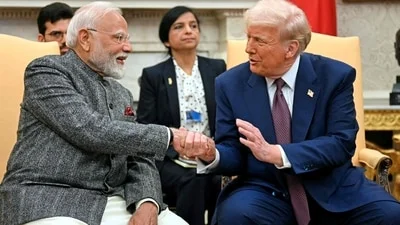
The period surrounding February 2026 saw intensified trade negotiations between India and the United States, culminating in an announcement of an interim trade agreement. This framework was formally established through a joint statement issued on February 7, 2026.
Read More: Karnataka Congress Leaders Say All Is Well, But Talk Continues
Subsequently, on February 10, 2026, the White House released a factsheet detailing the agreed-upon terms. However, within a short timeframe, this factsheet underwent revisions. These edits led to observations of softened language and the removal of specific commitments attributed to India, particularly concerning agricultural products, digital services taxes, and purchase targets.

February 7, 2026: India and the US issue a joint statement outlining the framework for an interim trade agreement.
February 9-10, 2026: The White House releases and subsequently revises a factsheet related to the trade deal.
February 12, 2026: The MEA provides clarification on the revisions to the White House factsheet.
Key Points of Contention and MEA's Clarification
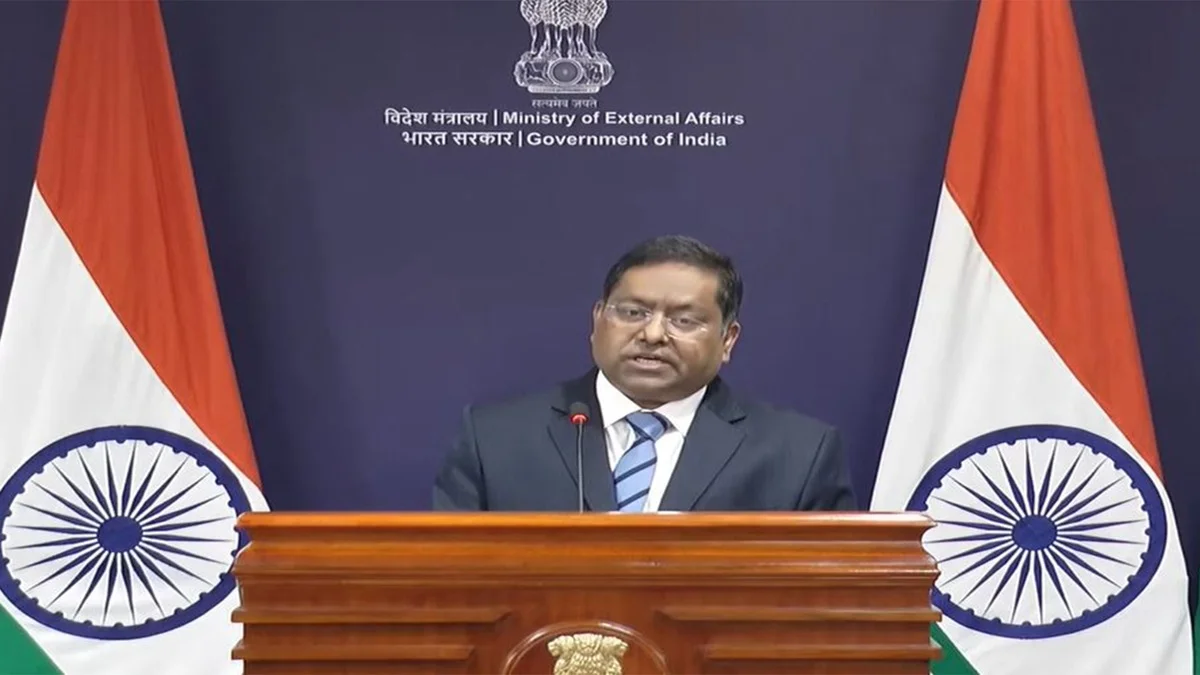
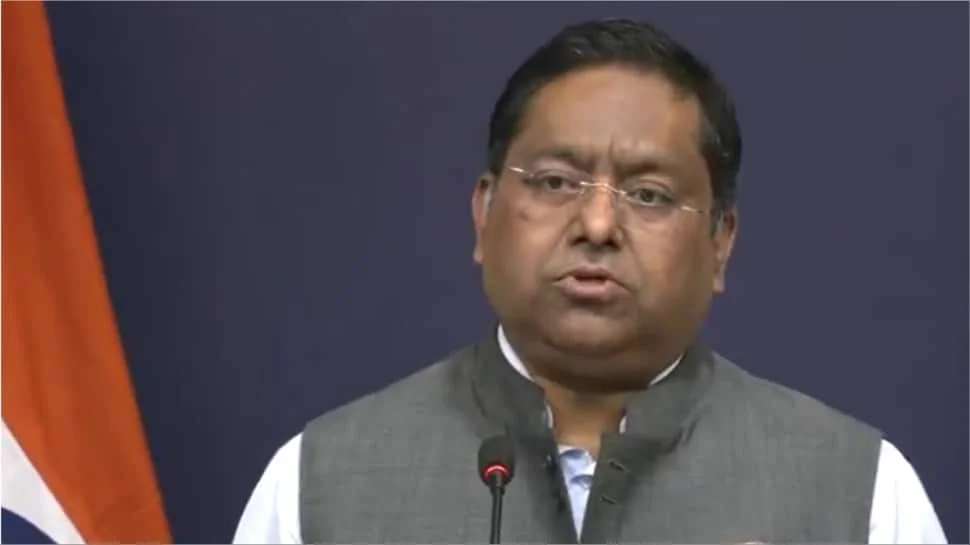
The revisions to the White House factsheet drew attention due to specific changes in its content. The MEA, through spokesperson Randhir Jaiswal, addressed these points by reiterating that the original joint statement remains the governing document.
Tariffs on Agricultural Products
Original Factsheet: Mentioned India's agreement to eliminate or reduce tariffs on a range of US agricultural products, including "certain pulses."
Revised Factsheet: Removed the specific reference to "certain pulses," opting for a broader statement about reducing tariffs on "a wide range of US food and agricultural products."
MEA Stance: The MEA has indicated that sensitive agricultural sectors were not included in the current framework and that the revisions align with the agreed-upon terms in the joint statement, safeguarding India's agricultural interests.
Digital Services Taxes and Trade Rules
Original Factsheet: Stated that "India will remove its digital services taxes" and "committed to negotiate a robust set of bilateral digital trade rules."
Revised Factsheet: Dropped the explicit mention of India removing its digital services taxes, retaining only the commitment to "negotiate a robust set of bilateral digital trade rules." Some reports also noted the removal of references to rules prohibiting customs duties on electronic transmissions.
MEA Stance: The MEA emphasizes that the joint statement is the basis of understanding, suggesting that the initial factsheet may have overstated or inaccurately represented certain commitments regarding digital trade.
Purchase Commitments
Original Factsheet: Reports indicated references to India's commitment to purchase specific quantities of American products, including an alleged commitment to invest $500 billion in various sectors.
Revised Factsheet: Language regarding purchase commitments appears to have been softened or removed.
MEA Stance: Government sources have reiterated that India has not entered into any mandatory agreement on specific purchase targets.
Evidence and Official Statements
"The amendments in the US factsheet reflect the shared understandings contained in the joint statement."— Randhir Jaiswal, MEA Spokesperson (as cited in multiple reports)
"The joint statement is the framework and remains the basis of our mutual understanding in the matter."— Randhir Jaiswal, MEA Spokesperson (as cited in multiple reports)
Read More: New Files Show Epstein Tried to Meet Putin and Russian Leaders
The Ministry of External Affairs has consistently stated that the joint statement issued on February 7, 2026, serves as the foundation for the trade agreement. The revisions to the White House factsheet are seen by the MEA as an alignment of the document with this foundational understanding, rather than a change in the core agreement itself. The US administration reportedly did not issue a separate public statement explaining the changes to its factsheet.
Deep Dive: Interpretations of the Amendments
The MEA's Position: Alignment and Clarification
The MEA's repeated assertion is that the amendments are not indicative of new agreements or changes to existing ones. Instead, they represent a recalibration of the factsheet to precisely mirror the language and scope of the February 7 joint statement. This perspective suggests that the initial factsheet may have contained formulations not explicitly agreed upon or that were more assertive than the underlying consensus. The focus on "shared understandings" underscores the MEA's belief that the core principles of the interim agreement remain intact and are accurately represented by the joint statement.
Opposition Concerns: Gaps and Potential Concessions
Reports and statements from opposition parties in India raised questions about the implications of the amendments. The removal of specific references to "pulses" and the softening of digital tax commitments led to concerns that India might have initially made concessions that were subsequently altered. Some political figures have called for greater transparency and clarification from the government regarding the precise terms of the trade deal and whether India's interests, particularly those of farmers and digital sovereignty, were adequately protected.
Read More: Kanpur Lamborghini Crash: Businessman's Son Arrested, Gets Bail Quickly
Analysis of Specific Omissions and Alterations
"Certain Pulses" Omission: The removal of "pulses" from the list of agricultural goods for tariff reduction is significant. Pulses are a crucial crop for Indian farmers. Was their inclusion in the initial factsheet an error, or did it represent an initial negotiating stance that was later revised? The MEA's claim that sensitive agricultural sectors were protected suggests the latter, but the initial inclusion raises a point for further examination.
Digital Services Tax Revisions: The alteration of the digital services tax clause, moving from a stated removal to a commitment to negotiate rules, suggests a nuanced approach. India's stance on data sovereignty and digital taxation has been a point of contention in international trade discussions. The revised wording may reflect a more deliberate strategy to negotiate these complex issues rather than a unilateral commitment.
Expert Analysis
"The MEA's response emphasizes the joint statement as the ultimate arbiter. If the factsheet presented details not present in the joint statement, then its revision to align with the statement is a logical step for maintaining clarity and preventing misinterpretation."— International Trade Analyst (based on general reporting on trade agreements)
"Amendments to official documents like factsheets can occur for various reasons, including a desire to ensure precision and avoid ambiguity. The key is whether these changes alter the substantive commitments made by either party. The MEA's framing suggests the latter has not occurred."— Political Science Scholar (based on general reporting on diplomatic communications)
Conclusion and Implications
The revisions to the White House factsheet concerning the India-US interim trade agreement have been officially characterized by India's Ministry of External Affairs as amendments reflecting "shared understandings." The MEA maintains that the February 7, 2026, joint statement remains the definitive framework for the agreement.
Read More: Americans Trust News Media Less Than Ever Before
The specific changes, particularly regarding agricultural product tariffs and digital trade commitments, have been interpreted by the MEA as a correction to align the factsheet with the established joint statement, thereby safeguarding India's interests, especially in sensitive agricultural sectors. While opposition parties have raised concerns about potential initial concessions, the official stance emphasizes consistency with the jointly agreed-upon framework.
The implications suggest that the core of the interim trade agreement, as outlined in the joint statement, remains unchanged. The focus is now on the implementation of this framework and further negotiations towards a broader bilateral trade agreement. The clarity provided by the MEA aims to prevent confusion and underscore the mutual agreement underpinning the trade initiative.
Sources Used:
The Hindu: https://www.thehindu.com/news/national/mea-on-white-house-factsheet-amendments-mutual-understanding-india-us-interim-trade-deal/article70624076.ece - Article focuses on MEA's statement and the joint statement as the basis of understanding.
Hindustan Times: https://www.hindustantimes.com/india-news/amendments-made-to-india-us-trade-deal-factsheet-based-on-shared-understanding-says-mea-101770893823107.html - Highlights MEA's view on shared understanding and details specific amendments on tariffs and digital trade.
The Tribune: https://www.tribuneindia.com/news/world/amendments-reflect-shared-understandings-mea-on-reports-of-changes-made-in-us-factsheet-on-interim-trade-deal-with-india/ - Confirms MEA's clarification and details changes in digital trade and agricultural product mentions.
India TV News: https://www.indiatvnews.com/news/india/govt-clarifies-on-revised-us-factsheet-on-trade-deal-says-amendments-reflect-shared-india-us-understanding-2026-02-12-1030005 - Emphasizes MEA's clarification and points to changes in tariff and digital trade sections.
Zee News: https://zeenews.india.com/india/amendments-in-india-us-trade-deal-factsheet-reflect-shared-understanding-mea-3016350.html - Reports MEA's statement on revisions reflecting mutual understanding and aligning with the joint statement.
Moneycontrol: https://www.moneycontrol.com/news/india/mea-responds-to-revisions-in-us-document-on-india-trade-deal-amendments-reflect-shared-understanding-13825776.html - Covers MEA's response to revisions, stating they reflect shared understanding.
News18: https://www.news18.com/india/amendments-reflect-shared-understanding-mea-on-key-tweaks-in-us-note-on-india-trade-deal-9898657.html - Focuses on MEA's emphasis that the Joint Statement remains the basis of mutual understanding despite revisions.
The New Indian Express: https://www.newindianexpress.com/nation/2026/Feb/12/amendments-in-us-fact-sheet-on-trade-deal-reflect-shared-understanding-mea - Reports MEA's confirmation that amendments align with the Joint Statement's shared understandings.
Firstpost: https://www.firstpost.com/world/amendments-reflect-shared-understanding-india-on-us-fact-sheet-on-trade-deal-13979086.html - Includes MEA spokesperson's quote and mentions the removal of commitments from the White House factsheet.
The Tribune (India): https://www.tribuneindia.com/news/india/amendments-made-to-us-fact-sheet-reflects-shared-understanding-says-mea - Reports MEA's remarks and notes that amendments followed scrutiny in India.
New Kerala: https://www.newkerala.com/news/a/revised-us-factsheet-reflects-shared-understandings-trade-deal-389.htm - Details revisions to tariffs and digital trade sections and India's stance on protecting farmers.
Prokerala: https://www.prokerala.com/news/articles/a1728580.html - Similar to New Kerala, detailing revisions and MEA's clarification on shared understanding.
ABP Live: https://news.abplive.com/news/india/amendments-in-us-fact-sheet-reflect-shared-understanding-mea-on-trade-deal-1826776 - Focuses on the MEA's clarification amid attention over document changes.
Republic World: https://www.republicworld.com/world-news/revised-us-factsheet-align-with-india-us-joint-statement-on-trade-framework-mea - States MEA spokesperson's confirmation that revisions align with the Joint Statement.
Dynamite News: https://www.dynamitenews.com/national/mea-clarifies-us-revisions-to-trade-factsheet-says-changes-reflect-india-us-joint-understanding - Reports MEA clarification that revisions align with the joint statement and notes concerns about purchase targets.
The Indian Express: https://indianexpress.com/article/explained/explained-economics/explained-the-us-revisions-to-the-trade-deal-factsheet-and-how-they-affect-india-10526007/ - Explains the revisions and their potential effects on India, noting the removal of "pulses" and digital tax commitments.
Read More: Famous Actors Support Rajpal Yadav After Jail Surrender