

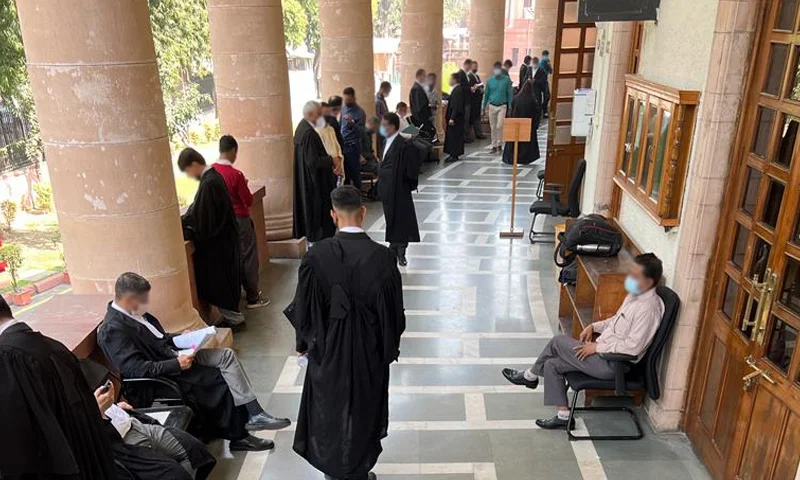
The Supreme Court of India has started a new process, called a "suo motu case," to improve how lawyer groups, known as Bar Associations, are run. The goal is to make these groups more open and accountable. This effort comes after concerns about the fairness and standards within the legal profession. The court is seeking ideas from these associations across the country to create a better system.
Background of the Initiative
The Supreme Court has officially started a case to look into ways to make Bar Associations stronger and better. This action, known as "suo motu," means the court initiated the case itself, without a specific request from outside parties. The court is trying to develop rules and methods to ensure more transparency and responsibility in how Bar Associations are structured, managed, and operate.
Read More: Supreme Court Questions States on Freebies and Job Creation in India

Key Event: The Supreme Court has begun a suo motu case titled ‘Re: Strengthening and Enhancing the Institutional Strength of Bar Associations’.
Purpose: To develop a mechanism for transparency and accountability in Bar Associations nationwide.
Timeline: The case has been listed for further hearing after eight weeks.
The matter seems to have been triggered by a dispute regarding membership in the Madras Bar Association, as reported by LiveLaw. This led the court to examine broader issues within bar bodies. The Supreme Court is looking at various aspects, including how office-bearers are elected and whether individuals with criminal records are holding such positions.

Seeking Input for Reform
The Supreme Court is actively collecting suggestions from various legal bodies. Justices Dipankar Datta and Satish Chandra Sharma have asked advocate Vipin Nair, who is acting as the nodal counsel, to share suggested terms of reference. These suggestions are to be circulated to the Registrar Generals of State High Courts.

Action Taken: Nodal counsel Vipin Nair is to distribute suggested terms of reference to the Registrar Generals of State High Courts.
Further Circulation: Registrar Generals are to circulate these suggestions to Bar Associations in district and sub-divisional courts.
Objective: To consider feedback from Bar bodies across the country before finalizing terms for further decisions.
The court has also included other important groups in this process. The Bar Council of India (BCI), various State Bar Councils, the Supreme Court Bar Association (SCBA), and the Supreme Court Advocates-on-Record Association (SCAORA) have been made parties to the case. Advocate Vipin Nair was appointed to gather suggestions from Bar associations, while another advocate, Prabakaran, was assigned to collect recommendations from State Bar Councils.
Read More: Assam CM Faces FIRs for Communal and Insulting Remarks in August 2024 and February 2026
Addressing Specific Concerns
The court’s attention has been drawn to issues beyond governance. In a separate but related matter, the Supreme Court took "suo motu cognisance" of the Enforcement Directorate (ED) summoning lawyers. This happened after concerns were raised about legal professionals being summoned for providing legal opinions or representing clients during investigations.
Previous Action: The court previously took up a case concerning ED summoning lawyers for legal advice.
Court's Stance: The legal profession is vital to justice, and summoning lawyers can undermine its independence.
Potential Outcome: The court aimed to safeguard lawyers' rights and establish guidelines to protect lawyer-client privilege.
The court had previously stated that allowing investigating agencies to summon defense counsel could seriously harm the autonomy of the legal profession and threaten the independence of justice administration. This underscores the court's commitment to upholding the integrity of the legal system.
Read More: Illinois Judge Rules Buffalo Wild Wings Can Keep 'Boneless Wings' Name
Expert Insights on Suo Motu Powers
The use of suo motu powers by the Supreme Court is a significant aspect of its judicial authority. This power allows the court to take up cases on its own initiative when it believes there is a matter of public importance that requires judicial attention, even without a formal petition being filed. This approach reflects the judiciary's role in addressing systemic issues and upholding constitutional principles.
Conclusion and Next Steps
The Supreme Court's suo motu case is a deliberate step to enhance the effectiveness and integrity of Bar Associations throughout India. By seeking broad input, the court aims to establish a robust framework for governance, transparency, and accountability. The upcoming hearing in eight weeks will be crucial for determining the next steps, including the finalization of terms of reference and the issuance of potential directions to strengthen these professional bodies. This initiative could have a significant impact on the standards of advocacy and the overall administration of justice in the country.
Read More: Tilak Varma's slow scoring at number 3 may hurt India in T20 World Cup 2026
Sources:
The Hindu: Supreme Court takes up suo motu case to strengthen Bar bodies
LiveLaw: Supreme Court Seeks Inputs In Suo Motu Case For Strengthening Bar Associations
The Hindu: Supreme Court makes suo motu move to reform advocates’ bodies
Law Street: SC takes suo motu cognisance of summons to lawyers by ED
URL: https://lawstreet.co/judiciary/sc-takes-suo-motu-cognisance-of-summons-to-lawyers-by-ed


)