


Union Minister of State for Petroleum and Natural Gas, Suresh Gopi, has stated that efforts are underway to manage the current LPG crisis in India, acknowledging that the situation has impacted daily life globally. He indicated that the government is actively exploring new avenues to secure additional supplies.
The core of the stated problem appears to hinge on disruptions related to the 'Strait of Hormuz', a critical global chokepoint for energy transport. Gopi mentioned that while India is pursuing solutions, certain technical aspects of global supply chains remain beyond the nation's direct control, and diplomatic sensitivities preclude the revelation of specific details concerning supplies through the Strait.
While asserting that "full efforts are underway to address the LPG crisis" and that the situation "will come under control," the minister also stressed that India cannot engage in military conflict to resolve issues pertaining to the Hormuz Strait. He noted that Union Petroleum Minister Hardeep Singh Puri had previously addressed related supply disruption queries in Parliament.

The minister's statements suggest a proactive, albeit constrained, governmental approach to the LPG shortage. He implied that "avenues are opening up" for securing more LPG, without detailing the nature or timeline of these developments. The recurring emphasis on the strategic importance of the Hormuz Strait and the acknowledgement of external influences on supply chains form the recurring leitmotif of the official commentary.
Read More: Data Centres Sign Direct Power Deals To Meet AI Energy Needs in 2024
EXTERNAL DYNAMICS CITED AS IMPEDIMENT
The current difficulties in securing LPG supplies are frequently linked by Suresh Gopi to disruptions involving the 'Strait of Hormuz'. This waterway, a vital transit route for a significant portion of the world's oil and gas, has apparently become a focal point for the current supply chain impediments affecting India.

The minister articulated that India is exploring options to mitigate the crisis, but acknowledged that some factors influencing global energy flow are beyond the country's direct intervention. He also highlighted that due to the delicate nature of international relations and diplomatic sensitivities, specific details regarding supply routes and challenges associated with the Hormuz Strait cannot be publicly disclosed.
This stance suggests a recognition of the complex geopolitical landscape within which India navigates its energy security needs. The statements imply that while domestic measures are being considered, the resolution of the LPG crisis is intrinsically tied to broader international stability and the functioning of critical global maritime passages.
Read More: Lok Sabha Debates Railway Ministry Budget for 2024-2025
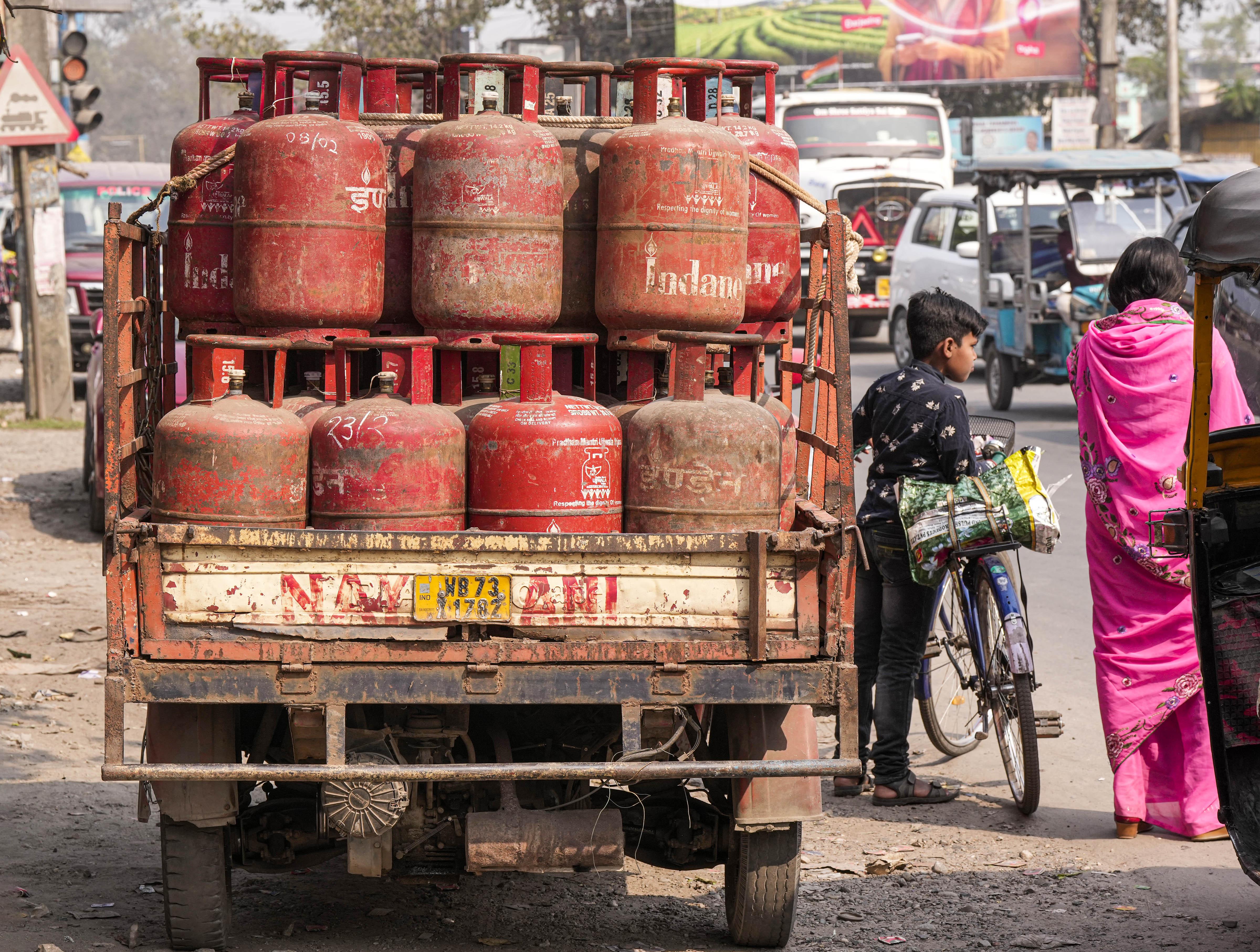
GOVERNMENT REASSURES, EXTERNAL FACTORS ACKNOWLEDGED
In recent public statements, Suresh Gopi, Union Minister of State for Petroleum and Natural Gas, has sought to reassure the public regarding the ongoing LPG shortage. He has reiterated that the government is actively working to bring the situation under control and is exploring various options to secure additional LPG supplies.
Gopi has also made it clear that while domestic efforts are being prioritized, certain aspects impacting the global supply chain, particularly those related to the 'Strait of Hormuz', are outside India's immediate sphere of influence. The minister's discourse repeatedly circles back to the critical nature of this maritime route and the inherent limitations India faces in directly dictating terms on international logistics.
He emphasized that the government is not pursuing military solutions to address the crisis, stating that such an approach is not viable. Instead, the focus remains on diplomatic and logistical adjustments to enhance LPG availability.
Read More: Middle East Tensions Cause Oil Prices to Jump Over $100 Per Barrel
BACKGROUND
The 'Strait of Hormuz' is a narrow waterway connecting the Persian Gulf to the Gulf of Oman and the open sea. It is one of the world's most important oil transit points, with a significant volume of crude oil and liquefied natural gas (LNG) passing through it daily. Geopolitical tensions in the region can directly impact shipping traffic and energy prices globally. The recurring mentions of this strait in the context of the LPG crisis underscore the vulnerability of global energy supply chains to regional instability.