New Delhi – In a joint declaration following the 16th India-Japan Annual Summit, Prime Ministers Narendra Modi and Sanae Takaichi have issued a stark condemnation of terrorism and violent extremism. The leaders specifically called for concerted global action against Pakistan-based terror outfits, naming Lashkar-e-Tayyiba (LeT) and Jaish-e-Mohammad (JeM).
The joint statement demands that perpetrators, organizers, and financiers of terrorist acts be brought to justice swiftly, while urging the eradication of terrorist safe havens and the disruption of their financing channels and links to transnational crime. The communique also flagged concerns over the situation in the East and South China Seas, advocating for peaceful resolution of maritime disputes in line with international law.
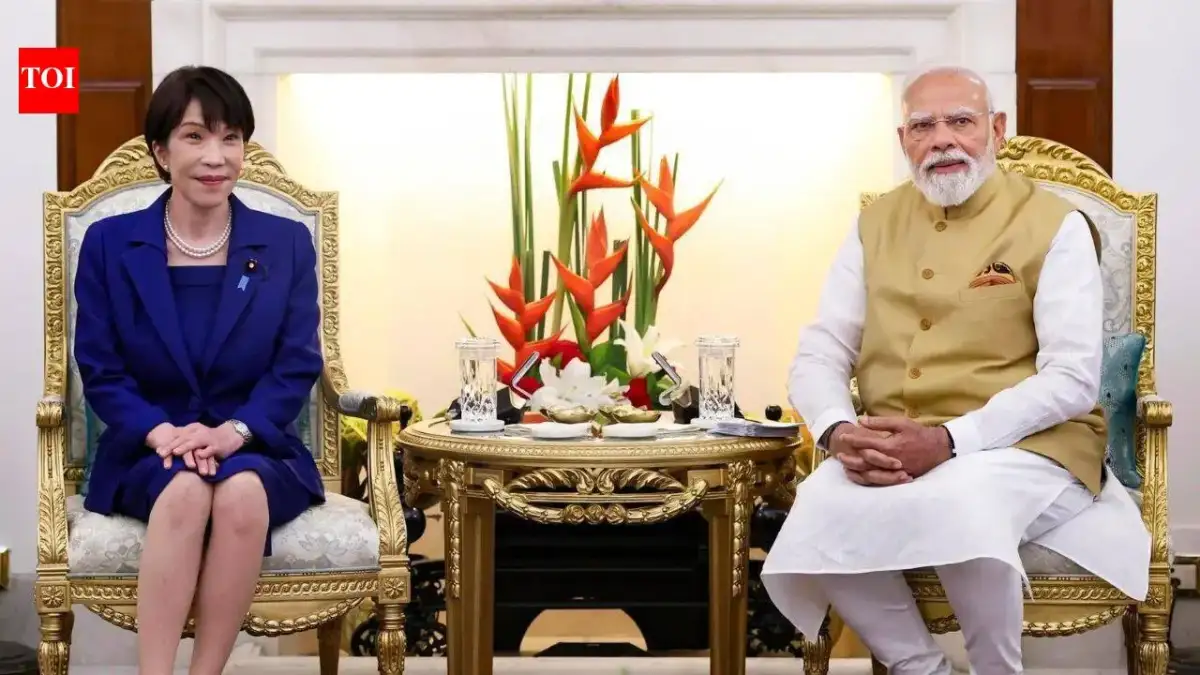
The summit, held from July 1 to 3, saw both nations pledge to deepen their "Special Strategic and Global Partnership." Beyond security matters, agreements were inked covering areas such as artificial intelligence, economic security, clean energy, critical minerals, advanced technologies, and defense cooperation. This broad collaboration underscores a growing alignment between India and Japan amidst evolving regional security dynamics.
Read More: Taiwan Holds Nantou County Drills to Prepare for State Collapse
The condemnation of Pakistan-backed terrorism is seen as a reinforcement of India's long-standing stance on cross-border militancy, with Japan lending its support to global counter-terrorism efforts. The joint statement explicitly mentioned the terrorist attack in Pahalgam, Jammu and Kashmir, on April 22nd of last year, and a terrorist attack in Delhi on November 10th of the previous year, demanding accountability.
This unified message against terrorism emanates from a period of enhanced diplomatic engagement, with Prime Minister Takaichi visiting India at Prime Minister Modi's invitation. The discussions also touched upon North Korea's ballistic missile launches and its nuclear program, urging Pyongyang to return to dialogue. Both nations also affirmed mutual support for their candidatures for permanent seats on a reformed UN Security Council.