


Recent statements by India's Finance Minister, Nirmala Sitharaman, assert a period of economic growth and an expanding middle class, directly refuting claims of economic distress. These pronouncements come amidst a parliamentary debate on the general budget, where the minister addressed concerns regarding public finances and welfare spending. The narrative presented by the Finance Ministry emphasizes an improved economic climate, characterized by low inflation and upward mobility in the workforce, suggesting a positive outlook for the nation's economic health.

Economic Progress and Workforce Mobility
Finance Minister Nirmala Sitharaman stated that India is experiencing economic growth alongside historically low inflation. She presented this combination as a significant national achievement, crediting the collective efforts of the country.
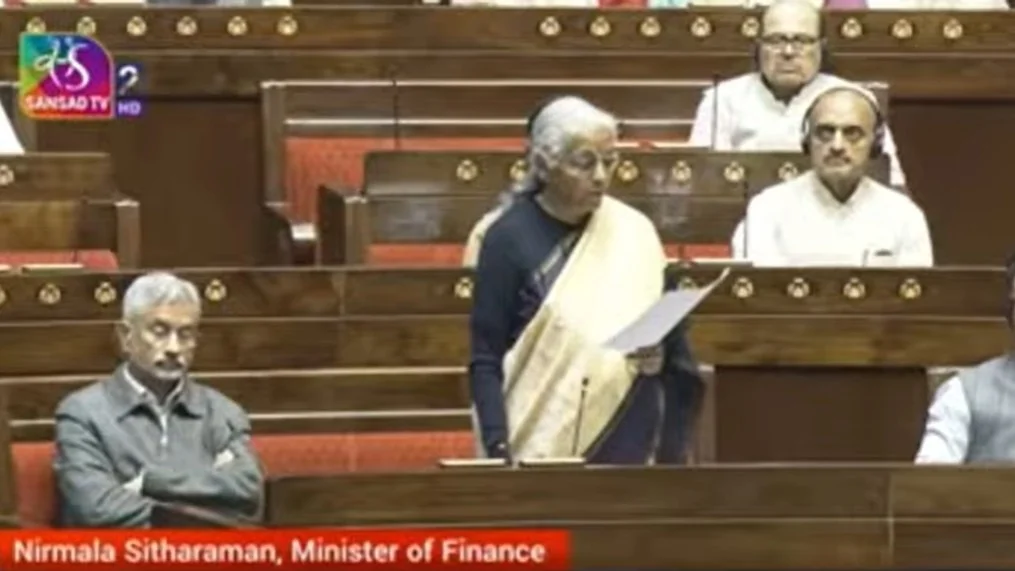
The minister noted an upward mobility of the workforce, indicating a potentially improving employment landscape.
She also pointed to an increase in the number of individuals with taxable income and a greater portion of income being recognized within the formal sector of the economy.
These observations were made in response to critics who, according to the minister, were misrepresenting the state of the Indian economy.
Countering Criticisms on Budgetary Matters
The Finance Minister also addressed accusations of cutbacks in welfare programs and rising national debt. She defended the government's fiscal approach, asserting that funds for states are not being withheld and that borrowing practices are not excessive.
Read More: Global Trade Alliances Are Changing

Sitharaman countered claims of expenditure curtailment in welfare schemes, stating there has been no denial or stoppage of funds to states for these programs.
She contrasted the current unspent funds in social sector schemes over the past decade with figures from the previous UPA government, indicating a lower amount of unspent funds in the current administration's tenure.
The minister criticized opposition parties for expressing concern over rising debt, characterizing their remarks as disingenuous given past fiscal behaviors.
Economic Reforms and National Development
The budget, according to Sitharaman, reflects India's commitment to becoming a resilient and self-reliant nation. She urged parliamentarians to encourage their respective state governments to actively participate in the schemes outlined in the budget.
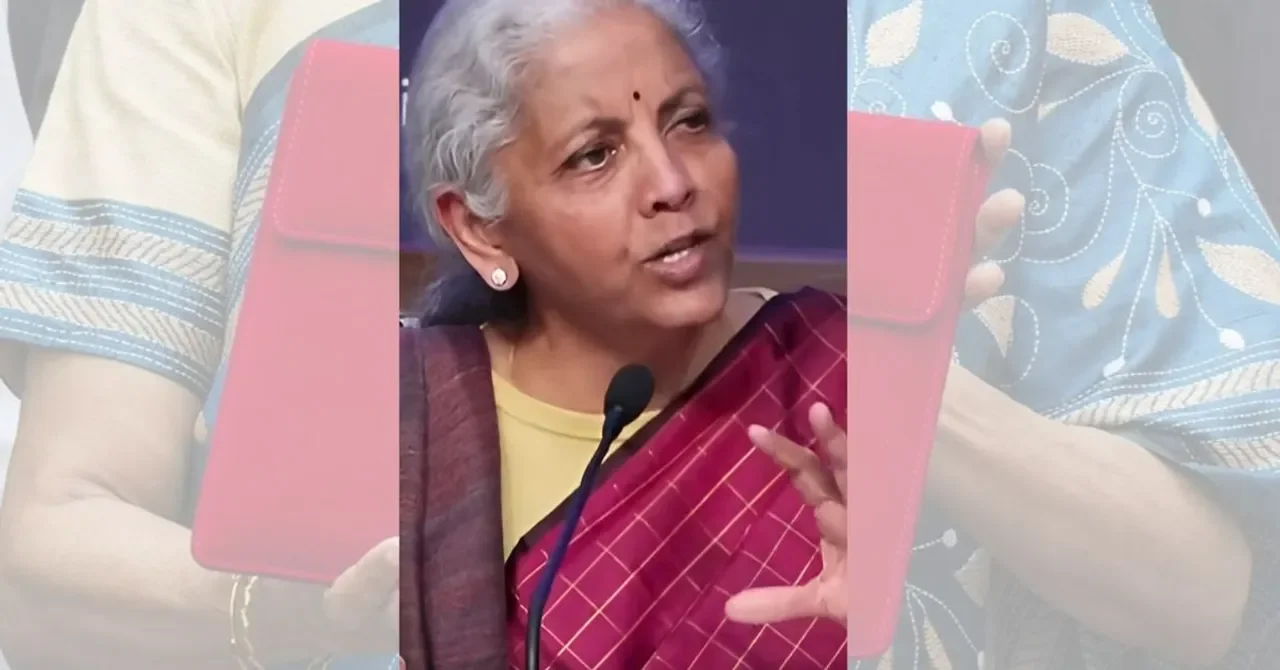
The budget's provisions are seen as evidence of the nation's resolve to build a strong, independent economy.
Cooperation between the central and state governments is deemed crucial for the successful implementation of budgetary initiatives.
International Perspectives on Middle-Class Economics
Discussions surrounding the middle class and economic growth are not unique to India. Various international contexts offer insights into the relationship between a thriving middle class and overall economic prosperity.
Read More: India Changes How It Measures Prices with New Inflation List
In Canada, the role of a Minister of Middle Class Prosperity and Associate Minister of Finance was established, highlighting a focus on this demographic. This suggests a recognition of the middle class as a key area for governmental policy and economic strategy.
The concept of "middle-out" economics suggests that enabling the middle class to consume more can foster economic growth. This perspective emphasizes the importance of middle-class spending as a driver for a broader economic foundation.
Analysis of the United States' economic history indicates that factors such as productivity growth, labor force participation, and income inequality have significantly influenced middle-class incomes.
Studies on China's economy have shown that the expansion of a middle-income class can contribute to consumption-led growth, provided this group spends a significant portion of its income.
Defining and Measuring Middle-Class Prosperity
The definition and measurement of the middle class remain a subject of discussion, impacting how economic policies are evaluated.
Read More: Indian Players Out of Chennai Open Singles
One perspective defines the middle class based on individuals' ability to afford their desired way of life, indicating a subjective element in its classification.
Concerns exist about the "hollowing out" of the middle class, where income gains at the top disproportionately outpace those in the middle, leading to increased income inequality. This divergence is often linked to factors like capital gains.
Proposals for reforming the economic contract with the middle class in some contexts include measures like reducing income tax burdens and providing access to education, aiming to enhance their economic standing.
Evidence
Finance Minister Nirmala Sitharaman's Statements (The Hindu, Economic Times, BusinessToday): Assertions of economic growth, low inflation, middle-class expansion, and increased formal sector income. Specific claims include refuting opposition charges on welfare spending and national debt.
Budgetary Scheme Unspent Funds Comparison (Economic Times, BusinessToday): Sitharaman cited Rs 37,000 crore unspent in 14 social sector schemes in the last 10 years, compared to Rs 94,000 crore during the UPA regime.
Canadian Mandate Letter (pm.gc.ca): Creation of a "Minister of Middle Class Prosperity and Associate Minister of Finance" role in December 2019.
US Economic Analysis (CEPR, Fortune, Brookings): Discussion of middle-class income drivers (productivity, participation, inequality) and concerns about income divergence and potential policy responses like tax reductions and educational access.
Chinese Economic Analysis (China Leadership Monitor): Links between middle-income class expansion and consumption-led growth.
General Economic Principles (Democracy Journal, Marketplace): The view that a strong middle class provides a stable consumer base, drives investment, and can be a key factor in economic growth.
Expert Analysis
Finance Minister Nirmala Sitharaman stated, "Naysayers who claim the Indian economy is dead are mocking at the people of India, who are contributing to India’s growth." She added that inflation is at a "historical low" and that "growth without inflation is an achievement of the entire country."
Regarding budget allocations, Sitharaman countered opposition claims: "there is no denial or stoppage of funds to states on any schemes." She further argued that "only Rs 37,000 crore was unspent in 14 social sector schemes in the last 10 years, compared to Rs 94,000 crore during the UPA regime."
In response to concerns about income tax collection, she clarified: "High personal income tax collection… does not mean middle class being suppressed." She argued that the data indicates "growth in the middle class."
Analysis from the World Economic Forum (WEF) on 'middle-out' economics suggests: "Nourishing a middle class means providing things that are more fundamental than prospective employment, like a technical education. A truly healthy economy is one with a thriving middle class… enabling more people to buy more things creates a broader foundation to build on."
Brookings Institution discussed American middle-class prosperity, stating: "Middle-class prosperity must be based primarily on rewarding work." They proposed reforms such as "eliminating income tax for most of the middle class and providing two years of free public college."
Conclusion
Finance Minister Nirmala Sitharaman has presented a positive assessment of India's economic situation, highlighting growth, low inflation, and an expanding middle class. These statements directly address and refute criticisms regarding the economy's health and the government's fiscal management, particularly concerning welfare spending and debt. The minister's remarks suggest that increased taxable income and formal sector activity are indicators of this economic advancement.
Read More: Head of RSS Says Vets Can Help India's Economy More
The discourse on middle-class economics is global, with various countries exploring strategies to foster its growth and stability as a driver of broader economic prosperity. This includes examining the impact of productivity, labor participation, and policy interventions such as tax reforms and educational access. While the Finance Minister emphasizes current positive trends, the effectiveness of these economic policies and the long-term implications for the middle class will continue to be subjects of observation and analysis.
Sources
The Hindu: https://www.thehindu.com/news/national/middle-class-expanded-economy-grew-finance-minister/article70625205.ece
Economic Times: https://economictimes.indiatimes.com/news/economy/policy/high-personal-income-tax-collection-does-not-mean-middle-class-being-suppressed-sitharaman-in-rajya-sabha/articleshow/128258911.cms
BusinessToday: https://www.businesstoday.in/personal-finance/tax/story/high-income-tax-collection-doesnt-mean-middle-class-is-being-crushed-fm-sitharaman-in-rajya-sabha-515957-2026-02-12
World Economic Forum: https://www.weforum.org/stories/2025/03/what-is-middle-out-economics-and-does-it-stand-a-chance/
Brookings: https://www.brookings.edu/articles/a-new-contract-with-the-middle-class-money/
Canada PM Office: https://www.pm.gc.ca/en/mandate-letters/2019/12/13/archived-minister-middle-class-prosperity-and-associate-minister-finance
CEPR: https://cepr.org/voxeu/columns/brief-history-middle-class-economics-productivity-participation-and-inequality-united
China Leadership Monitor: https://www.prcleader.org/post/china-s-middle-income-class-macroeconomic-growth-and-common-prosperity
Democracy Journal: https://democracyjournal.org/magazine/20/growth-and-the-middle-class/
Marketplace: https://www.marketplace.org/story/2022/10/14/middle-class-economic-growth
Read More: Karnataka Congress Leaders Say All Is Well, But Talk Continues


