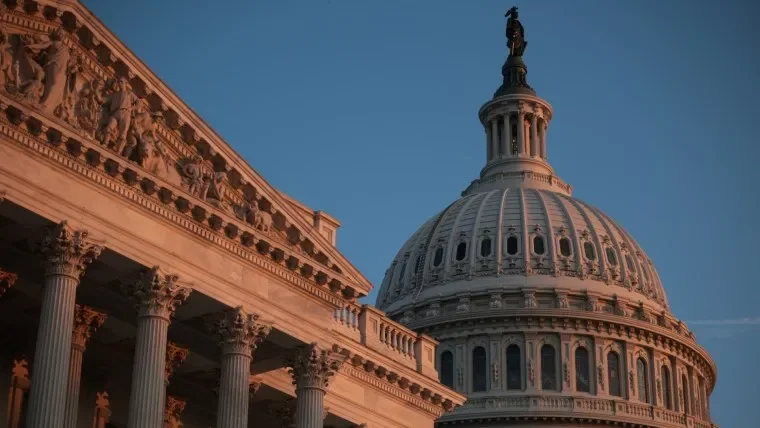
A significant Republican-backed bill aiming to change national voting rules has cleared the House of Representatives. Known as the Safeguard American Voter Eligibility (SAVE) Act, and now referred to as the SAVE America Act, the legislation introduces new requirements for voters, including identification and proof of citizenship. The bill’s passage in the House, with nearly all Republicans voting in favor and a single Democrat in opposition, signals a renewed effort to alter election procedures. However, its future in the Senate is uncertain, as it faces strong opposition from Democrats who argue the changes could prevent many eligible citizens from voting.

Background of the SAVE America Act
The SAVE America Act, previously the SAVE Act, represents a Republican proposal to reshape federal voting standards. It aims to implement stricter voter verification measures.

Legislative Journey: The bill was approved by the House approximately ten months after a prior version, the SAVE Act, was also passed by House Republicans. The latest iteration, the SAVE America Act, narrowly passed the U.S. House with a vote of 218-213.
Key Proponents: President Donald Trump has openly supported and advocated for these election reforms.
Congressional Action: The bill's passage in the House sends it to the Senate for consideration.
Proposed Voting Changes
The SAVE America Act introduces several key changes to how federal elections are conducted.
Read More: Chagossian Islanders Land on Chagos Atoll to Resettle, Challenging UK-Mauritius Deal

Voter Identification: The bill mandates that voters present photo identification when casting their ballot.
Proof of Citizenship: It requires individuals to provide proof of citizenship to register for federal elections. This proof would need to be presented in person.
Mail-in Voting: The legislation aims to prohibit states from automatically sending mail-in ballots to all registered voters. Instead, voters would need to explicitly request such a ballot.
State Compliance: States that do not comply with these new federal requirements risk losing federal election funds.
Ranked-Choice Voting: The bill also includes prohibitions against ranked-choice voting methods.
Arguments and Opposition
The proposed changes have generated significant debate, with supporters citing security and integrity, while opponents raise concerns about accessibility.
Supporters' Stance: While the specific arguments from the bill's proponents are not detailed in the provided texts, the general intent of such legislation is often framed around enhancing election security and preventing fraud. The act's title, Safeguard American Voter Eligibility, suggests a focus on ensuring only eligible citizens participate.
Opponents' Concerns: Critics, primarily Democrats, contend that the new requirements, particularly photo ID and proof of citizenship, could disenfranchise millions of eligible voters. They argue these measures create additional barriers that may disproportionately affect certain demographic groups. Senator Susan Collins (R-Maine) has expressed reservations about the revised bill, indicating concerns about its problematic aspects.
Path Forward in the Senate
The SAVE America Act faces a challenging path in the Senate.
Senate Vote Likelihood: While the bill passed the House, its prospects in the Senate are less clear. Democrats have stated that the bill has no path to the 60 votes needed to overcome a filibuster, indicating strong Democratic opposition.
Executive Order Precedent: President Trump previously issued an executive order that included a citizenship requirement for voters, but this order was blocked by the courts.
Sources
NPR: "A Republican plan to overhaul voting is back. Here's what's new in the bill" - Published Feb 19, 2026. https://www.npr.org/2026/02/19/nx-s1-5719252/trump-voting-save-america-act-explainer
CBS News: "What is the SAVE America Act? Here's what to know about the GOP elections bill" - Published Feb 6, 2026. https://www.cbsnews.com/news/save-america-act-republican-elections-bill/
TIME: "The Sweeping Elections Changes Republicans Are Proposing" - Published Jan 29, 2026. https://www.time.com/7362224/midterms-voting-requirements-mail-absentee-ranked-choice-republicans-bill/
Associated Press (AP News): "House Republicans propose voting changes as Trump administration eyes the midterms" - Published on Bing. https://apnews.com/article/midterms-voting-laws-photo-id-citizenship-republicans-feecb51a6efa41cf32d18fe4b15c08ce
NBC News: "House passes SAVE America Act, sending Trump-backed election bill to the Senate" - Published Feb 11, 2026. https://www.nbcnews.com/politics/congress/house-passes-save-america-act-trump-backed-election-bill-rcna258614



)