Recent findings in fossil amber are shedding light on the lives of ants millions of years ago, particularly during the Cretaceous period and the Miocene epoch. These preserved insects, encased in ancient tree resin, offer a rare glimpse into ecosystems and evolutionary paths that are otherwise difficult to study due to the scarcity of insect fossils.
Ancient Encounters Captured in Resin
Fossilized tree resin, known as amber, has yielded remarkable discoveries about ancient ants. The inclusions within these ancient materials provide invaluable data on insect interactions and the diversity of life in past geological eras.

Several pieces of amber have revealed ants in close association with other small creatures. In one instance, six separate amber samples contained interesting specimens.
Case 2 held a "Stem ant" and a spider.
Case 3 contained a "Hell ant," a snail, a millipede, and other unidentifiable insects.
Case 6 featured a "Stem ant" alongside a probable parasitic wasp and a spider.
Across three of these amber pieces, ants were found near mites, suggesting potential ecological relationships.
Reshaping Evolutionary Timelines
New ant fossils found in amber are prompting a re-evaluation of established evolutionary timelines and the distribution of ancient insect species.
A queen ant discovered in Dominican amber provides a new anchor point for the genus Hypoponera in the Miocene Caribbean. This finding suggests that the fossil record may not fully represent the prevalence of soil-dwelling ants in the past.
The queen's preserved compact body shape matches that of modern Hypoponera, highlighting a degree of evolutionary stability in its form.
The study of ant queens in fossils can be challenging, as scientists often focus more on worker ants, making it harder to link fossil specimens to living species.
The Smallest Predator Ant Unveiled
A specific fossil discovery has revealed the smallest predator ant ever found, leading to new understandings about the ancient range and evolutionary patterns of certain ant species.
Read More: New 43-Foot Mosasaur Found in Ancient Oceans
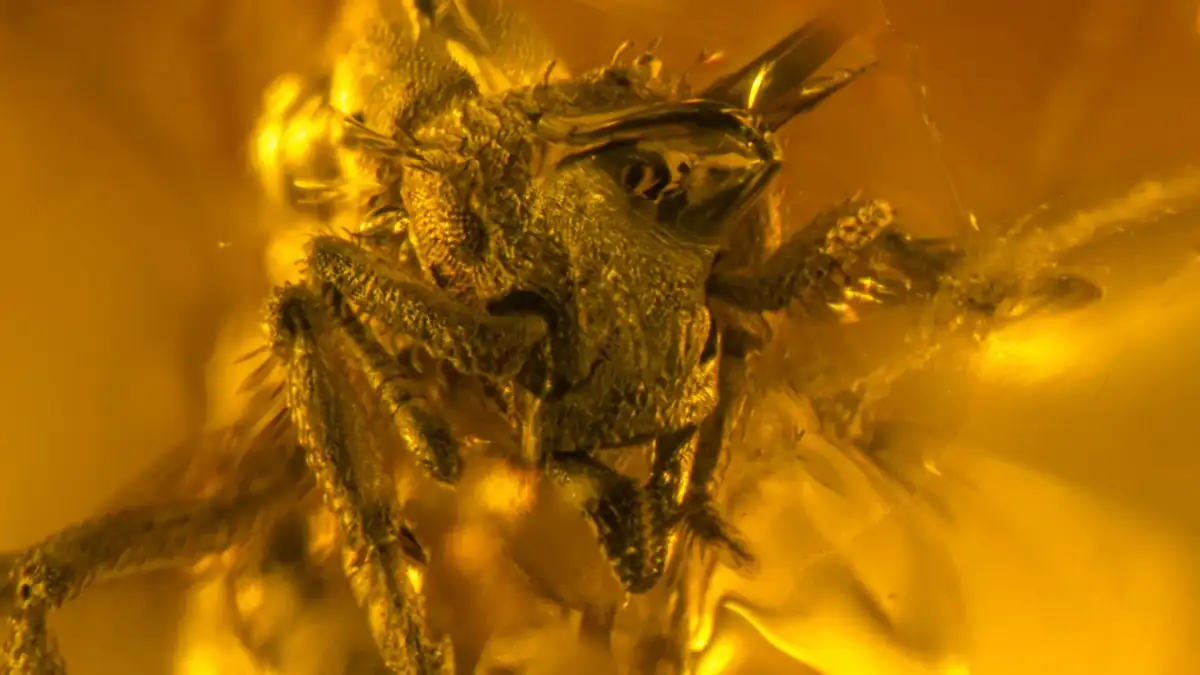
The ant, named Basiceros enana, was found preserved in Dominican amber.
This fossil challenges previous assumptions about the evolutionary path of its body size.
The Basiceros enana specimen measured only 5.13 mm long, significantly smaller than its modern relatives. This ant had distinctive mandibles with 12 triangular teeth, similar to modern dirt ants, used for capturing prey.
This discovery indicates that ants of this genus may have inhabited a broader geographical area in the past than previously understood.
Vanished Species and Environmental Change
Fossils encased in amber not only reveal ancient species but also offer clues about their extinction and the environmental factors that may have contributed to their disappearance.
Over a third of ant species that existed in what is now the Dominican Republic are believed to have gone extinct since the amber containing Basiceros enana formed.
Scientists suggest that changing environments likely played a significant role in the decline and disappearance of these insects from the Caribbean.
Expert Insights and Unanswered Questions
The analysis of these ancient ant fossils continues to yield important insights, while also raising new questions for researchers.
"Finding a ground-hunting Hypoponera queen in amber suggests many soil and leaf-litter ants stayed invisible in past collections."— [Attributed Insight from Article 2]
"The unexpected fossil discovery raises new questions about how the ant group reached their present-day habitats."— [Attributed Insight from Article 3]
"Changing environments likely played a role in these insects disappearing from the Caribbean."— [Dr. Phil Barden, associate professor of biology at NJIT and senior author of the study, cited in Article 5]
Emerging Conclusions and Future Directions
The examination of fossilized ants in amber provides a vital, though often incomplete, record of past insect life.
The rare inclusions of multiple organisms in amber offer unique opportunities to study past ecosystems and insect interactions.
Discoveries like Basiceros enana and Hypoponera electrocacica are helping to redraw evolutionary timelines and understand the historical distribution of ant species.
The role of environmental shifts is increasingly being recognized as a key factor in the extinction of past species.
Further research may focus on analyzing the surrounding materials in amber to better understand the broader ecological context of these ancient ant discoveries.
Sources Used:
Frontiers in Ecology and Evolution News: Fossil amber reveals the secret lives of Cretaceous ants. https://www.frontiersin.org/news/2026/02/27/fossil-amber-secret-lives-cretaceous-ants-frontiers-ecology-evolution (Summary focuses on multiple insect inclusions in Cretaceous amber.)
Earth.com: Ant fossil from Caribbean reshapes evolutionary timeline. https://www.earth.com/news/ant-fossil-from-caribbean-reshapes-evolutionary-timeline/ (Summary highlights a Hypoponera queen in Miocene Caribbean amber and its implications for fossil records.)
ScienceDaily: A 16-million-year-old amber fossil just revealed the smallest predator ant ever found. https://www.sciencedaily.com/releases/2025/08/250809100922.htm (Summary details the discovery of Basiceros enana in Dominican amber and its size significance.)
ScienceNewsToday: Scientists Finally Discovered the Missing Ancestor of the World’s Most Ordinary Ants. https://www.sciencenewstoday.org/scientists-finally-discovered-the-missing-ancestor-of-the-worlds-most-ordinary-ants (Summary introduces Hypoponera electrocacica found in amber, noting its importance for understanding the genus.)
ABC News: Prehistoric ant preserved in amber reveals Caribbean's vanished species. https://abcnews.go.com/US/prehistoric-ant-reveals-caribbeans-vanished-species/story?id=120920046 (Summary connects the Basiceros enana fossil to extinctions in the Dominican Republic and environmental factors.)