An Archipelago's Accretion
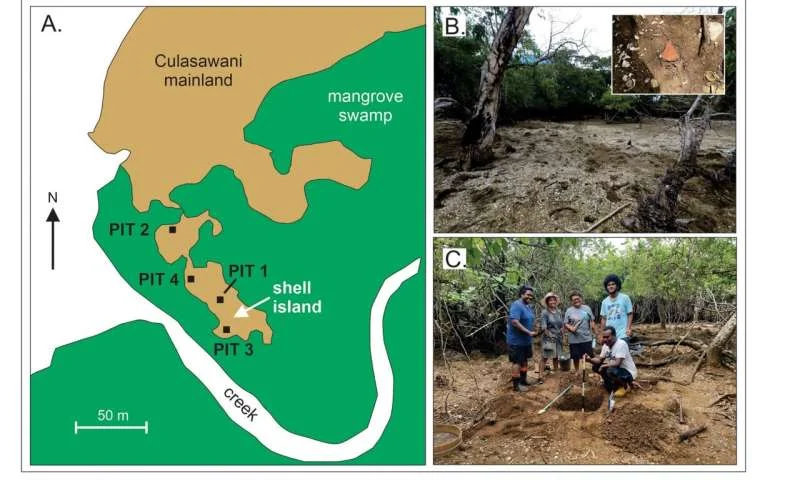
A small island, roughly 3,000 square meters in size, discovered off the western coast of Vanua Levu, Fiji, is largely composed of discarded edible shellfish remains, according to recent studies. This formation, estimated to be about 1,200 years old, is now recognized as the first known shell midden in the South Pacific region situated east of Papua New Guinea. Mixed with the abundant shells are fragments of pottery, suggesting a history of sustained human activity.
The island’s composition, dominated by commonly consumed shellfish with minimal sedimentary layers, points towards deliberate human accumulation rather than natural geological processes. Researchers are investigating whether the island's structure resulted from sustained waste disposal by a settled population or potentially from wave action depositing shells. Evidence supporting the latter hypothesis would involve observing a broader, thinning shell deposit extending eastward, consistent with tsunami deposition.
Read More: 5,900-Year-Old Child Skull Found in Norway Cave
Unearthing a Past Diet
The discovery near Culasawani offers a tangible link to the dietary habits and settlement patterns of ancient inhabitants. The presence of numerous shells from edible sea creatures indicates a reliance on marine resources. This site provides an unprecedented opportunity to study the archaeological record of a region previously lacking such significant shell midden discoveries.
Rethinking Landscape and Habitation
For millennia, humans have reshaped Earth's surfaces. This island, born from what was once discarded food, stands as a testament to this transformative power. Its existence challenges simplistic notions of island formation and underscores the profound impact human activities have had on shaping even seemingly natural landscapes.
Historical Echoes and Vanishing Shores
The South Pacific, particularly Fiji, has a history intertwined with fluctuating sea levels and climate shifts. Previous observations by scholars like Patrick Nunn have highlighted how changing coastal conditions have historically impacted human societies in Fiji, leading to adaptations and even displacement. The "Climate Wars" discussed in broader analyses of the region illustrate how environmental pressures have repeatedly reshaped settlement patterns over centuries, pushing people inland or towards different resource bases. Stories of vanishing islands and submerged lands persist in local lore, hinting at a deeper, more complex relationship between human history and environmental change in the archipelago.
Read More: Erode Aqueduct Stable: ASI Finds Minor Seepage, Recommends Repairs