New examinations of ancient Mongolian burial sites, known as khirigsuurs, are challenging long-held assumptions about ritualistic mass feasting and horse sacrifice. Previous interpretations suggested these large, stone structures, often 5 to 10 meters in diameter with central burial chambers, were sites for extensive communal consumption and the disposal of animal remains. However, recent studies focusing on the distribution and nature of artifacts within and around these mounds are casting doubt on these established narratives.
Unease Over the Absent Bones
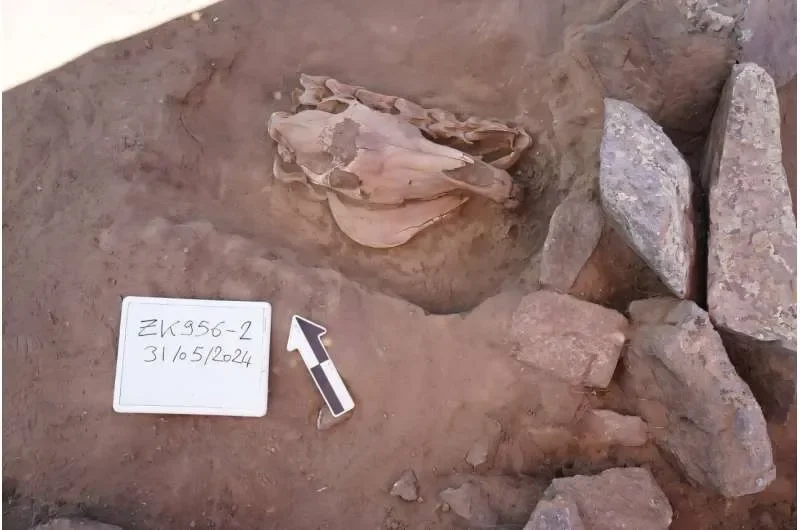
A key point of contention lies in the consistent presence of only horse skulls, and occasionally neck vertebrae and hooves, within the "satellite features" of khirigsuurs. This selective deposition has prompted investigations into whether large-scale butchering and feasting occurred nearby, leaving the bulk of the animal – the axial and long bones – unaccounted for in these specific ritual areas.
Read More: 5,900-Year-Old Child Skull Found in Norway Cave
The very existence of these peculiar accumulations of partial horse remains has fueled speculation about communal feasting.
Recent work, including systematic surveying, shovel probes, and phosphate analysis at selected khirigsuur sites, aims to uncover where the rest of the equine skeletons might have ended up.
In addition to horse remains, smaller stone circles, typically 1-2 meters across, have been found near khirigsuurs. These often contain burnt caprine bone fragments, suggesting different, possibly distinct, ritual practices.
Shifting Populations and Ancient Conflicts
Beyond the feasting question, genetic and archaeological evidence is reshaping our understanding of Bronze Age communities and broader historical conflicts in the region.
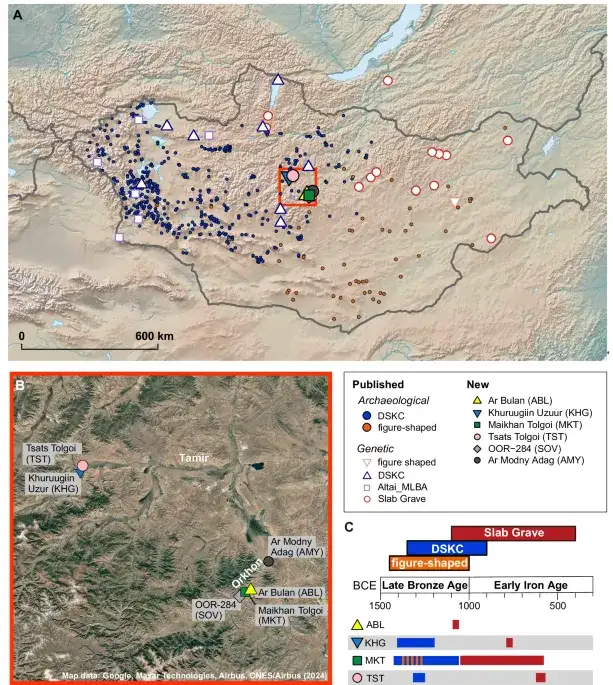
Genetic studies are revealing complex population dynamics, indicating distinct Bronze Age herder groups in central Mongolia whose long co-existence may have been disrupted.
Analysis of skeletal remains has grouped individuals based on mortuary affiliation and genetic profiles, distinguishing between various cultural groups like "Altai_MLBA," "DSKC," and "Slab Grave" populations.
These genetic clines and overlaps suggest intricate social structures and potential population movements or interactions over time.
Further afield, discoveries related to the 'Han-Xiongnu War' are also being re-evaluated.
Mass graves uncovered at Bayanbulag are prompting a revision of historical accounts of this significant early Chinese conflict.
These findings, incorporating genetic and isotopic data, offer insights into Han frontier strategy and the lives of those involved, including individuals who shared ancestry with ancient and modern Han Chinese populations.
A Transnational Excavation Effort
Ongoing archaeological endeavors highlight a collaborative approach to unearthing Mongolia's ancient past.
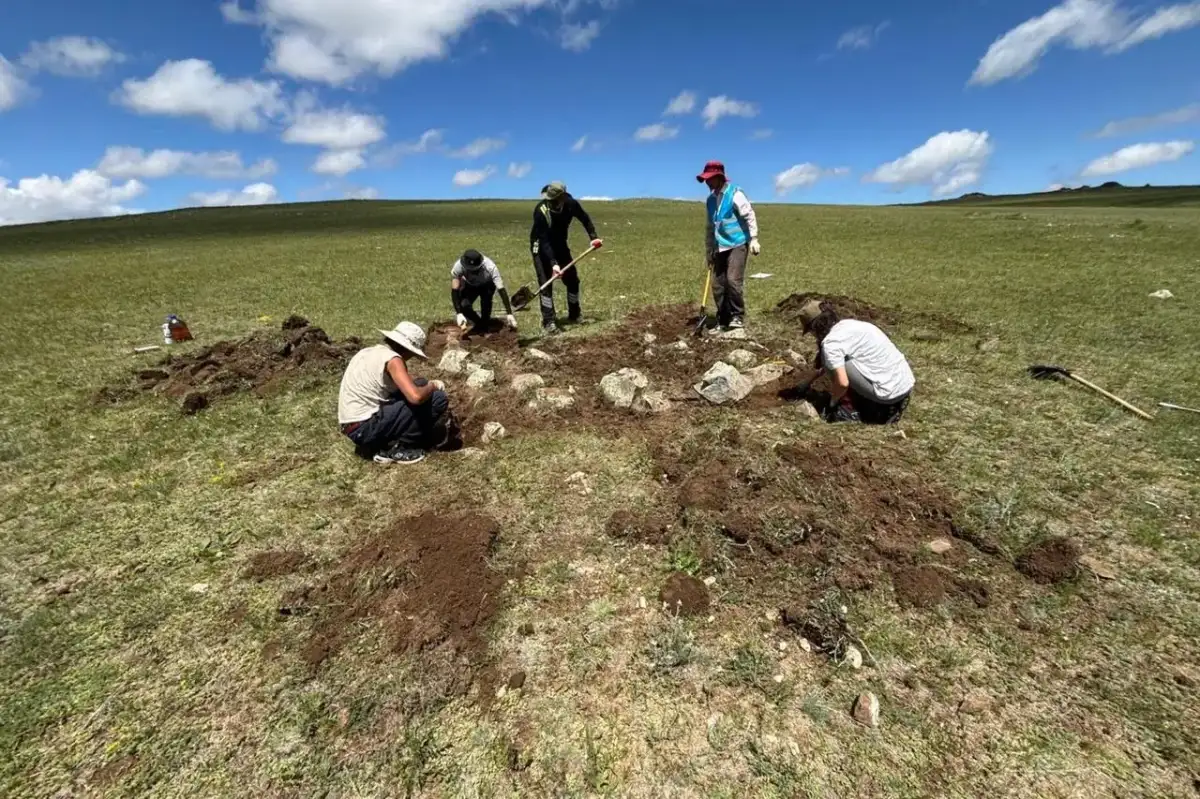
Turkish and Mongolian archaeologists are working together on burial mounds dating from the Bronze Age to the 13th century.
Projects centered on sites like Bor Ovoo Hill and the Shovh Uul Mountains are exploring the relationship between tomb architecture and the social standing of the interred.
These collaborations aim to understand the broader cultural legacies, including potential 'Turkish-Mongol' connections, embedded within these ancient nomadic burial traditions.
The excavation sites, some of which are considered sacred by local communities, underscore the enduring cultural significance of these historical monuments.