:max_bytes(150000):strip_icc():focal(741x537:743x539)/Erin-Brockovich-launches-map-of-data-centers-052826-tout-a738a34ab61b40f8a2f5afd3995bb11c.jpg)
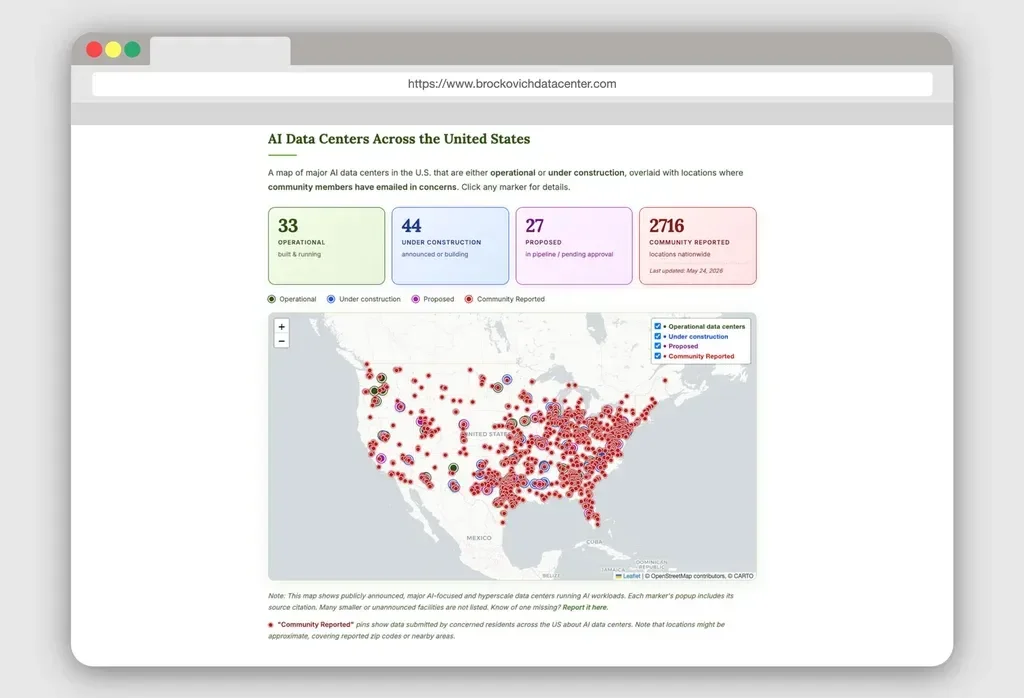
Erin Brockovich, known for her high-profile environmental activism, has launched a crowdsourced map to document AI data center locations and community concerns nationwide. The initiative, housed on the website 'Brockovich AI Data Center Reporting', aims to aggregate reports from the public regarding these rapidly expanding facilities.
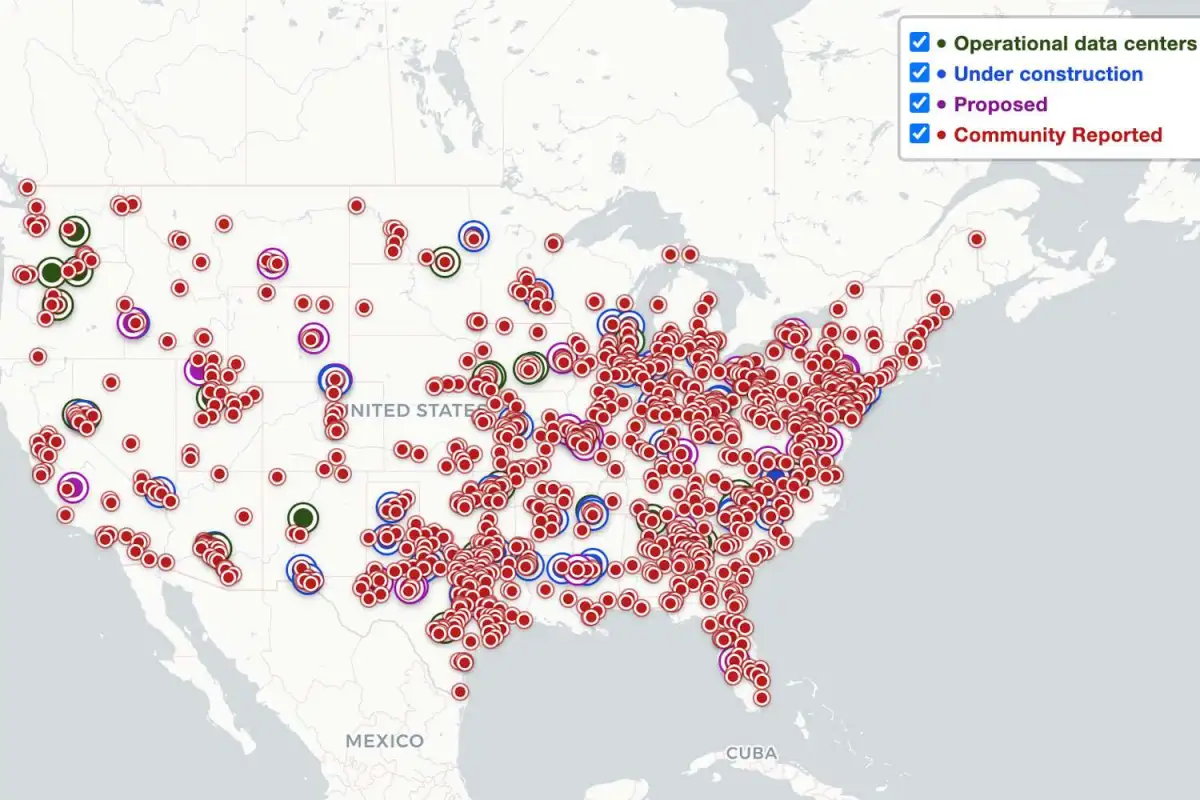
The interactive map currently displays 3,674 reported data center locations, encompassing existing, under-construction, and proposed projects. Most of the submissions to date originate from Texas, with Sulphur Springs, Texas, reportedly showing the highest number of reported concerns at 297.
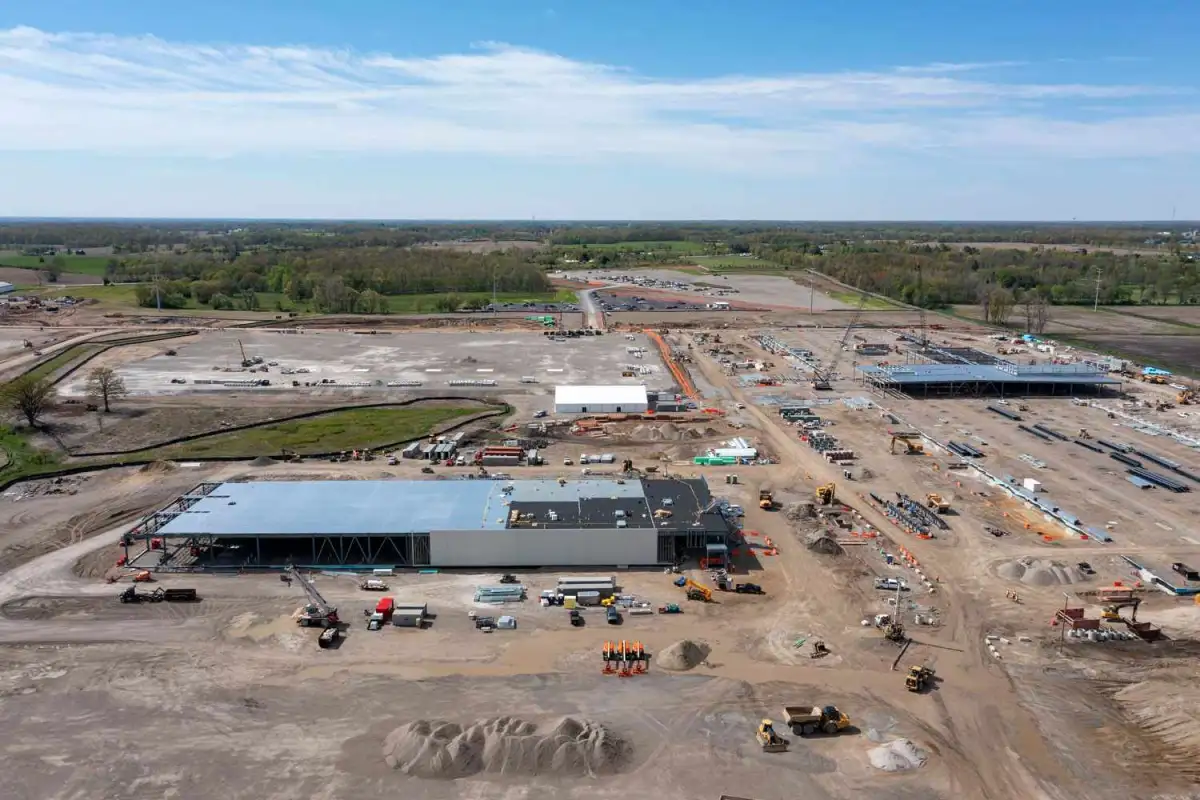
Communities Voice Worries Over AI Infrastructure
Brockovich's project surfaces as communities increasingly grapple with the impacts of data centers. Reported concerns predominantly focus on the centers' substantial energy demands, their potential to strain local water supplies (cited by 41.2% of respondents), and their effect on electric grids (22.2%) and overall community health (18.1%).

The website notes instances where communities have pushed back against data center development. It highlights 15 local moratoria or pauses on data center projects and six zoning or permit denials. This pushback occurs against a backdrop of varied governmental approaches, with some states advocating for increased regulation and transparency while federal initiatives, such as under the Trump administration, have largely adopted a less interventionist stance on AI regulation.
Read More: Chrome mimeHandler API lets extensions handle file types
A New Front in Environmental Advocacy
Brockovich's foray into tracking AI data centers marks a significant expansion of her advocacy work, which gained national attention following her role in exposing groundwater contamination in Hinkley, California, in the early 1990s. Her past efforts led to a major legal case against Pacific Gas & Electric Company (PG&E) concerning polluted water supplies.
The current map aggregates publicly announced, major AI-focused and hyperscale data centers, excluding smaller facilities. This initiative seeks to provide a centralized platform for communities to voice and document their experiences with the growing AI infrastructure. The chosen locations for these centers are often driven by factors like the availability of large, inexpensive land parcels and existing infrastructure, particularly in areas that were previously industrial sites.
Read More: Amazon Land Use Changes Cause Disease Clusters in Brazil
Other locations with a notable number of reported data centers include Lusby, Maryland (36), Box Elder County, Utah (31), and Archbald, Pennsylvania (30). The concerns logged on the map often relate to issues such as the water intensity of cooling systems, with discussions around water reuse technologies, like liquid cooling, gaining traction in areas with limited water availability.