"These are substances that haven't been historically monitored but are starting to show up."
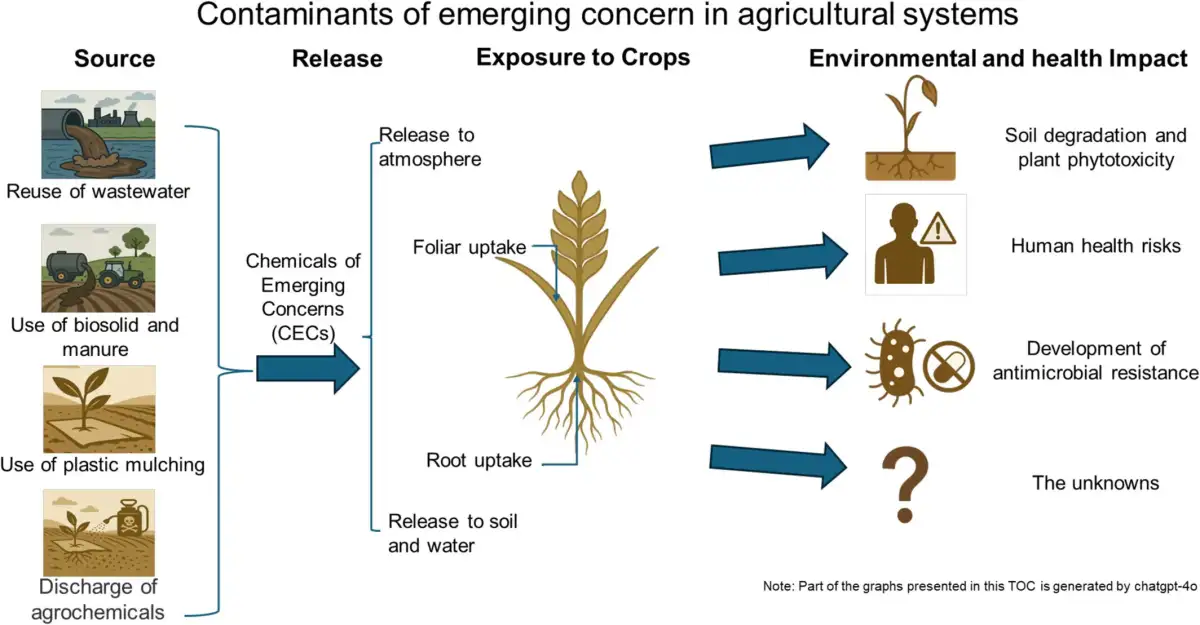
Researchers are sounding an alarm regarding the presence of "contaminants of emerging concern" detected in crops and agricultural soils. These substances, often unmonounced in previous environmental scans, are now registering in analyses, prompting questions about their pervasive nature and potential downstream effects on food systems and terrestrial environments. The focus is on substances that, while not yet widely regulated, are increasingly appearing in environments critical to food production.
A review spanning two decades of research, from 2005 to 2024, highlights the growing body of work examining the ecological risks these contaminants pose to soil and land-based ecosystems. This extensive review touches upon the broader context of these substances, linking them to challenges in water resource management and underscoring the need for proactive solutions in the face of evolving environmental threats. The study acknowledges the longevity of the 'One Health' concept, which links human, animal, and environmental health, but points out that significant work remains.
Read More: Cape Grim air station tracks pollution changes for 50 years in Tasmania
While specific details on the precise nature and quantity of these contaminants in recent crop studies remain somewhat obscured, the general trend identified by researchers indicates a widening spectrum of substances entering agricultural systems. The long-term implications for both the environment and human health are currently under examination, suggesting a need for more robust and adaptive monitoring protocols.
Background on Emerging Threats
The scientific community has been grappling with the concept of "emerging contaminants" for some time. These are often products of industrial processes, pharmaceuticals, personal care products, and various consumer goods that, through wastewater and other pathways, find their way into water bodies and subsequently, the soil. Historically, environmental regulations have lagged behind the introduction of new chemicals and materials into the marketplace. This has created a gap where substances can accumulate and spread before their potential ecological or health impacts are fully understood. The scientific literature, as evidenced by the review published in Environmental Geochemistry and Health, shows a concerted effort to quantify and qualify these risks, particularly as they pertain to vital ecosystems.
Read More: Rosemary Conley's 40-Year Weight Plateau Explained by 1980s Diet