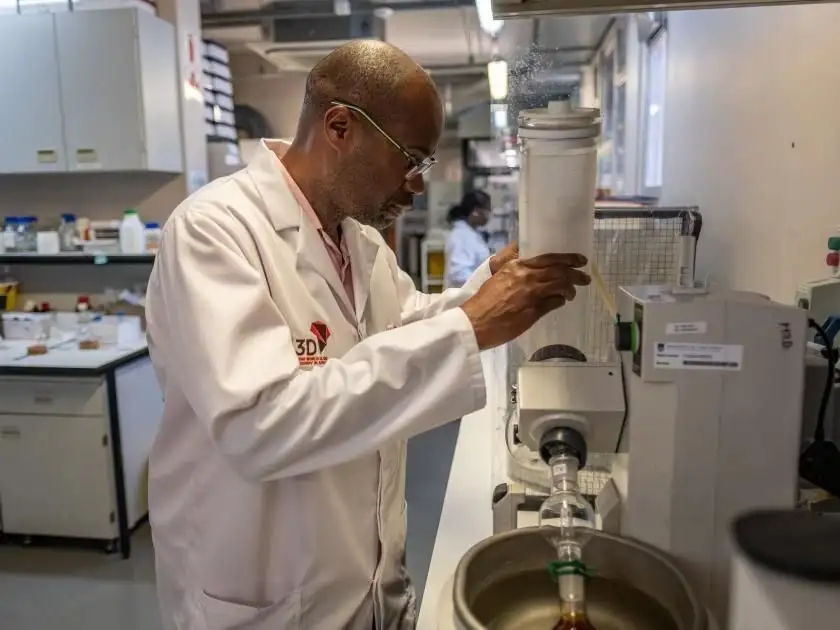
Holistic Drug Discovery and Development (H3D) Centre in South Africa is drawing attention for its work on medications for diseases prevalent on the continent. Led by Kelly Chibale, a scientist from Zambia, the facility at the University of Cape Town is reportedly undertaking "extraordinary" research.
The core of the operation appears to be a sustained effort to develop drugs addressing significant health issues such as malaria and tuberculosis. This focus highlights an intention to tackle ailments disproportionately affecting populations in Africa. The laboratory's endeavors are positioned as pivotal in reshaping the terrain of medical investigation within the region.
Chibale’s involvement is marked by a declared passion for chemistry, viewed not just as a scientific discipline but also as an artistic pursuit. This drive, according to reports, underpins the center's commitment to drug hunting, a process likened by Chibale to a "fairy-tale quest" that may involve unexpected breakthroughs.
The establishment of such a center in South Africa is framed as a critical move to build local capacity for addressing health challenges that have global implications. The work at the H3D Centre is described as groundbreaking, aiming for substantial outcomes through persistent research and development.
Read More: India IVF Costs And Social Barriers Limit Access In April 2026