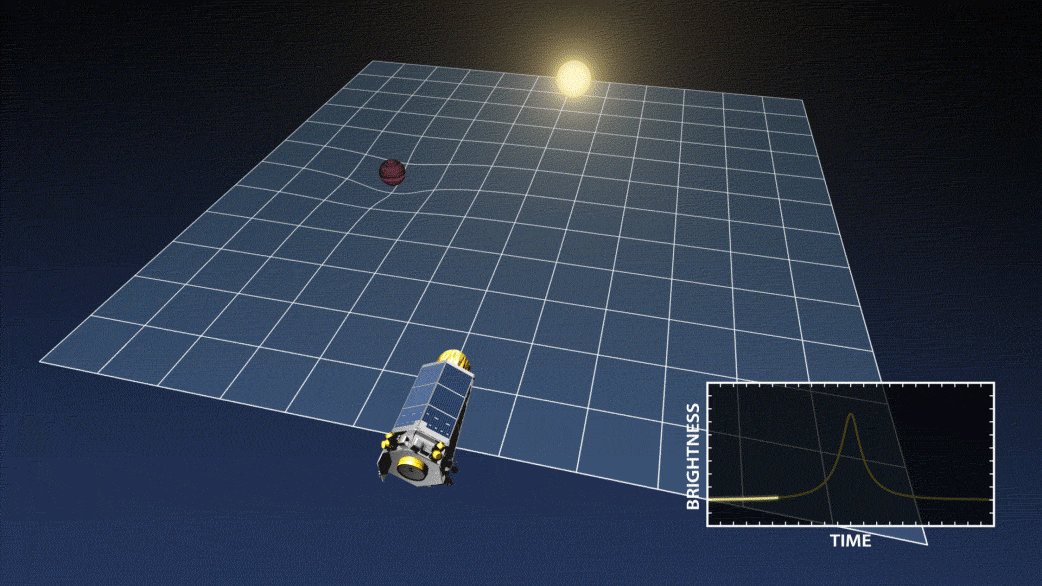
Recent astronomical observations have identified a potential Earth-sized exoplanet, designated HD 137010 b, located approximately 146 light-years away. While sharing similarities with Earth in size, its distant orbit around a cooler, dimmer star suggests it might experience temperatures colder than Mars. The planet's status remains a "candidate," requiring further confirmation through repeat observations.
This finding arises from data gathered by the Kepler Space Telescope's K2 mission. The planet's existence is inferred from a single observed transit – a brief dip in its host star's light. This event, seen as a potential hallmark of an Earth-like world, is also the primary reason for its tentative classification. The implications of this discovery are being carefully considered by astronomers, with particular interest in its potential for harboring liquid water or possessing a temperate climate, despite initial indications of extreme cold.
Read More: Moon-sized object passes Earth, sparking primordial black hole debate
Details of the Candidate Exoplanet HD 137010 b
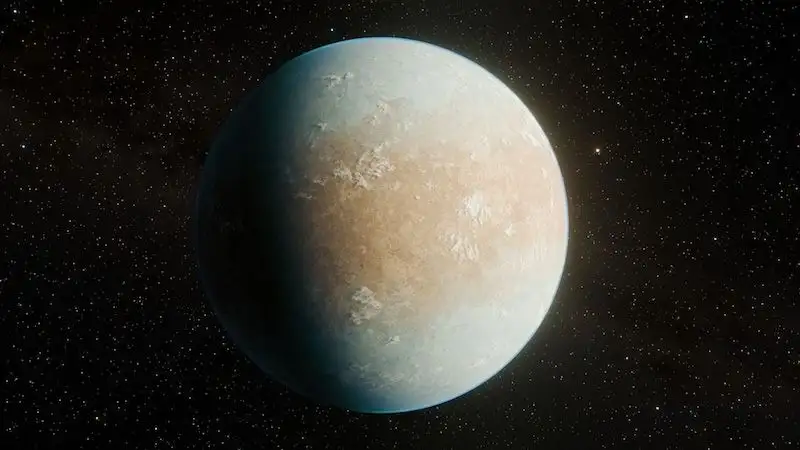
HD 137010 b is described as being only slightly larger than Earth, with a diameter estimated at 1.06 times that of our planet. It orbits a K-type star, HD 137010, which is noted to be cooler and less luminous than our Sun. This difference in stellar energy output means that HD 137010 b receives significantly less energy than Earth does.
The candidate planet's orbit is said to be at a distance comparable to Earth's. However, the similarity appears to end there. A striking aspect of this discovery is the limited data available.
Size: Approximately 1.06 times Earth's diameter.
Star Type: K-type dwarf star (cooler and dimmer than the Sun).
Distance from Earth: 146 light-years.
Orbital Distance: Appears similar to Earth's.
Detection Method: Single observed transit.
Temperature Projections and Habitable Zone Questions
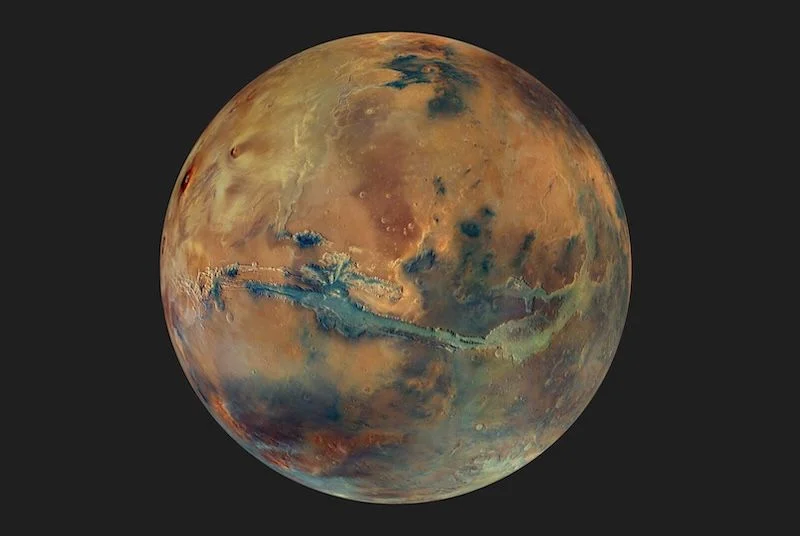
A key point of discussion surrounding HD 137010 b is its projected surface temperature. Estimates suggest it may not rise much above -90 degrees Fahrenheit. This temperature is colder than Mars, which has an average surface temperature of approximately -80 degrees Fahrenheit.
Despite this seemingly frigid outlook, researchers are cautious in their conclusions.
Read More: Webb Telescope Finds Old Black Hole Before Its Galaxy

Potential for Water: There remains a 50-50 chance that HD 137010 b could fall outside the habitable zone altogether.
Alternative Scenarios: Authors of the study also suggest that the planet could still turn out to be a temperate or even a watery world. This possibility hinges on factors not yet fully understood, such as the presence and composition of an atmosphere.
Atmospheric Influence: For an icy world to be potentially habitable, it might require an atmosphere richer in carbon dioxide than Earth's to retain heat. The thin atmosphere of Mars, in contrast, prevents it from retaining heat effectively.
Confirmation Challenges and Citizen Science
The current status of HD 137010 b is that of a candidate exoplanet. To be officially confirmed, it requires follow-up observations. The single transit observed makes it highly favorable for such follow-up studies with current and future telescopes.
The discovery itself highlights the contribution of citizen scientists. Several volunteers from NASA's Planet Hunters project, including Hans Martin Schwengeler and Martti H. Veneer, were involved in the study. Veneer had previously participated in the Planet Hunters project before completing his Ph.D.

The need for repetition in astronomical findings is crucial. A single transit event means that another transit might not occur for about a year, a factor that complicates the confirmation process.
Comparisons to Other Exoplanet Discoveries
HD 137010 b is not the first Earth-sized exoplanet candidate to be identified, but its projected cold climate sets it apart. For instance, Gliese 12 b, discovered earlier, is also Earth-sized and potentially habitable but is warmer than Earth's average surface temperature. Another system, TRAPPIST-1, has seen intensive study with the James Webb Space Telescope, focusing on the atmospheres of its seven planets, with TRAPPIST-1 e being a strong candidate for hosting liquid surface water. However, results for TRAPPIST-1 are described as "exciting, incomplete."
Read More: Webb Telescope Data Shows Paris Coordinates, Sparks Online Talk
Expert Analysis and Future Prospects
The potential for HD 137010 b to be colder than Mars, despite its Earth-like size and orbital distance, underscores the diverse range of planetary environments that may exist. While the preliminary data points towards a frigid world, the scientific community acknowledges the uncertainty inherent in initial discoveries.
"Despite the possibility of a frigid climate, HD 137010 b also could turn out to be a temperate or even a watery world, say the authors of the paper on this exoplanet."
This statement from one of the articles encapsulates the ongoing scientific dialogue, balancing initial observations with the potential for future data to reveal a different picture. The reliance on single transit events for initial detection means that confirmation requires significant additional effort and time.
Read More: ISS Experiment Shows How Particles Change Turbulent Flows
Conclusion and Next Steps
The identification of HD 137010 b presents an intriguing, albeit tentative, addition to the growing catalog of exoplanets. Its Earth-like size, coupled with projections of extreme cold, poses unique questions about planetary formation and habitability around cooler stars.
Status: Candidate exoplanet.
Key Characteristic: Projected to be colder than Mars.
Primary Evidence: Single transit event detected by Kepler's K2 mission.
Next Steps: Require dedicated follow-up observations to confirm its existence and characterize its atmosphere and climate.
The scientific community awaits further data to determine if HD 137010 b is indeed a frozen world, a temperate planet, or something else entirely. Its confirmation or refutation will add to our understanding of the potential for Earth-like worlds beyond our solar system.
Sources Used:
sciencedaily.com: Published Feb 12, 2026. Discusses HD 137010 b, its potential for being colder than Mars, and its Earth-like size and orbit. https://www.sciencedaily.com/releases/2026/02/260212025607.htm
science.nasa.gov: Published Jan 27, 2026. Mentions HD 137010 b as a candidate planet potentially colder than Mars, noting a 50-50 chance of being outside the habitable zone. Also highlights involvement of citizen scientists. https://science.nasa.gov/universe/exoplanets/discovery-alert-an-ice-cold-earth/
earthsky.org: Published Feb 5, 2026. Introduces HD 137010 b as a new candidate exoplanet, slightly larger than Earth, orbiting a sunlike star and possibly colder than Mars. https://earthsky.org/space/ice-cold-earth-exoplanets-mars-kepler-space-telescope/
orbitaltoday.com: Published Feb 5, 2026. Describes HD 137010 b as an Earth-scale planet that may be colder than Mars, noting the lack of repetition in its observed transit. https://orbitaltoday.com/2026/02/05/an-earth-scale-planet-that-may-be-colder-than-mars/
newsweek.com: Published Jan 30, 2026. Reports on the discovery of HD 137010 b, its potential cold surface temperature, and the dimmer nature of its host star. https://www.newsweek.com/space-astronomy-nasa-exoplanet-candidate-hd-137010-b-11443381
futuretimeline.net: Published Feb 2, 2026. Details HD 137010 b's size relative to Earth and its orbit around a cooler K-type star, emphasizing the significance of the single transit observation for follow-up studies. https://futuretimeline.net/blog/2026/02/2-earthsized-exoplanet-hd-137010-b.htm
phys.org: Published Jan 28, 2026. Covers the discovery of HD 137010 b from Kepler archives, discussing its potential ice-cold nature and the need for confirmation. https://phys.org/news/2026-01-ice-cold-earth-archives-kepler.html
downtoearth.org.in: Published May 23, 2024. Describes the discovery of Gliese 12 b, a potentially habitable exoplanet warmer than Earth, for comparison of exoplanet characteristics. https://www.downtoearth.org.in/science-technology/earth-sized-exoplanet-with-potential-for-life-discovered-40-light-years-away-96317
cnn.com: Published Sep 18, 2025. Discusses ongoing studies of the TRAPPIST-1 system, particularly TRAPPIST-1 e, for signs of an Earth-like atmosphere and habitability, providing context on exoplanet atmospheric research. https://www.cnn.com/2025/09/18/science/exoplanet-possibly-habitable