Recent solar activity appears to have amplified Earth's unexplained seismic pulse, a phenomenon previously documented at 26-second intervals. This escalation has been accompanied by widespread reports of insomnia and peculiar ringing sensations in people's ears, according to online social media chatter and a recent space weather report.

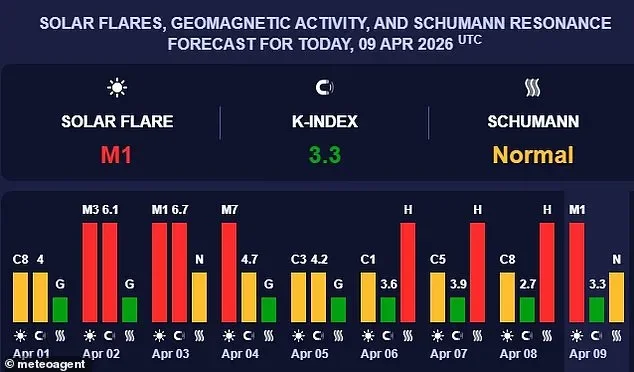
The amplified pulse, detected as a surge in 'Schumann Resonance' readings, began on Monday, April 7, 2025, and persisted throughout the week, reaching 'high' and potentially disruptive levels. This surge followed several weak and moderate solar flares erupting from the sun between April 3 and April 5. A further moderate flare was noted on April 8, with a strong M-class flare occurring on April 9. By Thursday, April 10, Earth's Schumann resonance reportedly returned to a 'normal' state.
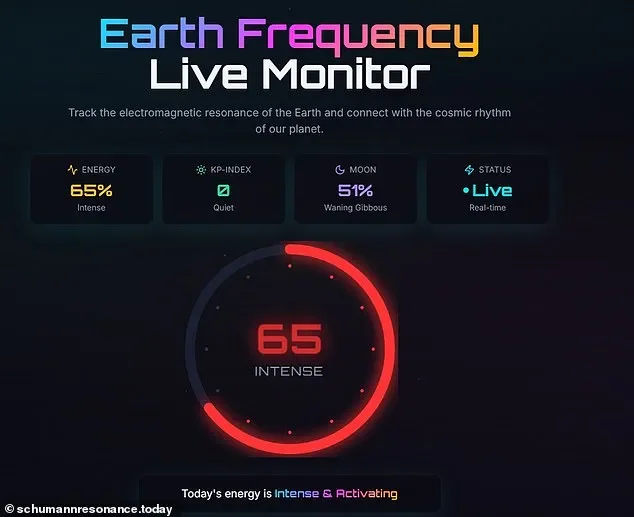
The public's experience of this intensified Earth activity has been voiced online. Questions such as 'What’s up with the Schumann?' reflect a growing awareness and concern. This public discourse suggests a perceived connection between the celestial events, the planet's vibrations, and personal well-being, particularly sleep patterns.
Read More: New Brain Scans May Show Vegetative State Patients Are Aware

An Unsettled Planet: Decades of Mystery Surrounding Earth's Rhythmic Pulse
The 26-second pulse, classified as a 'microseism,' has puzzled scientists since its initial observations in the 1960s. While its origins remain obscure, investigations have pointed to the Gulf of Guinea off the coast of West Africa as a potential source area. Despite advanced technological capabilities, the consistent, rhythmic nature of these tremors, likened to a metronome ticking every 26 seconds, continues to elude definitive explanation.
Researchers have proposed several hypotheses for the phenomenon. One theory links it to the imbalanced oceanic and atmospheric forces experienced during the Northern Hemisphere's summer or the Southern Hemisphere's winter. These forces drive winds, ocean currents, and waves, which, upon striking coastlines, are thought to induce land vibrations.
However, these explanations have been met with skepticism. Other proposed causes include waves interacting with the seafloor, volcanic activity, or even fluid movement through sediment fissures. Notably, a study published in Earth and Planetary Science Letters suggested fluid flow within fractal fissure networks under the seafloor as a potential cause. Yet, as of the available information, none of these proposed explanations have garnered definitive supporting evidence, leaving the Earth's rhythmic pulse an enduring scientific enigma.
Read More: Emperor Penguins Now Endangered Due to Climate Change, IUCN Says
The persistence of this 26-second pulse, even when its specific cause remains unidentified, indicates it is not an anomalous event but rather a consistent, albeit mysterious, feature of Earth's geophysical activity.