New scientific inquiries suggest a significant portion of individuals diagnosed as being in a vegetative state may possess a degree of awareness, challenging long-held assumptions about their inner lives and the very definition of consciousness. These developments, emerging from various research efforts and documented across recent publications, indicate that the silent exteriors of some patients may belie active mental processes.

Detecting the Unseen Mind
Recent investigations leverage advanced brain imaging techniques, primarily fMRI and EEG, to detect subtle signs of awareness in patients previously deemed entirely unresponsive. These methods allow researchers to observe brain activity that correlates with conscious thought, even when outward physical responses are absent.

In some cases, patients diagnosed as vegetative have shown distinct reactions to familiar faces, responding emotionally as if recognizing loved ones. Recognize Loved Ones
Studies have documented patients capable of filtering out irrelevant auditory information to focus on specific words, a feat indicative of directed attention. Paying Attention
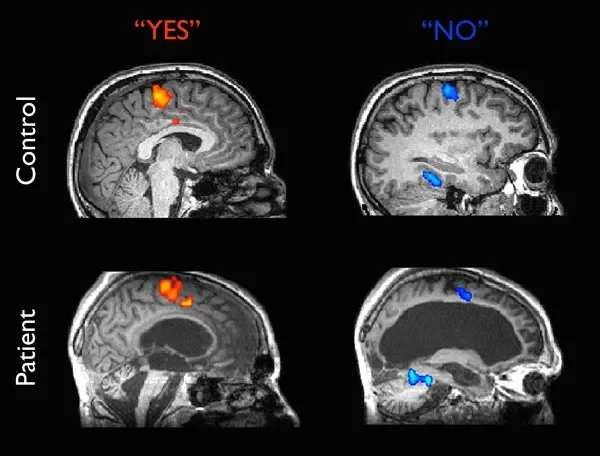
A small but measurable number of patients have demonstrated the ability to willfully control their brain activity to answer simple yes/no questions, interpreted via brain scans. Communicate Via Brain Imaging
The concept of 'cognitive motor dissociation' is also gaining traction, suggesting that some patients may have intact cognition but a severely impaired ability to physically express it, leaving them appearing unresponsive. Cognitive Motor Dissociation
Redefining the 'Vegetative State'
Historically, the persistent vegetative state has been characterized as "wakefulness without awareness," a condition where patients exhibit sleep-wake cycles and open their eyes but are presumed to lack any internal experience or understanding of their surroundings. However, this rigid definition is increasingly being questioned.
Read More: FDA Approves Wegovy for Liver Disease with Scarring

For decades, the prevailing medical understanding assumed a complete lack of self-awareness or environmental perception in vegetative patients. Beyond Outward Signs
This research implies that the binary classification of 'conscious' versus 'unconscious' may be insufficient, with a spectrum of awareness potentially existing. Spectrum of Awareness
The possibility arises that thousands of patients, previously overlooked, might possess a hidden consciousness. Hidden Consciousness
Ethical and Clinical Implications
The potential for covert awareness in vegetative patients raises profound ethical considerations regarding their well-being and human rights, as well as prompting a re-evaluation of diagnostic practices and treatment approaches.
Determining the "well-being" of such individuals presents significant challenges, given their inability to articulate their own experiences or preferences. Well-Being Challenges
Some experts argue that current diagnostic frameworks, heavily reliant on observable behaviors, may be inadequate and potentially violate patients' rights by assuming a complete absence of mental life. Human Rights Violation
Future advancements could lead to technologies that enable these patients to interact with the outside world, bridging the gap between their internal state and external communication. Future Interaction Possibilities
Background and Evolving Understanding
The scientific and medical community has grappled with disorders of consciousness for many years. Early diagnostic criteria focused on overt responsiveness, leading to broad categorizations that did not account for subtler forms of awareness.
Differentiating between conditions such as coma, vegetative state, and minimally conscious state has always been a complex clinical challenge. Distinguishing States
Early studies, like those published in the New England Journal of Medicine in the mid-1990s, laid groundwork in understanding the medical aspects of the persistent vegetative state. Early NEJM Research
Research from the mid-2010s began to highlight the possibility that some patients, despite fulfilling the criteria for a vegetative state, exhibited brain activity consistent with consciousness, sparking debate and further investigation. Early fMRI Findings