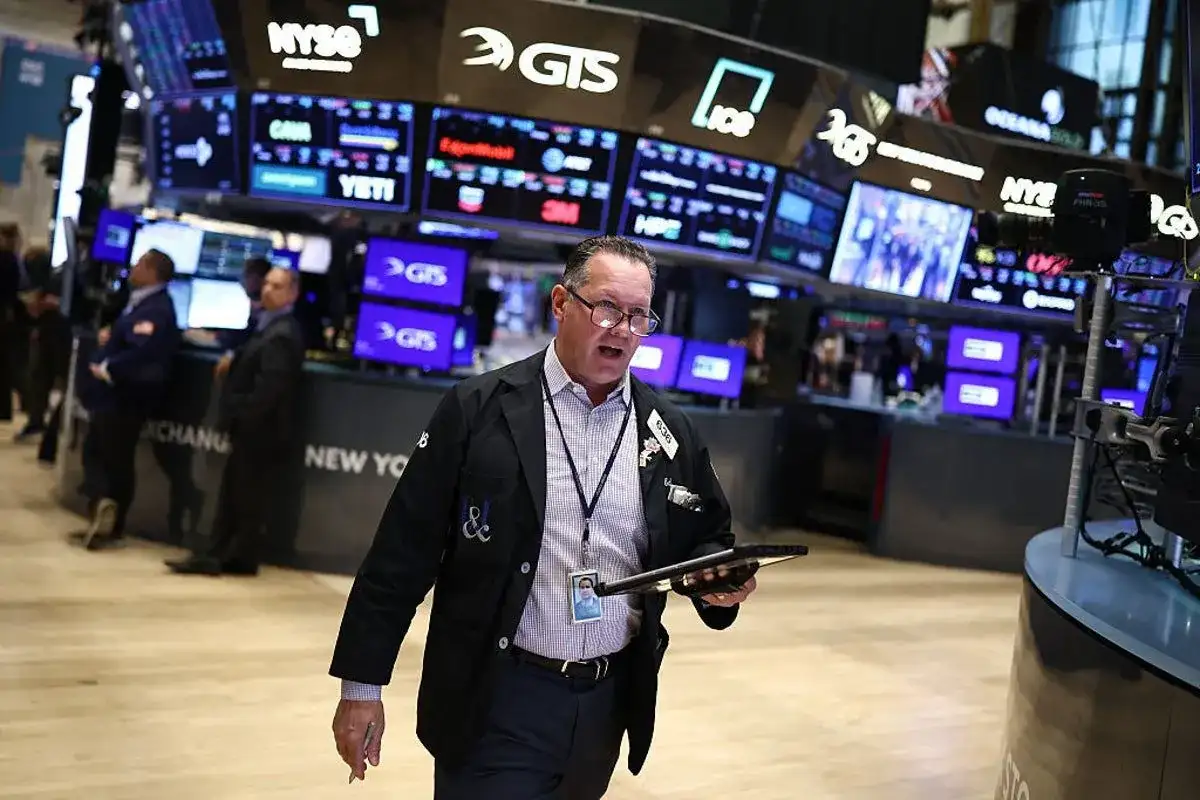
US stock markets experienced a significant upward swing on Wednesday, with the Dow Jones Industrial Average closing on a historic note. This rally followed the announcement Tuesday evening of a two-week ceasefire deal between the United States and Iran, a development that appears to have assuaged immediate fears of prolonged disruption to global energy supplies. The ceasefire, brokered by President Donald Trump, has led to a notable drop in crude oil prices, a trend expected to offer relief to consumers facing elevated gas prices.

The markets' swift positive reaction hinges on the perceived resumption of energy flows through the Strait of Hormuz, a critical global shipping lane. The temporary pause in conflict is seen by investors as a potential precursor to stabilizing oil markets and easing inflationary pressures that have been a growing concern. Travel-related stocks, in particular, have seen a surge in buying interest, suggesting a broader optimism about economic normalization.
Read More: Gunzilla Games Employees Report Months of Unpaid Wages

However, beneath the surface of this rally, a persistent uncertainty remains. Despite Wednesday's rebound, stock prices have not yet fully recovered to pre-conflict levels. This indicates that the underlying instability caused by the conflict, even with a temporary truce, continues to cast a long shadow.

The situation leading up to the ceasefire was characterized by significant investor anxiety. Markets were described as being "on tenterhooks," oscillating between hopes for a swift resolution and fears of a substantial escalation that could send oil prices and bond yields soaring. Analysts cautioned that even a diplomatic breakthrough might not offer immediate market relief, with predictions of continued sharp swings as narratives evolve.
Prior to the ceasefire announcement, the conflict had already fueled global inflation spikes, with warnings that further escalation could trigger a "growth shock" leading to "demand destruction and outright stagflation." Concerns about rising government bond yields and their impact on financial conditions were also prominent, with some strategists noting that bond markets were already repricing government notes to reflect a deteriorating inflation outlook.
President Trump had previously issued ultimatums regarding the reopening of the Strait of Hormuz, and had repeatedly extended deadlines for Iran. This backdrop of escalating threats, juxtaposed with intermittent signals of potential negotiation, created a volatile trading environment. Even as US stocks advanced on Monday, the S&P 500 remained down nearly 4 percent since the conflict began, underscoring the market's sensitivity to the ongoing geopolitical tensions. The public sentiment also reflected unease, with a significant percentage of Americans reportedly disapproving of the handling of the Iran war.
The temporary truce announcement on Tuesday evening also led traders to slightly increase their wagers on a potential Federal Reserve interest-rate cut later this year. The markets' current performance, while historically significant on Wednesday, reflects a complex interplay of immediate relief and lingering apprehension, demonstrating a continued sensitivity to geopolitical headlines.
Read More: Nvidia Stock Rises as UAE Agrees to Invest in US for Chip Exports