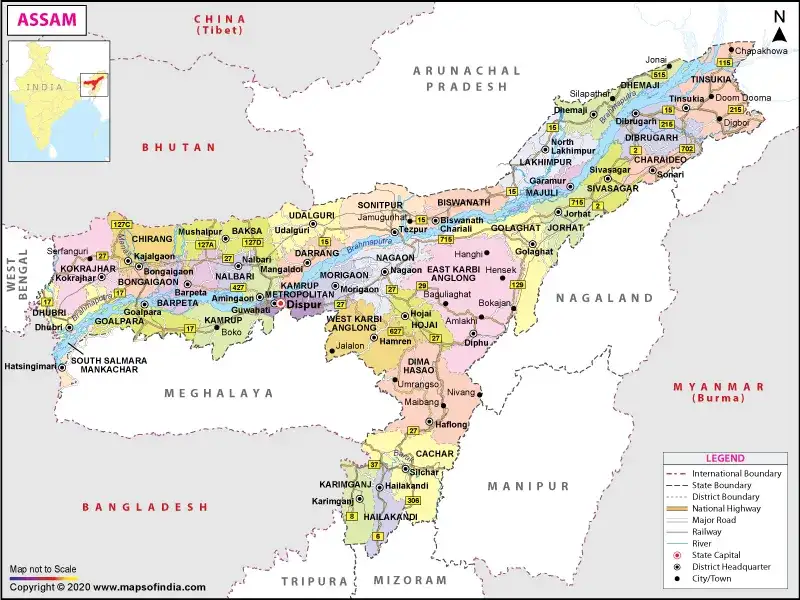
Dipali Das, a 59-year-old resident of Cachar, Assam, has become the first individual previously declared a foreigner and held in a detention facility to be granted Indian citizenship under the Citizenship Amendment Act (CAA). Her status shifted from a "suspected illegal migrant" to a legal citizen after authorities accepted the same documentation—once used to charge her—as evidence for her eligibility under the CAA’s provisions.

Timeline of Events:
2019: Das was declared a foreigner by a tribunal and detained in the Silchar facility on May 10.
2021: Released on bail following a Supreme Court intervention.
2026: Formally awarded Indian citizenship certificate on March 6.
Administrative Shift: The documents identifying her origin in the Sylhet district of Bangladesh, which were initially utilized by the state to prove her "illegal entry" after the 1971 cut-off, served as the bedrock for her successful citizenship application.
The Procedural Paradox
The case highlights an emerging, if awkward, convergence between India's punitive detention machinery and the remedial pathways opened by the Citizenship Amendment Act. By accepting a foreigner’s chargesheet as proof of eligibility, the state has effectively transformed a tool of deportation into a mechanism for naturalization.

| Status Phase | Legal Categorization | Institutional Outcome |
|---|---|---|
| Pre-2019 | Suspected Foreigner | Tribunal Inquiry |
| 2019-2021 | Declared Foreigner | Silchar Detention |
| 2026 | Eligible Applicant | Citizenship Granted |
Context and Implications
For Dipali Das, the citizenship certificate offers an end to years of precarious legal existence. Her three children, all born in India, now possess a direct legal precedent to secure their own documentation should their status face scrutiny.
Read More: Assam Cabinet Adds New Ministers, Excludes Party Switchers

While this marks a milestone for the implementation of the CAA in the Northeast, the broader landscape remains contested. The act itself continues to face intense friction from civil society groups and political entities. Critics argue the law introduces a structural bias, predicated on religious identity, which creates unequal tiers of belonging within the national fabric.
The Assam detention system, which still operates under the classification of "transit camps," currently holds thousands of individuals whose fates are now being navigated through the intersection of tribunal mandates and these new federal pathways.