Obscured Illumination Signals Advanced Structures
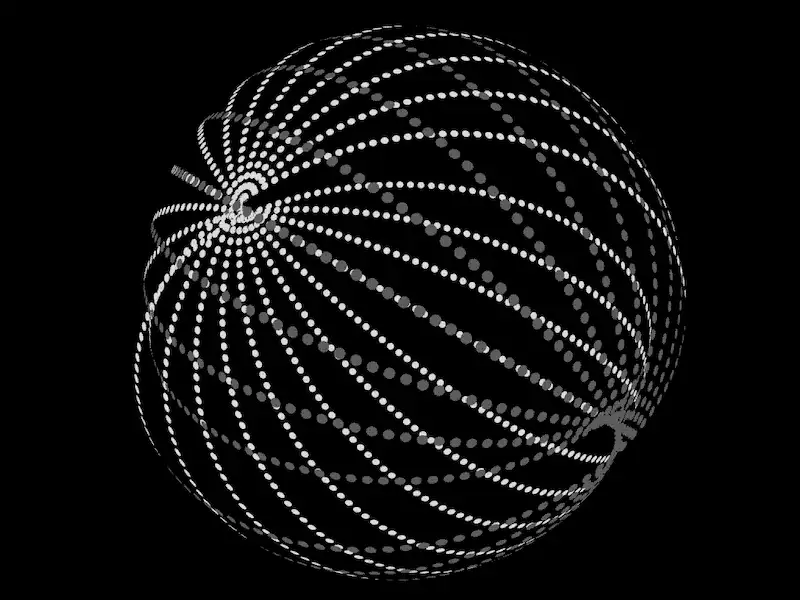
The most striking possibility emerging from recent astronomical observations is that some of the galaxy's dimmest "stars" might not be stellar at all, but rather massive constructs built by advanced alien civilizations. Research spearheaded by Amirnezam Amiri at the University of Arkansas proposes that Dyson spheres—hypothetical megastructures designed to encapsulate a star and harness its full energy output—could be responsible for the unusual light signatures observed. These structures, or more plausibly, swarms of components, are theorized to be most detectable around low-luminosity stars like red dwarfs and white dwarfs. Their smaller size and reduced energy output, relative to larger stars, theoretically make them more practical targets for such immense engineering feats.
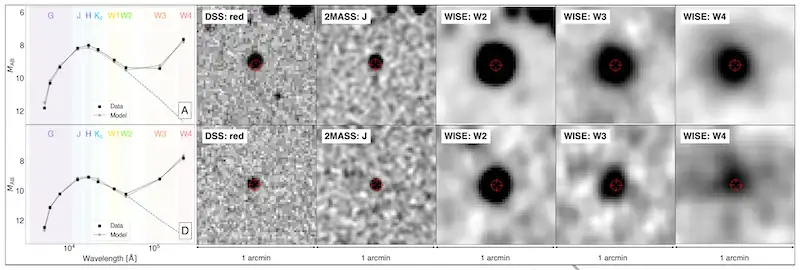
The core insight is that unusual infrared emissions from otherwise dim stellar objects could be the by-product of vast alien engineering, specifically Dyson swarms. The study focuses on stars that exhibit an excess of infrared radiation, a characteristic that suggests a heat source not readily explained by natural stellar processes. This excess light, shifting from the visible spectrum to infrared, is a key 'technosignature' being sought.
Seeking Signs in Dimmer Stars
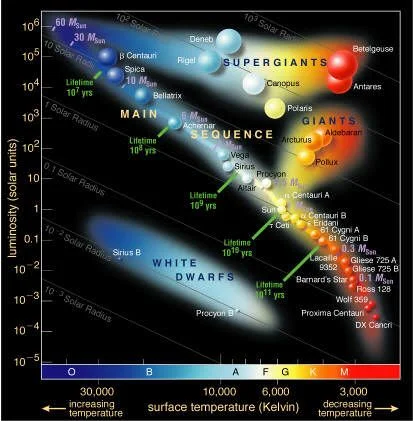
The rationale behind focusing on dimmer stars, such as M-dwarfs—dubbed "the universe's introverts"—is rooted in the mechanics of energy capture. A cooler star's radiation is more heavily concentrated in the infrared spectrum, making the heat signature of a surrounding Dyson swarm potentially more pronounced and easier to distinguish from the star's natural output. The idea is that while a star's energy cannot be entirely hidden, its emission pattern can be altered by an enclosing structure.
Read More: JWST Finds Oldest Barred Spiral Galaxy M1149-BSG-z5

A Catalogue of Anomalies
This line of inquiry has already yielded potential candidates. One team has identified seven promising star systems that defy easy natural explanation. These systems are characterized by unusual glows that are not dusty, not variable in brightness, not indicative of young stars, and lack other obvious natural causes for their excess radiance. Beyond these initial findings, a broader search encompassing millions of stars has flagged up to 60 potential Dyson sphere candidates. These candidates range from red dwarfs to larger, Sun-like stars, with some located as far as 6,500 light-years away. The common thread among these detected anomalies is an observed excess of infrared radiation.
The Dyson Hypothesis
The concept of the Dyson sphere, first posited by physicist Freeman Dyson in 1960, remains a cornerstone in the search for extraterrestrial intelligence (SETI). While a complete, solid sphere is considered physically improbable, the modern interpretation favors a "swarm" of orbiting components. Such a swarm could be built incrementally by an advanced civilization to maximize energy capture from their host star, thereby generating a detectable infrared signature distinct from the star itself.
Read More: Indigenous Data Rights Now Key in Conservation Genomics
Contextualizing the Search
The methodology relies heavily on comprehensive infrared surveys. Initial wide-field infrared maps are used to pinpoint unusual sources, which are then subjected to more detailed scrutiny by capable infrared instruments. This approach leverages the fact that cooler objects radiate more heat, making infrared observation crucial for detecting phenomena that might be invisible in other wavelengths. The research emphasizes that while natural explanations are always considered, the persistent anomalies around certain dim stars warrant exploration through the lens of advanced extraterrestrial engineering.