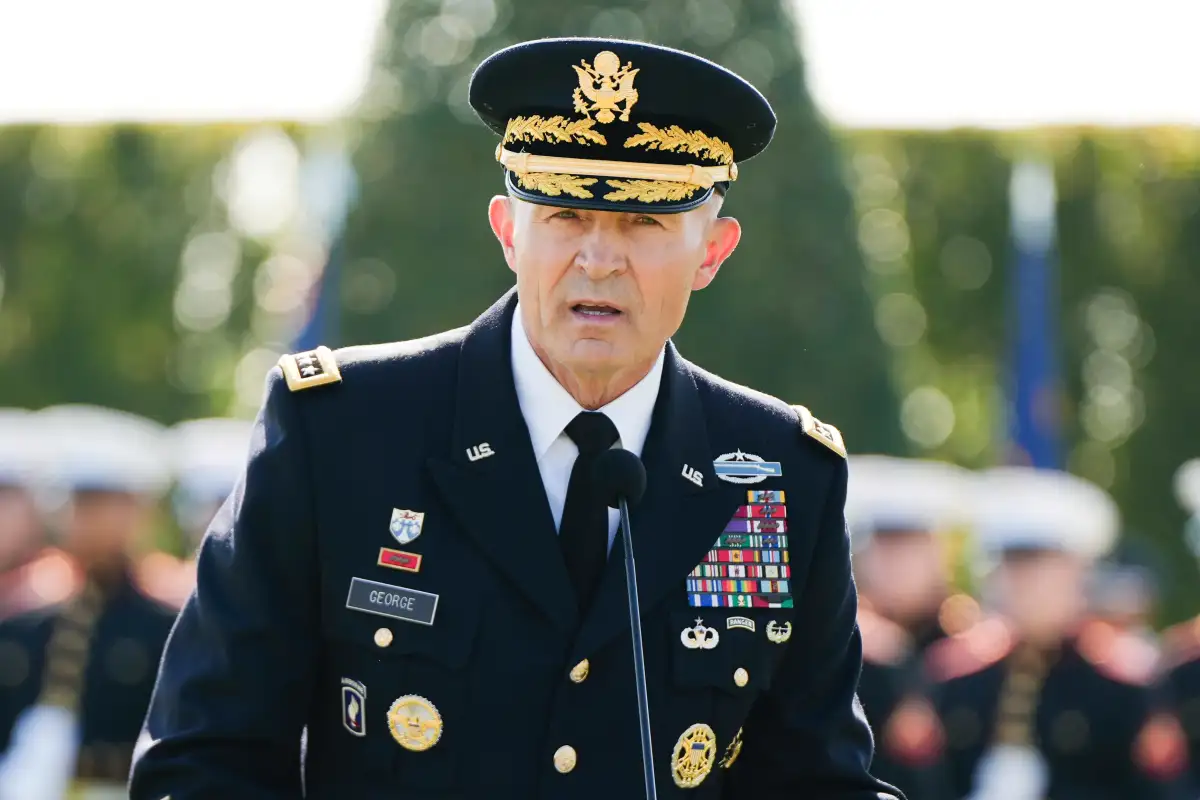
Defense Secretary Pete Hegseth has formally requested the resignation of Army Chief of Staff General Randy George, effective immediately. The Pentagon confirmed the departure Thursday without citing specific disciplinary grounds, though reports indicate the move aligns with the administration's stated intent to secure leadership capable of implementing a new strategic vision for the military.
General Christopher LaNeve has been tapped to serve as the acting Army Chief of Staff. LaNeve, formerly a commander of the Eighth Army in South Korea, recently served as Hegseth’s top military aide.
| Key Personnel Change | Status |
|---|---|
| Gen. Randy George | Requested to resign / Immediate retirement |
| Gen. Christopher LaNeve | Appointed Acting Army Chief of Staff |
The transition occurs against the backdrop of the ongoing US-Iran conflict.
Patterns of Structural Reorganization
The removal of George is not an isolated incident but part of an accelerated cycle of Military Personnel turnover under Hegseth’s tenure. The Department of Defense has seen a consistent shedding of established uniformed leadership. Notable recent exits include:
Read More: Tulsi Gabbard's Job as Intelligence Chief Questioned Amid Iran Policy Differences
Gen. CQ Brown, Chairman of the Joint Chiefs of Staff.
Adm. Lisa Franchetti, Chief of Naval Operations.
Gen. James Slife, Air Force Vice Chief of Staff.
The rapid elevation of LaNeve—who rose from a two-star general to his current prominence in approximately two years—reflects a departure from traditional promotion cycles in favor of direct loyalty and ideological alignment with the current administration.
Contextual Background
General Randy George, a West Point graduate and career infantry officer, brought extensive combat experience to the role, having served in the Gulf War, Iraq, and Afghanistan. His departure terminates a tenure defined by his oversight of the Army’s administrative and combat-ready posture.
The rationale provided by the Defense Department remains vague: the administration frames this as a search for a commander who "can better implement the president’s vision." In the sphere of political science, this language is frequently coded for the centralization of executive control over historically autonomous bureaucratic military structures. As the Executive Authority continues to excise legacy command, the military hierarchy moves toward a configuration of total alignment with the executive branch, marking a significant rupture in the established norms of civilian-military relations.
Read More: Defense Secretary Removes 4 Officers From Promotion List in Washington D.C.