Director of National Intelligence Tulsi Gabbard finds herself in a precarious position, with reports indicating friction within the Trump administration over her stance on the burgeoning conflict in Iran and subsequent questions about her loyalty and efficacy. Despite President Trump reportedly endorsing her continued tenure, administration officials acknowledge a complex landscape, with some advocating for her replacement.

Sources suggest that figures like Secretary of State Marco Rubio and Vice President JD Vance have publicly voiced support for Gabbard, characterizing her as a valuable member of the national security team. These reassurances stand in contrast to circulating narratives suggesting her marginalization from key discussions, particularly those concerning the escalating situation in Iran and Israel. Gabbard's recent presence at the White House and apparent consistent praise from the President are cited by officials as evidence against her being "on the outs."
Read More: Kash Patel FBI Director Faces Lawsuit and Ouster Rumors in Washington DC

However, these accounts are juxtaposed with reports of Gabbard being sidelined in crucial discussions regarding the Israel-Iran conflict. Her prior criticisms of U.S. military engagements abroad, combined with recent public statements and President Trump's own reactions, are said to have placed senior administration officials in a challenging situation. This perceived divergence on Iran policy has led to speculation about her future in the administration, with some suggesting her position may be contingent on the unfolding of the Iran crisis.

Further complicating matters is the winding down of the 'Director's Initiatives Group' (DIG), a task force Gabbard established with the stated aim of "depoliticizing intelligence agencies." News reports confirm the closure of this unit, with some sources attributing it to alleged missteps and a perception that it was used to pursue political agendas. A spokesperson for Gabbard's office has denied any impropriety regarding the DIG's dissolution.
Read More: India Warns Pakistan of Decisive Action Amidst West Asia Tensions
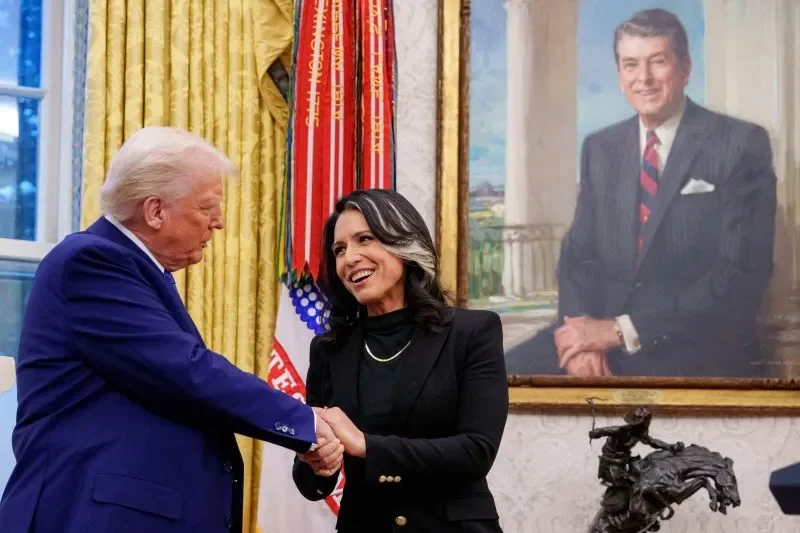
The narrative surrounding Gabbard presents a bifurcated image: to supporters, she is seen as a fervent advocate combating deep-seated corruption within intelligence structures, while critics view her as an overly zealous figure whose pursuit of the President's agenda compromises the apolitical nature of intelligence work. This duality is evident in her public appearances, including regular segments on Fox News, and her perceived proximity to the President, often highlighted in White House accounts.
The broader context of Gabbard's appointment and current standing involves an apparent ideological chasm between her and President Trump on matters of foreign intervention. While the President appears to be aligning with Israel in its confrontation with Iran, Gabbard's past critiques of military action and her insistence on alignment with the President on Iran present a nuanced dynamic. Her role in administration discussions has been a subject of scrutiny, particularly following a public rebuke from Trump regarding her perspective on Iran.
Read More: House Leaders Stop Vote on Releasing Epstein Documents in Washington D.C.
Gabbard's tenure as Director of National Intelligence has been marked by intense public discourse, with her approach to intelligence gathering and foreign policy serving as a focal point of debate, particularly in the context of international conflicts. Her ability to navigate these internal pressures and external criticisms remains a central element of the ongoing political narrative.