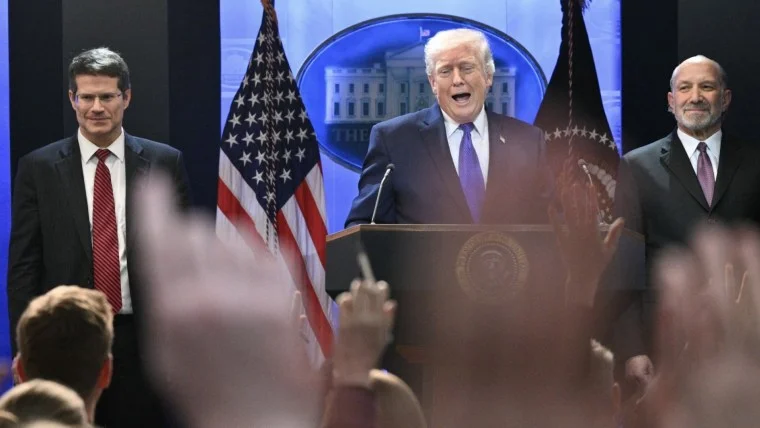
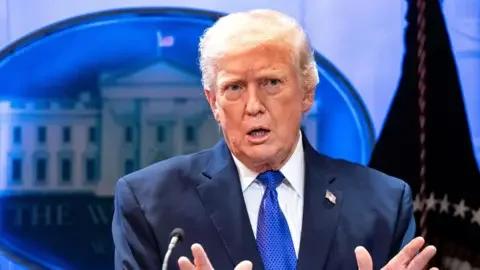
The recent Supreme Court ruling has placed Republican leaders in a difficult position regarding President Trump's tariffs. The decision, which struck down a significant portion of these tariffs, creates a conflict between party unity and the need to address a policy that has divided Republicans. This situation forces elected officials to choose between aligning with the President, whose support is crucial for upcoming elections, and appeasing constituents or factions within the party who may oppose the tariffs. The outcome of this internal debate could have lasting effects on trade policy and Republican leadership.
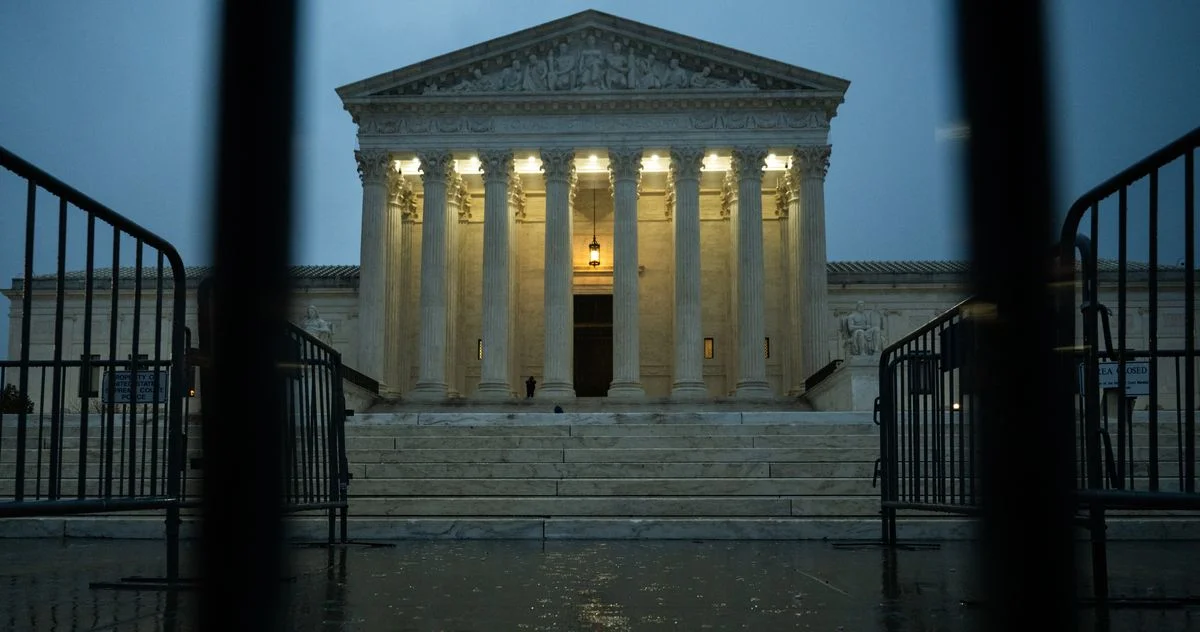
Political Fallout from Tariff Ruling
The Supreme Court's decision on President Trump's tariffs has triggered immediate political repercussions, particularly for Republican leaders. The ruling has amplified a pre-existing division within the party concerning trade policy. This internal conflict is now more prominent, as any future votes on tariffs will require concrete legislative action rather than being purely symbolic.
Read More: Congress Says India-US Trade Deal Hurts India Due to US Tariffs
Republican leaders like Speaker Mike Johnson and Senate Majority Leader John Thune are now tasked with navigating this contentious issue.
The ruling forces Congress to decide whether to reinstate the President's tariffs through legislation.
This presents a dilemma for Republicans, who must balance the need to support the President, especially with mid-term elections approaching, against the potential impact on their own elected officials and narrow party majorities.
President Trump's Reaction and Subsequent Actions
President Trump has publicly expressed strong disapproval of the Supreme Court's decision to invalidate his tariffs. This reaction has led to renewed scrutiny of his use of executive authority and his relationship with the judiciary.
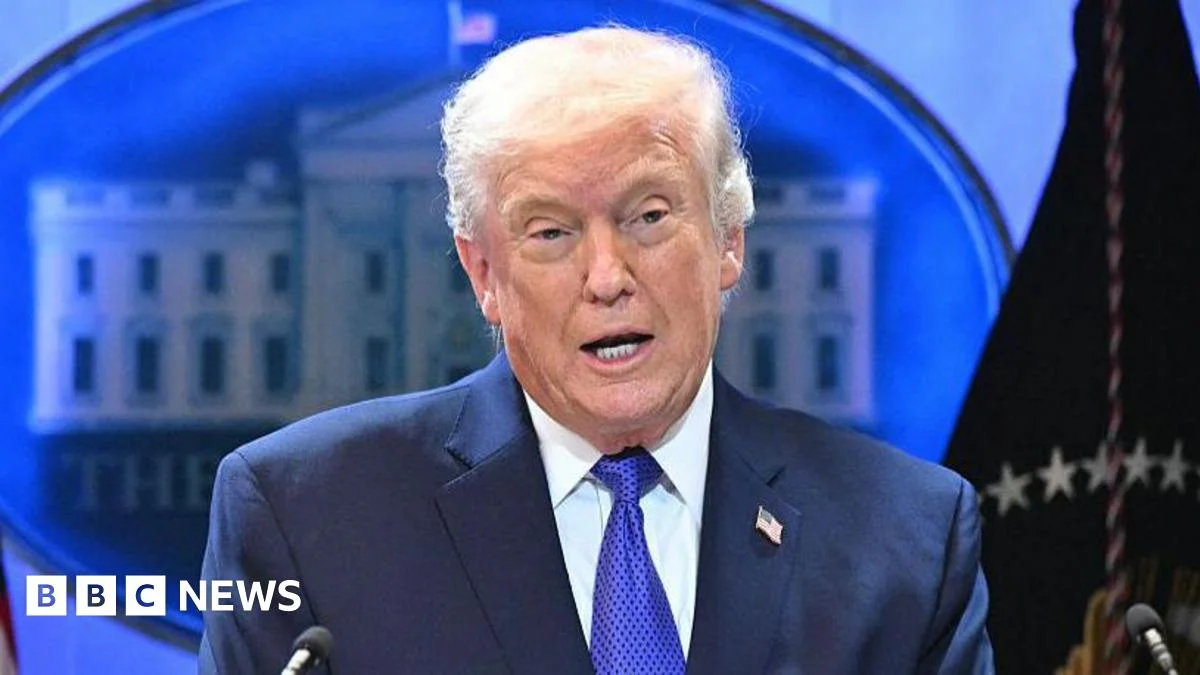
Following the ruling, President Trump declared he would pursue alternative legal avenues to implement tariffs.
He was notably critical of the justices who ruled against him, though he praised those who supported his position.
On February 21, 2026, President Trump announced an increase in global tariffs to 15%, a move that followed the Supreme Court's decision and invoked a specific law under the 1974 Trade Act. This law allows for tariffs up to 15% for a 150-day period, after which Congress must intervene.
Congressional and International Responses
The Supreme Court's decision has drawn varied reactions from Congress and international observers, highlighting the policy's divisiveness.
Congressional Democrats largely welcomed the ruling, with some characterizing the tariffs as illegal. They see the decision as a check on executive power.
Some Republicans, including those who opposed the tariffs, have also expressed support for the Supreme Court's decision. For instance, Representative [Name Withheld] faced political consequences after voting against Trump's tariffs, including the rescission of President Trump's endorsement.
International allies, such as German Chancellor Friedrich Merz, have voiced concerns about the uncertainty created by these tariff fluctuations and their impact on the global economy.
Legal Basis and Court's Reasoning
The Supreme Court's ruling centered on the President's authority to impose tariffs under emergency economic laws. The Court determined that Congress, not the President, holds the power to levy tariffs.
The decision was a 6-3 ruling, with three justices appointed by President Trump voting to uphold his tariff authority.
The Court found that President Trump had exceeded his powers by using an emergency law to impose these tariffs.
The legal challenge was based on the argument that the Constitution grants Congress the authority to levy tariffs, and President Trump's use of emergency powers circumvented this.
Expert Analysis on Executive Power and Judicial Independence
Legal experts and commentators have analyzed the Supreme Court's decision in the context of executive authority and the balance of power between branches of government.
Some observers note that the ruling represents a rare instance of the Supreme Court limiting the President's expansive use of executive authority.
Concerns have been raised about the implications for judicial independence, with some critics suggesting that certain court decisions have granted broad powers to the executive branch, potentially leaving citizens with limited recourse against unconstitutional actions.
The decision has been framed as a significant moment, particularly given the conservative majority on the Court, including justices appointed by President Trump.
Conclusion and Future Implications
The Supreme Court's decision has created a complex political and legal landscape for President Trump and Republican leaders. The ruling has underscored the constitutional division of power regarding trade policy and has forced a reckoning within the Republican party.
Read More: Supreme Court Divisions Grow as Trump Administration Faces Rulings
President Trump's immediate response involved announcing new tariffs, signaling his intent to continue pursuing his trade agenda through alternative legal means.
Republican leaders now face the challenge of managing internal party divisions and determining legislative action on tariffs, with potential implications for their electoral prospects.
The decision highlights the ongoing tension between presidential power and congressional authority, a theme that is likely to persist in future policy debates.
Sources
NPR: Published 1 day ago. Source discusses President Trump's reaction to the Supreme Court's tariff decision and its impact on imports. Link: https://www.npr.org/2026/02/21/g-s1-110961/supreme-court-tariffs
US News: Published 1 day ago. Source examines how the Supreme Court ruling offers limited relief for Republicans divided on President Trump's tariffs and notes political consequences for a congressman. Link: https://www.usnews.com/news/us/articles/2026-02/21/supreme-court-ruling-offers-little-relief-for-republicans-divided-on-trumps-tariffs
New York Magazine: Published 1 day ago. Source provides an overview of the Supreme Court striking down President Trump's tariffs, detailing his authority and potential for refunds. Link: https://nymag.com/intelligencer/article/supreme-courts-trump-tariffs-live-updates-reaction-analysis.html
Newsweek: Published 2 days ago. Source details the MAGA response to the Supreme Court's tariff decision, noting the 6-3 ruling and the need for alternative measures. Link: https://www.newsweek.com/maga-responds-supreme-court-tariff-decision-11555958
BBC News: Published 13 hours ago. Source reports on President Trump raising global tariffs to 15% the day after the Supreme Court ruling, invoking a seldom-used law. Link: https://www.bbc.com/news/live/c0l9r67drg7t
Raw Story: Published 1 day ago. Source suggests the conservative Supreme Court has "trapped" top Republicans by forcing them to confront party divides over trade policy due to the tariff ruling. Link: https://www.rawstory.com/trump-tariffs-2675289816/
BBC News: Published "Published". Source describes the tariffs ruling as a major blow to President Trump's second-term agenda, emphasizing the Supreme Court's check on executive authority. Link: https://www.bbc.com/news/articles/cx2jqgdn719o
CNBC: Published 2 days ago. Source highlights Democrats rejoicing at the Supreme Court's rebuke of President Trump's tariffs, while Republicans remain divided. Link: https://www.cnbc.com/2026/02/20/congress-scotus-trump-tariffs.html
BBC News: Published 1 day ago. Source covers President Trump's strong criticism of Supreme Court justices following the ruling that denied him authority to impose sweeping tariffs. Link: https://www.bbc.com/news/articles/cd9g0e7zd8wo
BBC News: Published 1 day ago. Source reports on President Trump introducing a new 10% tariff after the Supreme Court rejected his global import taxes, citing his intent to use other laws. Link: https://www.bbc.com/news/articles/cn8146l0n55o
Demand Justice: Published June 27, 2025. Source argues that specific Supreme Court justices have limited federal courts' ability to protect Americans from executive overreach, particularly concerning President Trump's actions. Link: https://demandjustice.org/maga-scotus-justices-effectively-eliminate-ability-of-federal-courts-to-defend-americans-from-trumps-attacks-on-our-rights/