Ocean's Grasp Extends 200 Kilometers Offshore
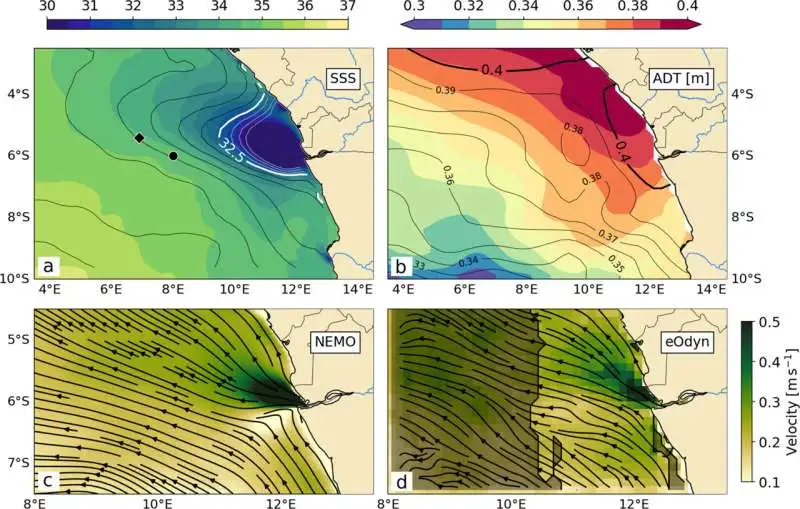
Recent observations and modeling reveal an extraordinary phenomenon: freshwater discharged from the Congo River, the planet's second-largest river, is being carried significant distances into the Atlantic Ocean by swirling ocean currents. Specifically, a powerful ocean eddy was observed to trap a substantial amount of this low-salinity water, transporting it approximately 200 kilometers (120 miles) offshore before it dissipated. This event, noted in March and April, highlights the complex interplay between riverine outflow and oceanic dynamics.
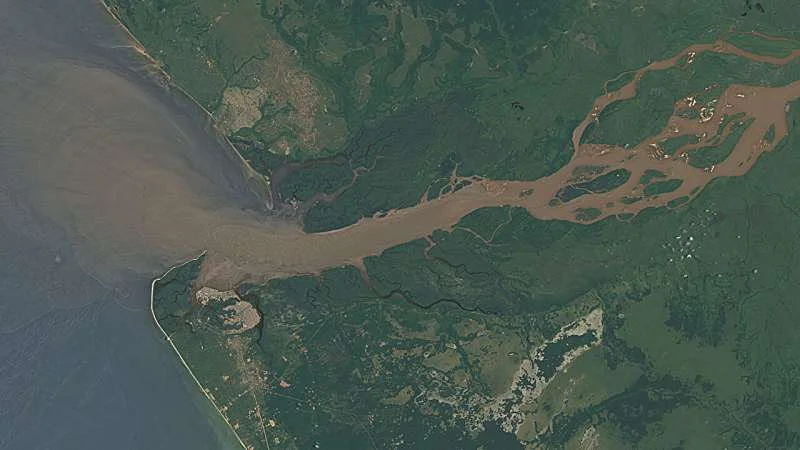
The Congo River's immense volume, estimated at an average of 40,000 cubic meters per second, creates a vast freshwater plume that typically extends up to 800 kilometers (500 miles) from the coast. Researchers utilized the NEMO ocean circulation model, a 3-kilometer resolution system, to simulate the river's discharge and track the movement of its freshwater. Particle-tracking experiments within these simulations helped elucidate the origins of the water caught in these eddies, providing insights into how river water integrates into the broader Atlantic system.
Read More: Indigenous Data Rights Now Key in Conservation Genomics
Eddy Dynamics and Plume Behavior
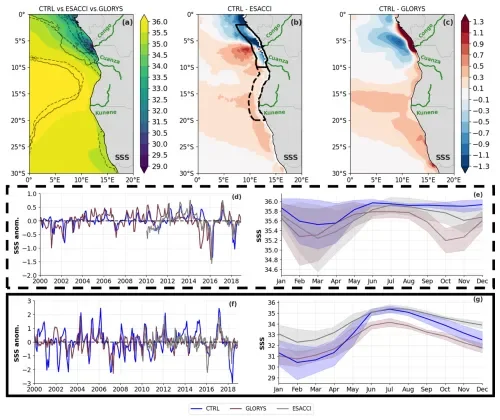
These findings underscore the significant role of mesoscale eddies, like the one observed, in the exchange of water between coastal zones and the open ocean. The study also notes that the formation and behavior of these near-equatorial river plumes, termed NERPs, are sensitive to various factors. These include alterations in the river mouth's shape, the seafloor topography, and crucially, the volume of freshwater outflow. A larger freshwater discharge, as seen with the Congo River, is directly correlated with the generation of proportionally larger and potentially more influential eddies.
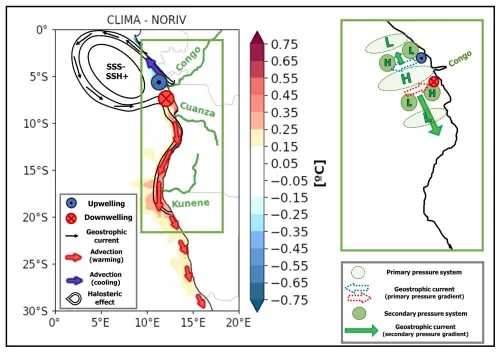
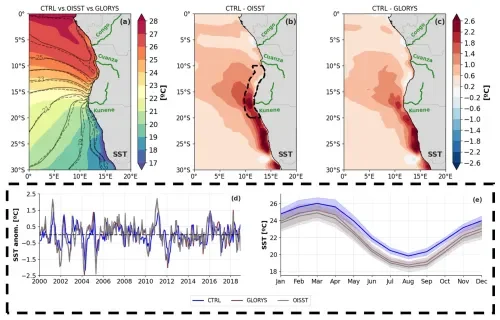
While the primary focus is on the physical transport of freshwater, other research touches upon related aspects. Studies have investigated the vertical structure of salinity near the Congo River plume and its seasonal variations. Furthermore, research on trace metal fluxes from the Congo River into the South Atlantic suggests that atmospheric inputs also contribute to the overall chemical composition of this marine environment. The influence of river discharge on sea surface temperature and broader circulation patterns in the southeastern tropical Atlantic has also been a subject of model-based analysis.
Read More: Amazon Land Use Changes Cause Disease Clusters in Brazil
Context: Equatorially Driven Oceanography
The Congo River, along with rivers like the Amazon, originates near the equator, a region characterized by substantial and consistent rainfall. This proximity to the equator and the resulting high river discharge rates contribute to the formation of these powerful near-equatorial river plumes. Understanding these plumes is critical, as they can have substantial effects on oceanographic processes, nutrient distribution, and potentially regional climate. The study emphasizes that while large freshwater fluxes are expected to influence ocean conditions, the precise mechanisms and extent of this influence are still being unraveled through ongoing research and modeling efforts.