The Unseen Chains in Old Photographs
Look closely at an old photograph from India, taken between 1855 and 1920. What do you see? Is it a simple snapshot of a person or a group? Or is it something far more complex, a carefully constructed image designed to define and control an entire population? The exhibition "Typecasting: Photographing the Peoples of India, 1855-1920" at DAG Delhi challenges us to ask these very questions. It unveils a collection of nearly 200 historical photographs, presenting them not as innocent portraits, but as powerful tools of colonial classification. These images, far from being neutral documents, actively shaped how people in India were seen, categorized, and ultimately, governed.
This exhibition forces a reckoning with how colonial photography wasn't just about capturing India, but about defining it, creating a visual language of "types" that served imperial interests.
Read More: St. Augustine's ideas on justice help explain US politics
The Camera as a Colonial Classification Machine
The period between 1855 and 1920 was a critical time in British India. The colonial administration was consolidating its power, and with it came a need to understand, categorize, and manage the vast and diverse population under its rule. Photography, a relatively new technology, offered an unprecedented way to achieve this.
Early State-Sponsored Projects: The exhibition highlights how photography was used in state-sponsored projects, aiming to document the "peoples of India." This wasn't about celebrating diversity; it was about creating a taxonomy of subjects.
The Rise of Anthropology: Simultaneously, the burgeoning field of anthropology provided a scientific framework for this classification. Photographs became crucial evidence for theories about race, caste, and social hierarchies.
Defining by Occupation and Appearance: Images were meticulously organized around themes like "Trade, Caste and Occupation." This meant people were reduced to their jobs – coolies, barbers, snake charmers – or their perceived social standing.
Thematic Segment Colonial Purpose The Peoples of India State-sponsored documentation to create a comprehensive visual archive of India's diverse populations. Tribe, Community & Anthropology To support anthropological studies and theories, often reinforcing existing prejudices about so-called "primitive" or "exotic" groups. Trade, Caste & Occupation To visually classify individuals based on their profession, reinforcing social stratification and labor categories within the colonial economic system. Beauties and Dancing Girls To cater to Western Orientalist fantasies, objectifying women and performance for colonial consumption, and shaping perceptions of Indian femininity and exoticism.
This deliberate act of "typecasting" sought to freeze people into fixed categories, making them seem more manageable and understandable to the colonial gaze. But what happens when these "types" are so rigidly defined that they obscure the actual lived realities of individuals?
More Than Just Pictures: The Creation of "Types"
The exhibition delves into how these photographs weren't just passively documenting; they were actively creating what were perceived as authentic Indian "types." Labels like "Hindu Woman," "Tamil Lady," or "Group of Kashmiri Females" stripped individuals of their unique identities, subsuming them into broad, often stereotypical, classifications.
Read More: Banana Art Stolen From French Museum, Replaced Quickly

Postcards of Exoticism: The circulation of postcards featuring figures like "Miss Jomti of Mussoorie" and "Miss Gauhar Jaan" served a dual purpose. They were a form of colonial entertainment, feeding British fantasies about Indian women, while simultaneously reinforcing a specific, often sexualized, image of Indian femininity.
The Power of the Label: The accompanying labels were not neutral descriptions. They were imbued with colonial assumptions and biases. A photograph of a woman could be labeled simply as a "dancing girl" without any context of her profession, her artistry, or her personal life.
The act of labeling was as crucial as the act of photographing in constructing colonial typologies.
This raises a critical question: How much of what we understand about historical Indian communities is based on their own self-representation, and how much is a product of this colonial photographic project? Did these images reflect reality, or did they create a reality that served the colonizer?
From "Tribes" to "Beauties": A Taxonomy of Control
The exhibition's structure, divided into thematic segments, reveals the deliberate intent behind the colonial photographic enterprise. It was a systematic effort to understand and order the Indian subcontinent according to imperial needs.
The "Peoples of India" Project: This state-sponsored initiative was an early attempt to create a visual encyclopedia of India's inhabitants. But whose eyes were guiding this documentation? What biases shaped what was considered important to capture?
Anthropology's Role: The exhibition showcases images linked to the rise of anthropology, an academic discipline that, at the time, often served to justify colonial rule by framing colonized peoples as inherently different and often inferior. Photography provided the visual "proof" for these theories.
Focus on "Beauties and Dancing Girls": This segment, while perhaps appealing on a surface level, is a stark example of the colonial gaze objectifying and exoticizing Indian women. It reduced complex human beings to figures of entertainment or curiosities, perpetuating harmful stereotypes.
Consider the Afridis of Sind in the northwest, the Lepcha and Bhutia tribes of the northeast, and the Todas of the Nilgiris in the south. Were these communities photographed to understand their unique cultures, or to mark their territories and assess their "otherness" from a colonial perspective? What stories did these communities themselves have to tell about their own lives that are lost in these meticulously framed colonial portraits?
Read More: The Plot Against America Miniseries Discussed in April 2026
Reclaiming the Narrative: A Decolonial Imperative
The exhibition "Typecasting" is more than just a display of old photographs; it's an invitation to deconstruct them. It prompts us to move beyond the surface and question the very foundations of how these images were created and what they represent.

Challenging Colonial Frames: As highlighted in discussions around decolonizing design (Article 4) and geographies (Article 6), there's a critical need to "undo the privileging of non-Indigenous settler ways of knowing" and to "decenter colonial frames of knowledge." This exhibition is a visual manifestation of that very process.
The Contentious Legacy: The summary notes that the exhibition addresses the "contentious legacy" of colonial ethnographic photography. This legacy isn't just about the past; it continues to influence how we perceive different cultures and communities today.
Self-Determination in Representation: Critical Indigenous scholarship, for example, emphasizes the importance of "Indigenous peoples lived realities visible on their own terms as an expression of self-determination" (Article 6). This exhibition, by exposing the colonial project, can be seen as a step towards reclaiming that narrative.
By presenting these photographs critically, the exhibition empowers viewers to become active interpreters, rather than passive recipients, of colonial visual history.
What were the actual conversations happening within these communities at the time? What forms of resistance or adaptation were present that the colonial camera, focused on classification, failed or refused to capture? How do we move from being subjects of a colonial gaze to being active participants in shaping our own visual identities?
Conclusion: Beyond the Frame, Towards a New Understanding
"Typecasting: Photographing the Peoples of India, 1855-1920" is a vital exhibition that goes beyond mere historical display. It’s a critical examination of how visual tools were used to construct and reinforce power structures. The photographs, once seen as objective records, are revealed as deeply embedded within the colonial project of classification and control.
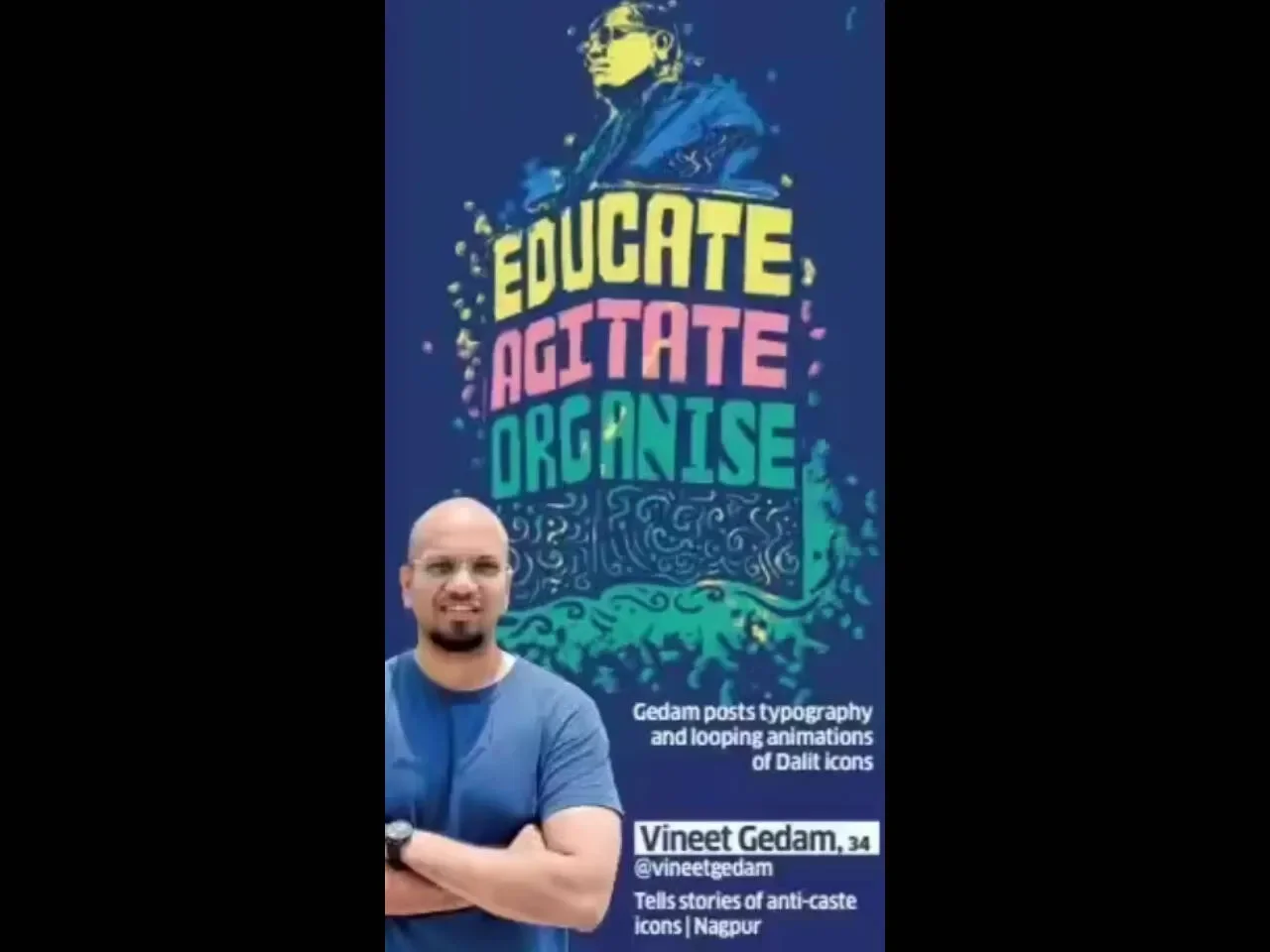
Read More: Indian artists use Instagram for anti-caste art
The exhibition asks us to interrogate:
The intention behind the camera: Was it to document or to define? To understand or to control?
The power of labeling: How did simple labels shape perceptions and erase individuality?
The enduring impact: How do these historical images continue to influence our understanding of Indian society and its diverse communities?
The act of "typecasting" was a subtle yet powerful form of colonial governance, shaping not only how India was viewed by the West but also, by extension, how Indians came to see themselves and each other.
As the exhibition closes, the questions it raises linger. It is a call to engage with our visual histories critically, to dismantle the colonial frames that still influence our perspectives, and to seek out the untold stories that lie beyond the carefully constructed narratives of the past. What new exhibitions, what new narratives, are needed to further deconstruct these colonial legacies and present a more nuanced and self-determined vision of India's past and present?
Sources:
Article 1: Exhibition Walkthrough | Typecasting: Photographing the Peoples of India, 1855-1920
Seen on: AOL
Link: https://dagworld.com/typecasting-exhibition-walkthrough.html
Article 2: This show puts colonial photography under lens
Published: 5 days ago
Link: https://www.tribuneindia.com/news/delhi/this-show-puts-colonial-photography-under-lens/
Article 3: Portrait of a people | DAG Delhi's 'Typecasting: Photographing the Peoples of India 1855-1920'
Published: 6 days ago
Article 4: What Does It Mean to Decolonize Design?
Published: Jun 5, 2019
Link: https://eyeondesign.aiga.org/what-does-it-mean-to-decolonize-design/
Article 5: History, Memory and Memorabilia: Kamala Dasgupta and the Politics of Remembering Revolutionary Bengal
Published: Oct 22, 2024
Link: https://www.tandfonline.com/doi/full/10.1080/09584935.2024.2413648
Article 6: Unsettling decolonizing geographies
Published: Jun 25, 2018
Link: https://compass.onlinelibrary.wiley.com/doi/10.1111/gec3.12376