Unraveling the Building Blocks of Life
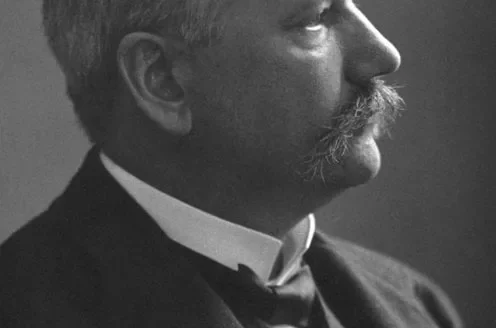
The early 20th century saw a significant advancement in understanding the fundamental chemical processes within living cells. A pivotal figure in this era was Albrecht Kossel, a German biochemist whose meticulous investigations into the components of cells earned him the Nobel Prize in Physiology or Medicine in 1910. His work illuminated the complex world of nucleic acids and proteins, laying essential groundwork for future discoveries in genetics and molecular biology.
Historical Context: A Shifting Scientific Landscape
Born in Rostock, Germany, in 1853, Albrecht Kossel’s scientific journey began in the late 19th century. He was influenced by his mentor, Hoppe-Seyler, who encouraged the chemical analysis of biological substances. This approach was instrumental as Kossel delved into the composition of cells, a field that was rapidly evolving.
Kossel graduated in medicine in 1878 from the German University in Strasbourg.
He worked in laboratories in Strasbourg and Berlin, developing his research skills.
In 1895, he became a professor at Marburg, and in 1901, he moved to a similar post at Heidelberg University, where he eventually directed the Institute for Protein Investigation.
His dedicated research spanned decades, from the 1880s onward, focusing on biologically vital substances.
Key Discoveries and Contributions
Kossel's most significant contributions revolved around the chemical makeup of nucleic acids and proteins, which are crucial components of cells.
Read More: New Light Copper Catalysts Make Chemical Reactions Easier
Identification of Nucleic Acid Bases: Kossel is credited with identifying and isolating the fundamental building blocks of nucleic acids, the molecules that carry genetic information. He distinguished between key bases, including adenine, cytosine, guanine, and thymine, and later uracil.
Study of Proteins: Beyond nucleic acids, Kossel also investigated cellular proteins, particularly histones and protamines. He isolated a protein from bird red blood cells that bound with nucleic acids, noting its distinct properties.
Laying the Foundation for Genetics: Although many scientists at the time believed proteins were more significant for heredity than nucleic acids, Kossel's systematic analysis of nucleic acid components provided essential data. His work established the chemical basis that later scientists would use to elucidate the structure of DNA and understand its role in inheritance.
Evidence of Kossel's Research
Multiple sources confirm Kossel's impactful research and its recognition:
"Albrecht Kossel (born Sept. 16, 1853, Rostock, Mecklenburg [now Germany]—died July 5, 1927, Heidelberg, Ger.) was a German biochemist who was awarded the Nobel Prize for Physiology or Medicine in 1910 for his contributions to understanding the chemistry of nucleic acids and proteins." (Article 2)
"The fundamental processes of life take place in the cells of organisms. A variety of chemical substances are involved in an equally rich set of processes. … Nobel Prize in Physiology or Medicine 1910 … Prize motivation: 'in recognition of the contributions to our knowledge of cell chemistry made through his work on proteins, including the nucleic substances'" (Article 4)
"Albrecht Kossel isolated several major structural parts of the nucleic acids and discovered histidine, an essential amino acid. He received the 1910 Nobel prize in physiology or medicine for his work with the nucleic acids and cellular proteins." (Article 9)
"Kossel established the bases that led to the elucidation of the structure of DNA. Albrecht kossel Ludwig Karl Martin Leonhard Albrecht Kossel (Rostock, Germany, September 16, 1853-Heidelberg, Germany, July 5, 1927) was a German physician." (Article 5)
Kossel's Influence on Scientific Fields
Kossel's research had a ripple effect across multiple scientific disciplines:

The Birth of Physiological Chemistry
Kossel was instrumental in establishing physiological chemistry as a distinct field of study. His rigorous approach, which combined chemical analysis with biological questions, set a standard for future research.
His early work as an assistant to Hoppe-Seyler exposed him to methods of studying biological materials through chemical means.
This foundation allowed him to pioneer investigations into the chemical nature of life's essential components.
The "Nucleic Substances" and Cell Chemistry
Kossel's Nobel Prize specifically recognized his contributions to cell chemistry through his work on proteins and nucleic substances.
He studied biologically significant substances like proteins, DNA, and RNA from the 1880s onward.
His detailed papers, many published in Hoppe-Seyler’s journal, documented his findings on components like guanine and adenine. (Article 8)
The Debate on Heredity's Basis
While Kossel identified key nucleic acid components, the understanding of their role in heredity was still developing.
Proteins as the Carrier of Heredity?: Kossel himself, like many of his contemporaries, initially believed that proteins were the primary carriers of genetic information due to their complexity.
Nucleic Acids' Undiscovered Role: Despite this, his systematic isolation and characterization of nucleic acid components provided crucial data that would later be vital for discovering DNA's function. (Article 3, Article 7)
Legacy and Recognition
Albrecht Kossel's dedication to unraveling the chemistry of life has left a lasting mark on science.
He received numerous accolades, including six honorary doctorates and membership in prestigious scientific academies. (Article 9)
His work laid the foundation for subsequent generations of scientists to explore DNA's structure and function, ultimately leading to the unraveling of the genetic code.
Institutions like the Albrecht Kossel Institute for Neuroregeneration at the University of Rostock are named in his honor, underscoring his enduring scientific significance. (Article 10)
Conclusion
Albrecht Kossel's Nobel Prize-winning work was a landmark achievement in the history of biochemistry. By systematically identifying the chemical components of nucleic acids and investigating cellular proteins, he provided an indispensable foundation for understanding the molecular basis of life. His research, conducted during a transformative period in science, illuminated the intricate chemistry within cells and set the stage for the genetic revolution that would follow.
Read More: Why Humans Haven't Returned to the Moon Since 1972
Sources Used:
Article 1: The Hindu - Published 28 minutes ago - https://www.thehindu.com/sci-tech/health/albrecht-kossels-nobel-winning-discovery-of-the-chemical-basis-of-heredity/article70603321.ece
Context: A recent news report discussing Kossel's Nobel-winning discovery.
Article 2: Britannica - Published July 20, 1998 - https://www.britannica.com/biography/Albrecht-Kossel
Context: A biographical entry providing foundational information on Kossel's life and Nobel Prize.
Article 3: ANEc - Seen on Brave - https://www.anec.org/en/biology/Albrecht-Kossel-19-262.htm
Context: An article detailing Kossel's analysis of nucleic acid composition and his views on proteins.
Article 4: Nobel Prize Official Website - Seen on Brave - https://www.nobelprize.org/prizes/medicine/1910/kossel/facts/
Context: Official Nobel Prize facts page for Albrecht Kossel, including the prize motivation.
Article 5: AcademiaLab - Seen on Brave - https://academia-lab.com/encyclopedia/albrecht-kossel/
Context: An encyclopedic entry detailing Kossel's life, education, and contributions, particularly the identification of DNA bases.
Article 7: Genetics Unzipped - Published January 16, 2021 - https://geneticsunzipped.com/transcripts/2020/2/27/from-poop-to-pus-the-discovery-of-dna
Context: An article discussing the discovery of DNA, highlighting Kossel's role in analyzing the molecule.
Article 8: Encyclopedia.com - Seen on Brave - https://www.encyclopedia.com/science/dictionaries-thesauruses-pictures-and-press-releases/kossel-karl-martin-leonhard-albrecht
Context: A detailed entry referencing Kossel's publications and contributions to protein and nucleic acid chemistry.
Article 9: FAQs.org - Seen on Brave - http://www.faqs.org/health/bios/18/Albrecht-Kossel.html
Context: A biographical summary focusing on Kossel's isolation of nucleic acid parts and his Nobel Prize.
Article 10: Alchetron - Published Published - https://alchetron.com/Albrecht-Kossel
Context: A biographical overview mentioning Kossel's continued work on nucleic acids and recognition through institute naming.
Article 13: Albrecht Kossel Institute - Seen on Brave - https://albrecht-kossel-institut.med.uni-rostock.de/en/translate-to-english-albrecht-kossel
Context: Information from an institute named after Kossel, providing context on his renown and connection to his hometown.