A Theoretical Shift Suggests Black Holes May Transform into White Holes
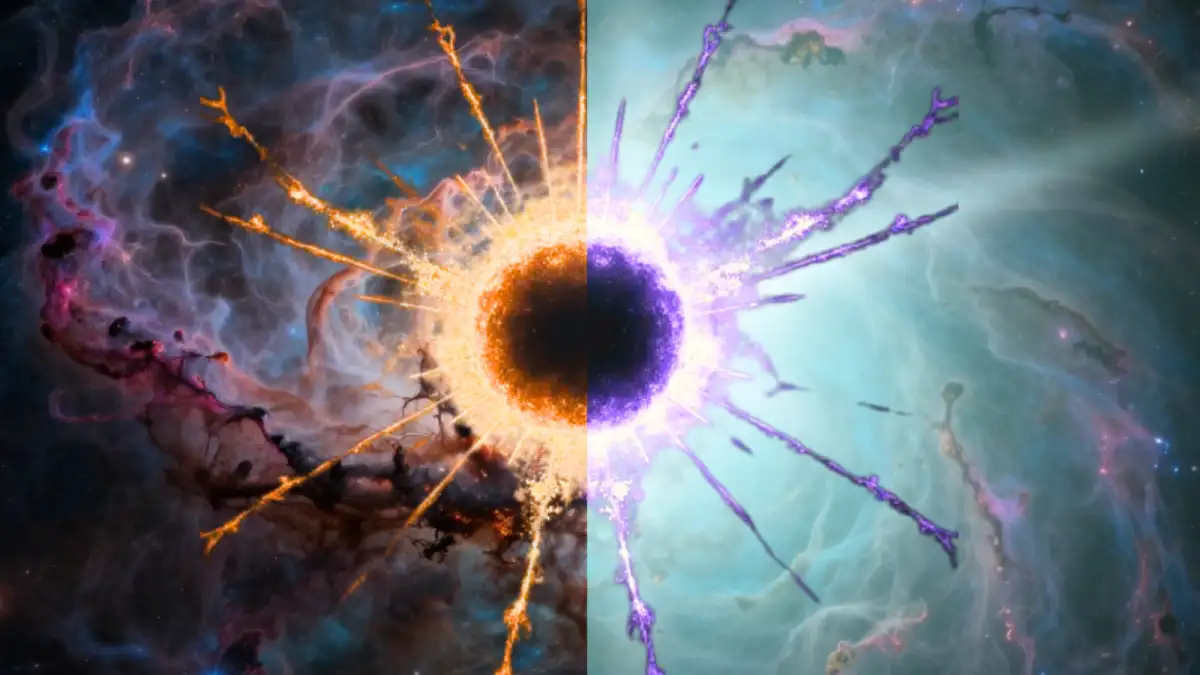
Recent theoretical work proposes a radical departure from the established understanding of black holes, suggesting they might not be ultimate cosmic dead ends. Instead, these studies posit that black holes could transition into white holes, theoretical objects that, in reverse of black holes, would eject matter, energy, and potentially even time back into the universe. This paradigm shift, emerging from research out of the University of Sheffield, could profoundly alter our grasp of the cosmos, potentially unifying concepts like cosmic expansion, dark energy, and the very nature of time itself.
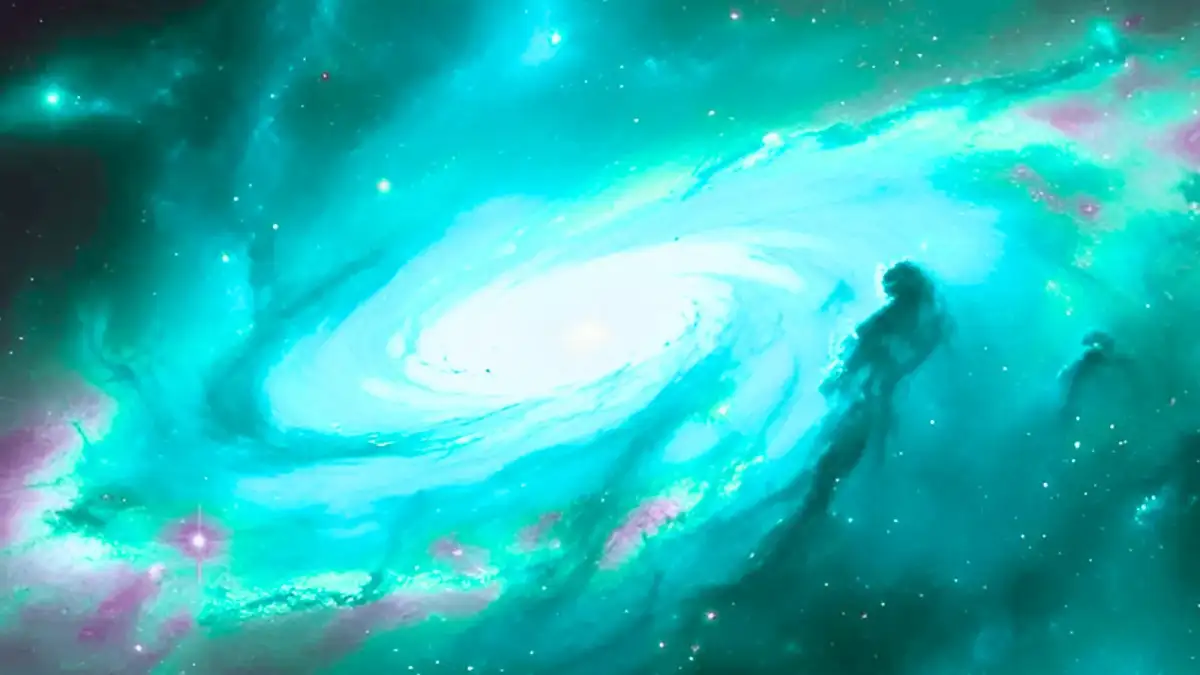
The core of this emerging theory rests on the idea of a 'black-to-white hole transition'. This is not conceived as a violent, immediate event for all black holes, but rather a process where the singularity at the heart of a black hole might be resolved. Instead of a point of infinite density and no return, the transition could lead to a 'bounce', where the object transforms into a non-singular white hole. This process is envisioned as a form of quantum tunneling, where a specific quantum region facilitates the conversion from a classical black hole into a white hole.
Read More: Indigenous Data Rights Now Key in Conservation Genomics
White Holes: The Theoretical Counterparts
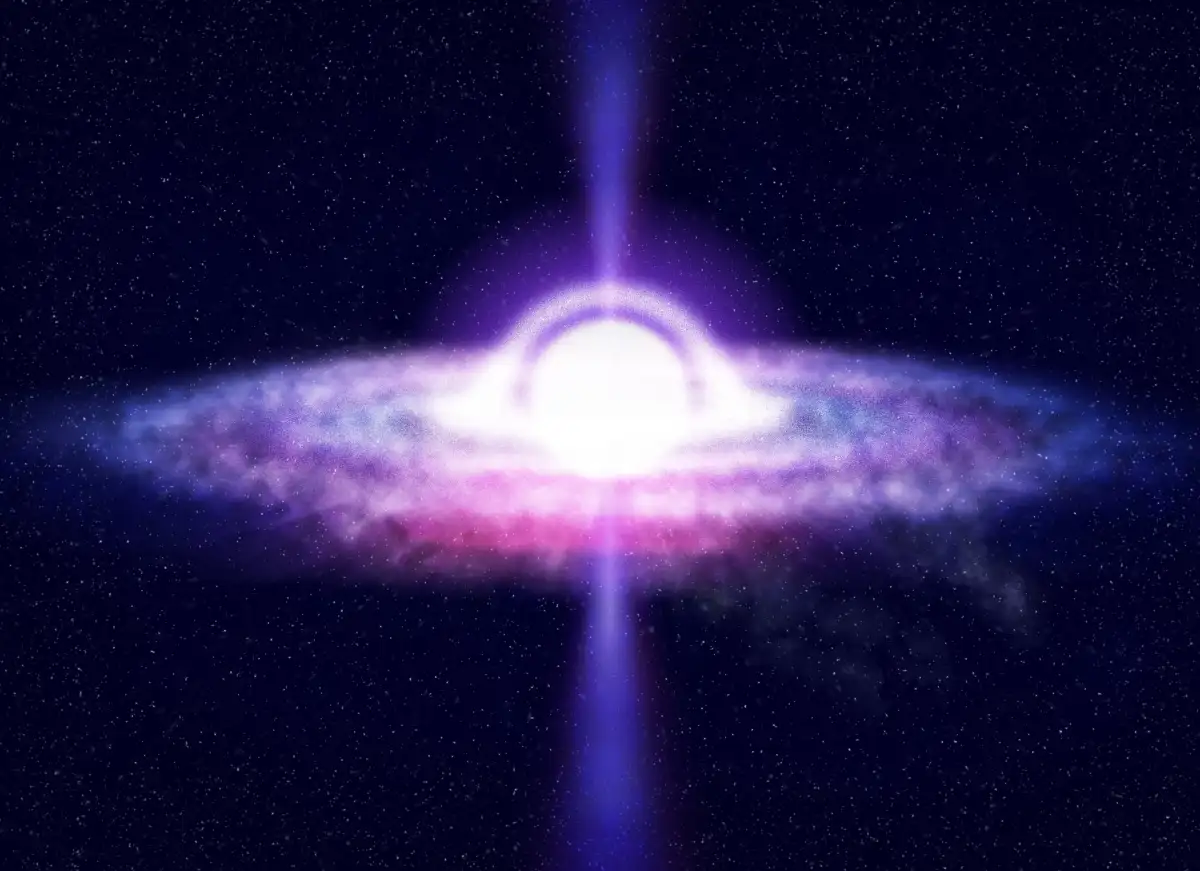
White holes, while often discussed in theoretical physics, have remained elusive and distinct from their more famous counterparts. Classically, a white hole is a region of spacetime that cannot be entered from the outside, functioning as the time-reversed version of a black hole. Where black holes pull everything in, white holes would expel matter and energy. The current research suggests that these aren't merely hypothetical constructs but could be the eventual state of black holes after a transformative period.
Implications for Information Paradox and Cosmology
The concept of black-to-white hole transition offers a potential resolution to the long-standing 'information paradox' associated with black holes. Current models of black hole evaporation, like Hawking radiation, suggest information that falls into a black hole is lost forever, a scenario that clashes with fundamental principles of quantum mechanics.

The transition to a white hole, however, could allow for information preservation. Instead of being permanently trapped, the information could be released back into the universe as the white hole expels matter and energy. This implies that black holes are not information sinks but rather conduits for eventual information release.
This theory could also shed light on dark energy, the mysterious force driving the accelerated expansion of the universe. Some researchers suggest a link between the ejection of time and energy from white holes and the phenomena attributed to dark energy.
The notion that time could run backward within a white hole, as suggested by some interpretations, adds another layer of complexity and potential revolutionary insight into our understanding of temporal dynamics.
Theoretical Models and Future Research
The research often utilizes simplified theoretical models, such as a planar black hole, which has a flat, two-dimensional boundary rather than the spherical boundary of typical black holes. While these models are simplifications, the researchers believe their findings could potentially apply to the more common, spherical black holes observed in the universe.
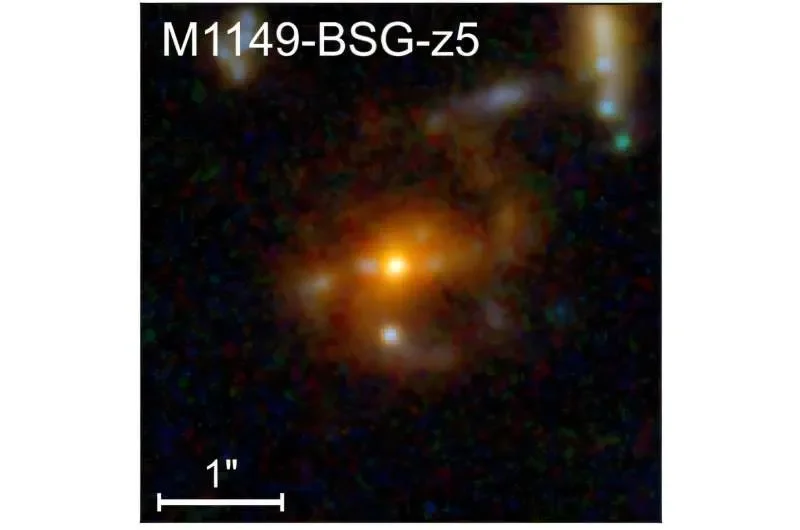
Read More: JWST Finds Oldest Barred Spiral Galaxy M1149-BSG-z5
The idea that primordial black holes, if they exist and have evaporated down to a certain mass (the Planck mass), could also become white holes, adds another speculative avenue. Such tiny, hypothetical black holes might eventually transform into white holes, emitting energy.
The journey from black hole to white hole, if confirmed, would represent a fundamental re-evaluation of astrophysics and cosmology. It suggests that cosmic structures once thought to be definitive endings might, in fact, be profound beginnings, ushering in new phases of existence for matter, energy, and possibly even time itself.
Read More: New Room Temperature Photon Source for Quantum Tech in Korea
| Feature | Classical Model (e.g., Schwarzschild) | Black-to-White Hole Transition |
|---|---|---|
| Singularity | Present, point of infinite density | Resolved via quantum region, no singularity |
| Horizon | Permanent, traps information | No permanent horizon; global Cauchy surface connects past/future |
| Evaporation/Bounce | Infinite evaporation (Hawking) | Bounce time varies; white phase often rapid |
| Information Fate | Lost or released over long times | Preserved, ultimately released in white hole phase |
| Global Geometry | Schwarzschild/Kruskal | Piecewise classical + quantum region; smooth manifold |