

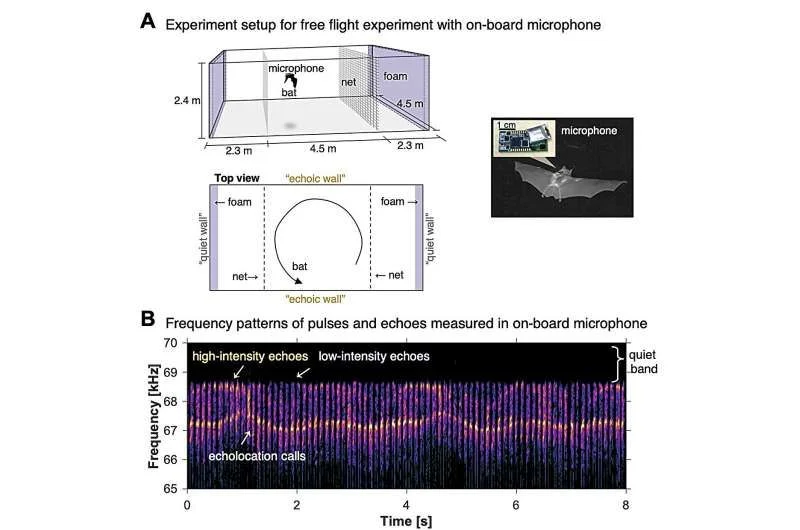
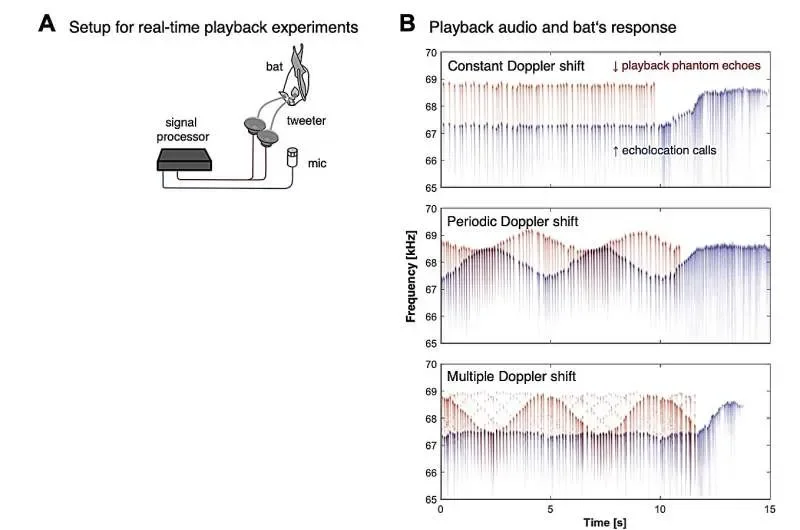
Japanese horseshoe bats (Rhinolophus nippon) have been observed actively constructing "silent frequency zones" to secure prey. A study published today in Communications Biology confirms that these mammals do not merely interpret environmental sounds; they dynamically manipulate the physical properties of returning echoes to strip away background clutter. By anchoring the noise from their surroundings to a constant reference frequency (fref), bats effectively clear a "sonic lane" that allows them to pinpoint moving insects with high precision.
Bats physically sculpt their sensory environment to ensure critical target signals remain detectable against noisy backgrounds.
| Mechanism | Functional Outcome |
|---|---|
| Doppler Shift Compensation | Maintains stable echo return despite flight |
| Active Frequency Control | Locks clutter noise into a predictable band |
| Silent Frequency Zones | Isolates prey signatures from background interference |
Precision Through Frequency Control
Research led by Shizuko Hiryu and her team at Doshisha University demonstrates that when these bats are subjected to artificial noise, their success hinges on the position of that noise relative to their echo-location stream.
When investigators introduced narrow-band noise within the bat’s "clean" frequency range, hunting efficiency plummeted.
Noise placed outside this narrow-gap zone had almost zero impact on the animal's ability to capture prey.
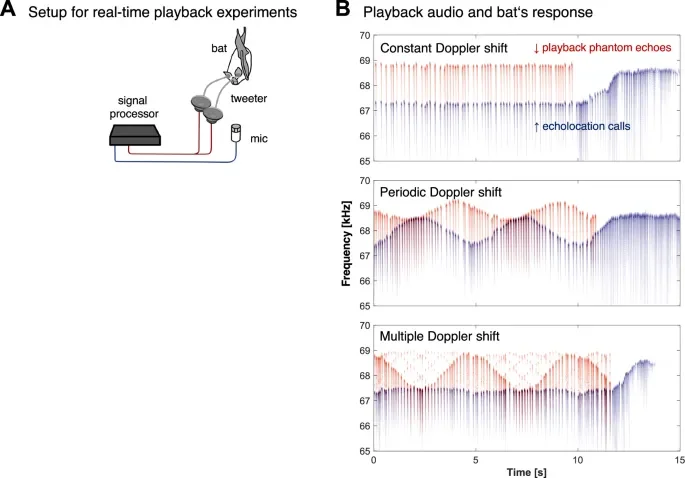
The bats engage in Doppler-shift compensation, adjusting their own vocal pitch to keep the reflected sound at a specific, consistent frequency regardless of how fast they are moving.
"Bats actively shape the acoustic environment to enhance perception, manipulating the physical properties of echoes rather than relying solely on neural processing."
Beyond Passive Reception
The implications of this study shift our understanding of biosonar from a reactive biological process to one of active engineering. By physically filtering the auditory input before it even reaches the brain, the horseshoe bat avoids the heavy computational load of filtering out clutter post-hoc.
Read More: DNA Shows Most "Wild Dogs" in Australia Are Dingoes
This behavioral adaptation reveals a sophisticated integration of biomechanics and physics. The acoustic clutter filtering identified in this species provides a model for how complex signals can be isolated in dense, chaotic environments—a discovery that may eventually inform the development of advanced human sensory systems and radar technologies.
For the researchers at Doshisha, this underscores that the bat is not merely a creature of instinct, but a precise regulator of its own sensory landscape.


