Asus has officially debuted the world’s first OLED-based esports monitor, paired with a distinct secondary display utilizing Color ePaper technology. These developments arrive as the manufacturer refines its broader 2026 computing lineup, focusing on screen fidelity and specialized hardware roles for professional and productivity sectors.
| Segment | Innovation Focus | Primary Technology |
|---|---|---|
| Gaming | Response time / Visual depth | OLED Esports Monitor |
| Productivity | Efficiency / Static output | Color ePaper Display |
| Consumer PC | Power / Portability | Lunar Lake / Snapdragon X |
Product Ecosystem Shifts
The recent integration of these display technologies aligns with a broader strategy observed in the company's June 2026 hardware rollout. The current hardware landscape reflects a bifurcation between raw performance and interface utility:
The Asus ZenBook S16 currently anchors the performance tier, utilizing AMD silicon capable of handling sustained compute loads and entry-level gaming demands.
The ZenBook A16 serves as the deployment platform for the Qualcomm Snapdragon X2 Elite Extreme, signaling a pivot toward architectural diversity.
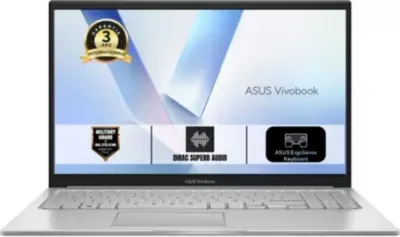
The VivoBook S14 series continues to occupy the value-focused segment, shifting to Intel Core Ultra 7 (Series 2) chips, codenamed Lunar Lake, to balance daily utility with power efficiency.
"The shift toward heterogeneous computing and advanced panel technology reflects a broader industry attempt to differentiate hardware in a saturated market," notes market data observed as of 02/06/2026.
Market Context and Strategic Direction
The decision to utilize Color ePaper alongside traditional OLED displays points to an interest in managing visual fatigue and energy consumption—two persistent friction points in modern office hardware.
Entry-level positioning: Products like the Zenbook A14 (equipped with the Snapdragon X chipset) are marketed as lightweight solutions, prioritizing form factor over aggressive performance metrics, with pricing floors near 699,99 €.
Mainstream reach: The VivoBook remains the volume driver for the firm, currently positioned with a starting price point of 899,99 €.
This hardware diversification represents a departure from traditional monolithic design philosophies, forcing a segmentation between 'work' hardware and 'display-first' professional equipment. By moving OLED technology into the esports domain, the firm seeks to bridge the gap between high-refresh-rate gaming requirements and the high contrast ratios previously reserved for content creation and cinematic media.
Read More: Chrome mimeHandler API lets extensions handle file types