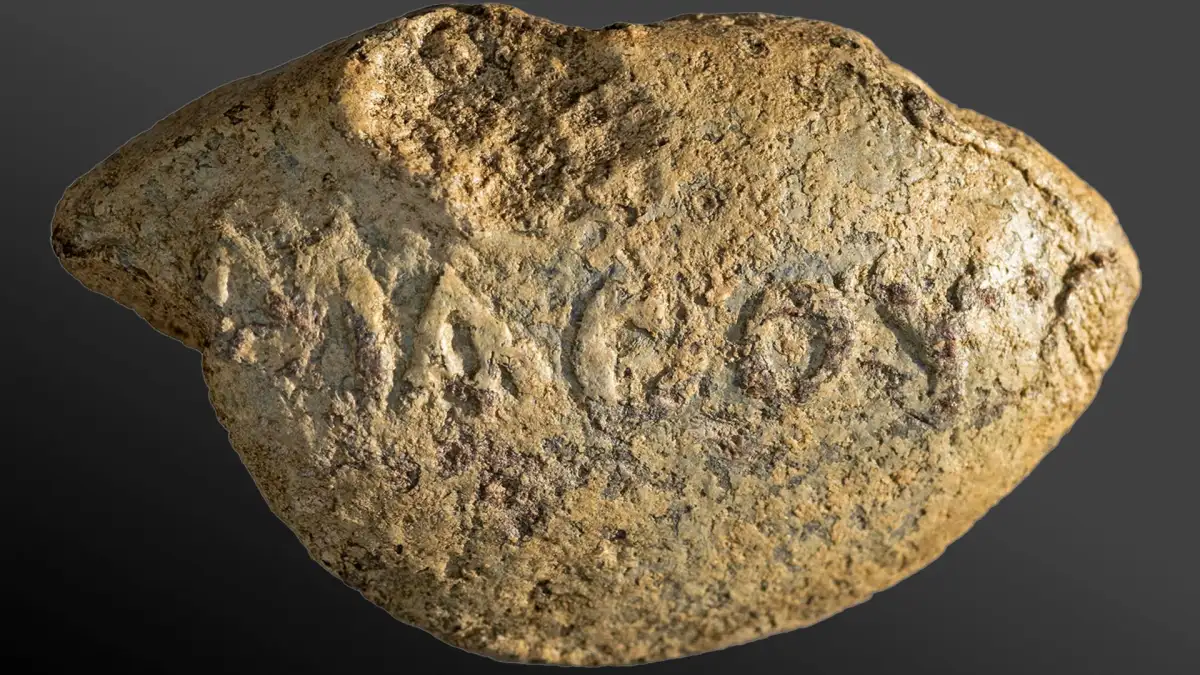
AN INSCRIPTION, OLDER THAN CENTURIES, BRINGS A HARSH ADMONITION FROM THE PAST TO LIGHT.
A lead sling bullet, roughly two millennia old, unearthed in the ancient Holy Land bears a stark inscription that reverberates with a chilling directive: "Learn your lesson." Found at the site of Hippos, a city in the Decapolis region, this artifact presents a rare glimpse into the psychological warfare of antiquity. The inscription, rendered in Greek letters, consists of the fragment "ΜΑΘΟΥ" (MATHOU), a word that carries the weight of a grim warning or a taunt directed at vanquished foes.
PSYCHOLOGICAL WARFARE, THEN AND NOW
The discovery, reported across archaeological and popular science publications, highlights a practice that was not entirely unknown: the personalization of weaponry with messages intended to demoralize or mock adversaries. This sling bullet, however, stands out for its pointedly sarcastic and foreboding tone, likening ancient battlefield taunts to a form of "ancient-day internet snark." While ancient armaments possessed their own brutal effectiveness, the addition of such inscriptions suggests a deliberate layering of psychological impact, aiming to leave a lasting impression beyond the immediate physical harm.
Read More: 5,900-Year-Old Child Skull Found in Norway Cave

The artifact's provenance points to Hippos, a location steeped in historical conflict. The nature of the inscription, "Learn your lesson," implies a context of battle and subjugation. It speaks not just of immediate violence, but of a desire to imprint a lasting consequence, a cultural or personal memory of defeat. The lead projectile itself, a common instrument of ancient warfare capable of being fired from considerable distances, becomes more than mere ammunition; it transforms into a messenger of retribution.
While the exact circumstances surrounding the bullet's inscription and deployment remain open to interpretation, its survival offers a tangible connection to the harsh realities and the sometimes surprisingly human—or perhaps, inhuman—elements of ancient conflicts. The message, etched in lead and buried by time, now speaks to a modern world still grappling with the enduring human impulses of aggression and intimidation.
Read More: St. Augustine's ideas on justice help explain US politics