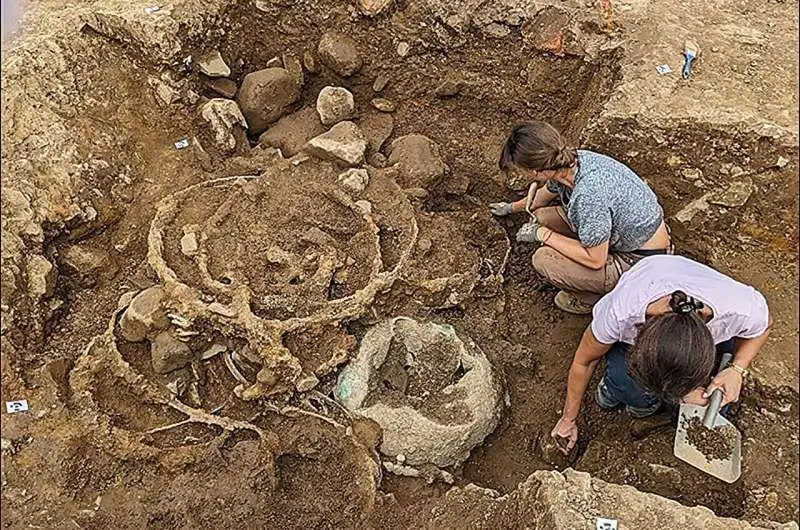
The Melsonby Hoards: A Technological and Societal Shift
Two vast caches of artifacts, collectively known as the Melsonby Hoards, have been uncovered in North Yorkshire, offering unprecedented evidence of four-wheeled wagons in Iron Age Britain. This discovery, comprising nearly 950 objects, includes a significant number of dismantled vehicle components such as iron tires, linchpins, yoke fittings, and brackets. Radiocarbon dating places the deposits in the Late Iron Age, approximately the first century BC to the first century AD, a period marked by increasing interaction with the Roman world.

The unearthed items, described as internationally significant, point towards a level of technological sophistication and societal complexity in Iron Age Britain previously underestimated. The presence of these larger, four-wheeled vehicles, which bear resemblances to ceremonial wagons found on continental Europe, fundamentally challenges long-held notions of isolation and technological limitations among Iron Age Britons. Researchers suggest this find compels a significant revision of our understanding of transport, wealth, status, trade, and ritual practices of the era.
Read More: 5,900-Year-Old Child Skull Found in Norway Cave
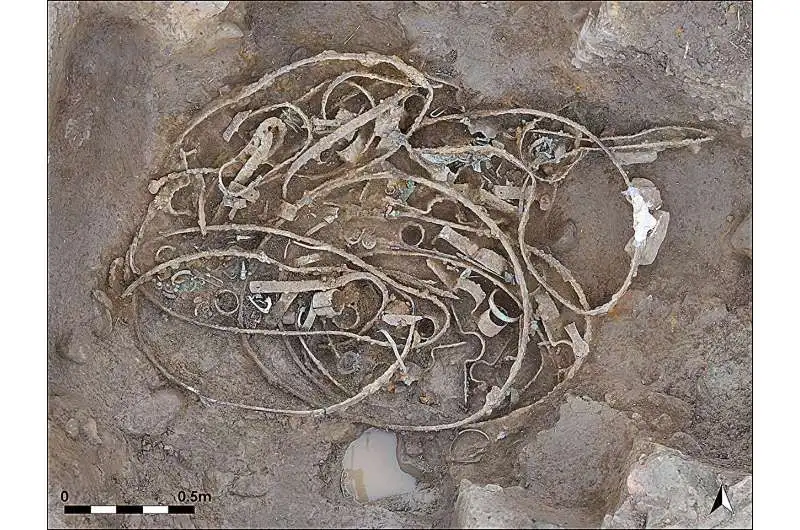
A Reevaluation of Iron Age Life
The Melsonby Hoards reveal more than just a new mode of transport. They indicate a society with considerable wealth and intricate cultural expression. Among the nearly 1,000 items are elaborately decorated horse harness elements, feasting vessels, and ceremonial spears. Notably, some objects, including cauldrons, exhibit a fusion of Mediterranean and Iron Age artistic styles, providing concrete evidence of cultural exchange and broader connections with continental Europe and the Mediterranean. The deliberate destruction or burning of many items before burial suggests complex ritualistic practices, adding another layer to the reevaluation of Iron Age societal dynamics.
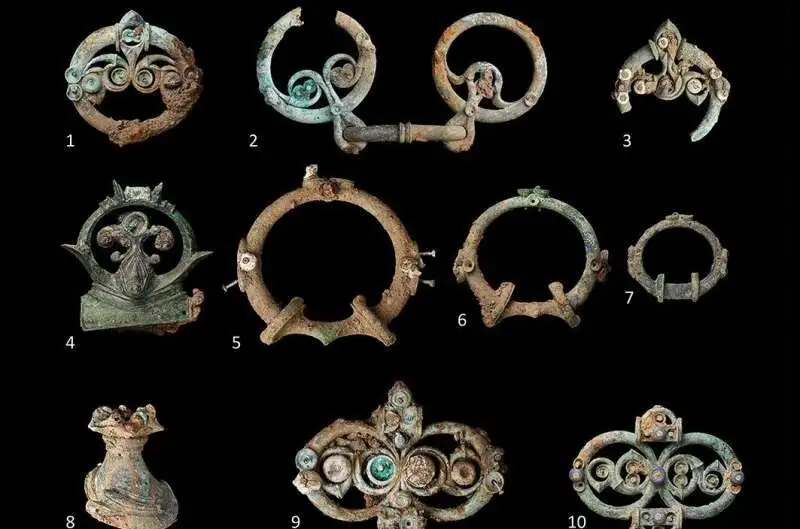
The sheer scale and composition of the hoards, with a substantial portion dedicated to vehicle parts, suggest these were not merely utilitarian objects but likely held significant social or ceremonial importance. The proximity of the find site to Stanwick, a major Late Iron Age center associated with the Brigantes tribe, further contextualizes these discoveries within the political and social landscape of northern England.
Read More: St. Augustine's ideas on justice help explain US politics

Unprecedented Evidence
The core of the evidence for four-wheeled wagons lies in specific components unearthed. The presence of numerous iron tires, bent and deliberately placed, alongside hub elements and brackets, indicates larger vehicles than previously assumed for the period in Britain. While two-wheeled chariots were known, the Melsonby finds are the first tangible archaeological confirmation of four-wheeled wagons being in use. This technological introduction is seen as having affinities with continental European designs, underscoring a deeper level of interaction than previously understood.
The study, published in the journal Antiquity, highlights specific findings:
Vehicle Components: Approximately three-quarters of the objects are related to horse-drawn transport, including 28 iron tires, linchpins, yoke fittings, kingpins, bolts, rein rings, and tubular adornments.
Continental Parallels: The style of some wagon parts shows similarities to ceremonial wagons found elsewhere in Europe.
Ritualistic Deposition: Many artifacts, including metal items, were deliberately broken, burned, or melted before being buried, pointing to complex ritualistic behavior.
Cultural Exchange: The inclusion of items like a cauldron decorated with both Mediterranean and Iron Age styles signifies direct cultural links.
The meticulous laboratory excavation, spanning several months, has pieced together evidence for at least seven four-wheeled wagons and numerous two-wheeled chariots, alongside harnesses for at least 14 horses. The deliberate placement of large drinking vessels, found upside down at either end of the main deposit, further points to intentional and meaningful deposition.
Read More: Erode Aqueduct Stable: ASI Finds Minor Seepage, Recommends Repairs