As of today, 18 May 2026, the Alienware m16 R1 AMD remains a documented reference point in the high-performance portable computer market. Originally entering the public sphere in mid-2023, the device is cataloged under Regulatory Model P124F. Its positioning in the industry is defined by a shift from the legacy m15 chassis toward a 16-inch architectural framework modeled after the larger m18 variant.
The core utility of this machine rests on its ability to integrate AMD-specific components, notably the Radeon RX 7600M XT, into a 16-inch thermal enclosure.
Technical Specifications and Footprint
The physical and internal constraints of the unit are established by the manufacturer's technical documentation:
| Component / Metric | Detail |
|---|---|
| Regulatory Type | P124F002 |
| Primary GPU | AMD Radeon RX 7600M XT (8 GB GDDR6) |
| Dimensions (Width) | 368.9 mm |
| Dimensions (Depth) | 289.9 mm |
| Integrated Camera | 2.1 MPix |
Users are required to interface with the Alienware Command Center software to manage thermal performance and input shortcuts.
The power delivery system is specific to the hardware configuration ordered; standardization remains absent across the series.
Performance Observations
Retrospective data from NotebookCheck and Overclocking.com suggest the machine functions as a corrective iteration of the m15. Observations indicate that the design emphasizes Heat Dissipation and structural rigidity.
Read More: Chrome mimeHandler API lets extensions handle file types
Critics of the era identified the following as notable markers:
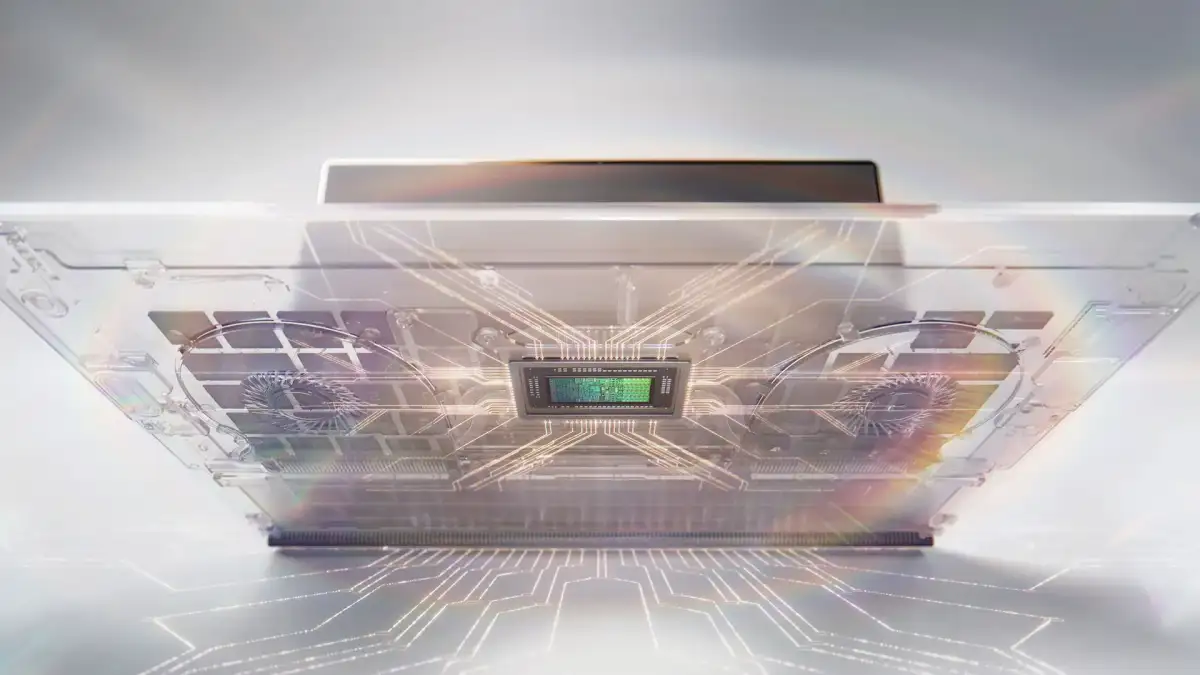
Thermal Efficiency: A redesigned cooling path aimed at maintaining sustained clock speeds.
Interface: A keyboard layout perceived as more substantial than the preceding m-series iteration.
Price Point: Market entries appeared near the €2,500 threshold, marking it as a "core-range" offering rather than an entry-level purchase.
Contextual Evolution
The m16 R1 AMD serves as a case study in mid-cycle product refinement. By adopting the aesthetic and structural DNA of the m18 R1, the manufacturer sought to address previous failures in chassis ergonomics and thermals. The reliance on AMD silicon rather than the industry-standard Intel/NVIDIA pairing creates a distinct bifurcation in how software drivers and External Display Support are handled. While it is no longer the latest flagship, its documented state remains a prerequisite for maintenance and understanding the specific Regulatory benchmarks set by Dell during the 2023 release window.