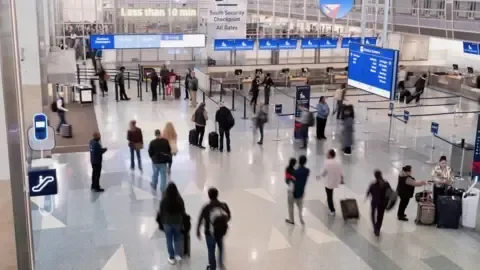
Recent events point to a growing risk of airport delays and disruptions as funding for the Department of Homeland Security (DHS) remains uncertain. Lawmakers have been unable to reach an agreement on funding bills, raising concerns about the operational capacity of agencies within DHS, including the Transportation Security Administration (TSA). The potential for a partial government shutdown looms, with significant implications for air travel, its workforce, and travelers themselves.
The core of the issue lies in the pending deadline for DHS funding. With disagreements over immigration policy hindering progress, key agencies face the prospect of operating without secured budgets. This situation has prompted warnings from travel industry groups and the TSA itself, highlighting the potential for significant collateral damage to public services and daily life, particularly impacting air travel.
DHS Funding Standoff and Potential Shutdown
Lawmakers are currently engaged in debates over new restrictions on immigration enforcement, which have stalled progress on essential funding bills. This impasse has led to a potential partial government shutdown, with a critical deadline set for midnight on Saturday.
Read More: Margaret River Named World's Best Wine Place
The Senate has seen funding bills blocked by Democrats, who argue that these measures do not adequately address immigration reforms.
The Department of Homeland Security (DHS) is a primary focus of these funding debates.
Failure to reach an agreement could trigger a shutdown affecting various DHS agencies.
TSA Operations and Workforce Under Pressure
The TSA, a critical component of air travel security, would continue to operate during a shutdown, but its personnel would work without pay. Historical data from previous shutdowns suggests that this situation can lead to tangible problems.

Unpaid Work: TSA officers would be required to report to work, despite not receiving their salaries.
Increased Absences: During the 43-day shutdown in the past, unscheduled absences among TSA personnel increased.
Impact on Wait Times: While TSA aims to maintain standards, stress on the workforce has historically translated into longer wait times and delays at airports. Some TSA employees report still dealing with financial and emotional consequences from previous shutdowns, with many living paycheck to paycheck.
Broader Implications for Air Travel and Travelers
Beyond the TSA, a DHS shutdown could have wider ripple effects on the travel ecosystem. While air traffic control and the Federal Aviation Administration (FAA) funding are not directly affected, operational strains are anticipated.
Traveler Experience: Travel groups are voicing concerns that a shutdown could lead to "travel chaos," particularly during peak periods like spring break.
Airport Congestion: Past shutdowns have shown that longer security lines become unavoidable as the duration of the shutdown increases.
Reduced Capacity: In some instances, disruptions related to shutdowns have led to flight capacity reductions at major airports.
Official Warnings: The TSA has formally warned lawmakers about the potential for longer lines and increased wait times, advising travelers to arrive early and exercise patience.
Conflicting Perspectives and Past Precedents
While the immediate operational halt of air travel is unlikely, the extended impact of a funding lapse is a significant concern.

| Aspect | Potential Impact | Source & Nuance |
|---|---|---|
| Immediate Function | TSA and FAA essential functions continue. | Federal employees performing safety and security duties will work. |
| Workforce Strain | Unpaid work, increased stress, potential for higher unscheduled absences. | McNeill, acting TSA head, cited increased absences during a past 43-day shutdown. Many TSA officers face ongoing financial hardship. |
| Traveler Experience | Longer wait times, potential for delays, and general disruption. | Travel groups warn of chaos. TSA has publicly stated impacts will worsen over time. |
| Systemic Effects | Strain on technology deployment, potential for reduced services if prolonged. | TSA's ability to meet personnel needs and deploy technology could be affected. Other DHS agencies like the US Coast Guard could also see reduced operations. |
Expert Analysis and Warnings
"The experience of the last prolonged shutdown… underscored how quickly stress on the workforce can translate into problems at airports." - McNeill, Acting TSA Administrator
"TSA has warned that the extended shutdown could lead to longer security lines." - TheTravel.com
"Many TSOs work paycheck to paycheck trying to support themselves and their families." - TSA Oversight Hearing Testimony
The TSA has issued direct warnings to lawmakers regarding the foreseeable consequences of a funding lapse. The agency has previously documented how periods of unpaid work directly correlate with increased stress on its personnel, which subsequently affects airport operations and traveler wait times. The cumulative effect of past shutdowns continues to weigh on TSA staff, many of whom are still recovering financially and emotionally from previous funding crises.
Read More: US 250th Anniversary on July 7, 2026, sees 20% not celebrating
Findings and Outlook
The current legislative gridlock over DHS funding presents a clear and present risk to the stability of air travel operations. While essential TSA and FAA personnel will continue their duties, the mechanism of working without pay is demonstrably unsustainable in the long term, leading to predictable outcomes.
Escalating Risk: The longer a shutdown persists, the greater the likelihood of significant disruptions at airports.
Workforce Sustainability: The financial and emotional toll on TSA employees is a critical factor in maintaining operational effectiveness.
Traveler Impact: Travelers are being advised to prepare for potential delays and longer wait times.
Policy Focus: Lawmakers are increasingly using the threat of such disruptions as leverage in broader policy debates, particularly concerning immigration.
The situation demands a resolution to the funding impasse to mitigate the projected strain on airport security infrastructure and ensure a more predictable travel experience.
Sources:
TIME: https://time.com/7377750/shutdown-impact-airports-tsa-flights/
USA Today (Article 2): https://eu.usatoday.com/story/travel/news/2026/02/12/flights-tsa-government-shutdown/88643602007/
PBS NewsHour: https://www.pbs.org/newshour/politics/what-services-are-affected-by-the-homeland-security-shutdown-what-you-need-to-know
The Travel (Article 5): https://www.thetravel.com/tsa-issues-warning-to-us-lawmakers-over-dhs-shutdown-longer-airport-lines-looming/
The Travel (Article 6): https://www.thetravel.com/tsa-officers-warn-airport-security-could-get-worse-dhs-shutdown/
Fox News (Article 7): https://www.foxnews.com/politics/dhs-shutdown-explained-who-works-without-pay-what-happens-airports-disaster-response
USA Today (Article 8): https://eu.usatoday.com/story/travel/news/2026/01/31/government-shutdown-flights-tsa/88436782007/
Fox News (Article 9): https://www.foxnews.com/travel/shutdowns-impact-airports-worsen-tsa-travelers-should-go-early-be-patient
TSA.gov: https://www.tsa.gov/news/press/testimony/2026/02/11/oversight-hearing-potential-dhs-shutdown-impacts
NerdWallet: https://www.nerdwallet.com/travel/learn/how-a-government-shutdown-could-affect-travel