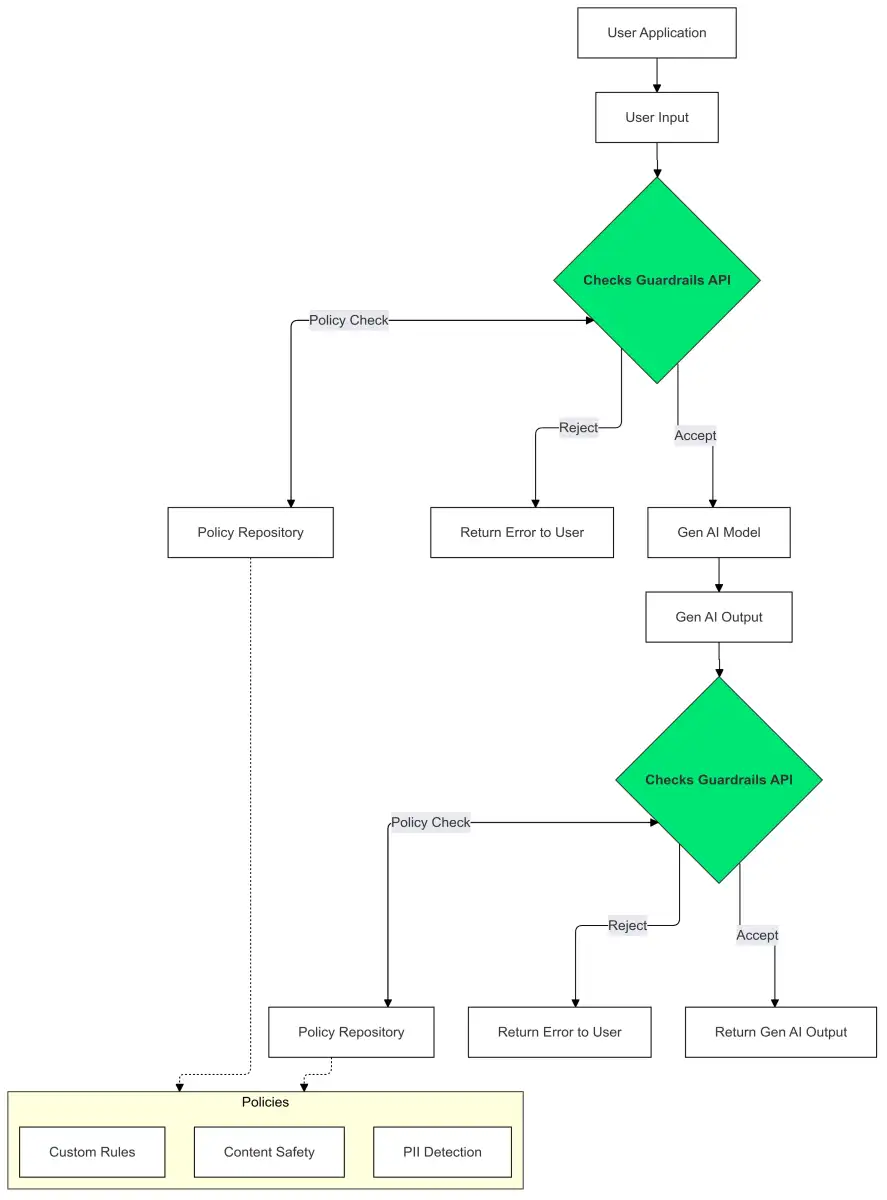
Runtime controls, known as AI guardrails, are being implemented to validate inputs and outputs against safety, security, and compliance policies. This development is driven by the increasing integration of AI into critical business functions, making responsible deployment paramount. Organizations are deploying these safeguards to prevent issues such as biased content, system abuse, and sensitive data leaks.

AI guardrails function as programmatic controls across an AI system's lifecycle, filtering inputs, outputs, and enforcing operational boundaries. Key implementation areas include:

Content Safety: These controls aim to block harmful or policy-violating content in both user inputs and AI-generated outputs.
Data Layer Security: Guardrails at this level ensure that sensitive, problematic, or incomplete data does not enter the system. Techniques like hashing sensitive data at the input layer are employed to maintain data integrity, focusing on accuracy, completeness, and reliability.
Input Guardrails: Positioned between the user and the AI model, these controls manage what information the model receives.
Runtime Guardrails: These monitor the actual behavior of AI systems in production.
Data Access Guardrails: These manage which datasets, embeddings, and retrieval sources a model is permitted to access.
Beyond technical implementations, security guardrails focus on safeguarding sensitive data and preventing misuse. The emergence of purpose-built AI security tools is also noted, offering organizations enhanced visibility and control over AI deployments. However, concerns exist about overly strict guardrails frustrating users and the potential for infrastructure-level exposure to bypass application-level controls.
The necessity for robust AI guardrails stems from the rapid adoption of Large Language Models (LLMs) in production. Without them, AI systems risk producing inaccurate or harmful outputs. Implementing these guardrails is considered essential, not optional, for responsible AI deployment. Providers like Google for Developers offer API-based solutions for checking and logging policy violations, while frameworks like Guardrails AI provide comprehensive documentation for validators and implementation patterns. Companies like Bifrost are integrating guardrails as a core gateway capability.
Read More: New Light Switch for AI Chips Uses Very Little Energy