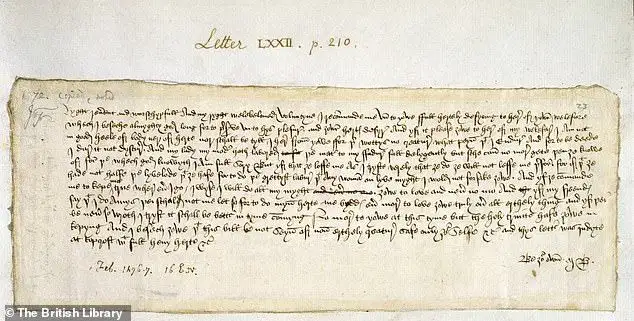
A recently decoded 15th-century letter, hailed as the world's oldest love correspondence, reveals a poignant struggle between personal affection and familial financial pressures. Employing advanced AI, scholars have brought the faded script of Margery Brews to life, detailing her emotional quandary during marriage negotiations to John Paston. The letter, penned around February 1477, shows Brews grappling with a dowry dispute, a common friction point in medieval marital arrangements, while simultaneously expressing deep feelings for Paston. The technology used, Scribe AI, was instrumental in overcoming the letter's degraded ink and archaic script, including the Anglo-Saxon letter 'thorn', a significant hurdle for human transcription.
The unearthed message offers a stark glimpse into the complex realities of historical relationships, where matters of the heart were inextricably tied to economic standing. Brews’ missive not only conveys her affection but also highlights the societal norms and the formidable influence of family wealth on personal choices. She implored Paston to keep the correspondence private, a testament to the sensitive nature of the negotiations and her personal investment in their union.
Read More: St. Augustine's ideas on justice help explain US politics
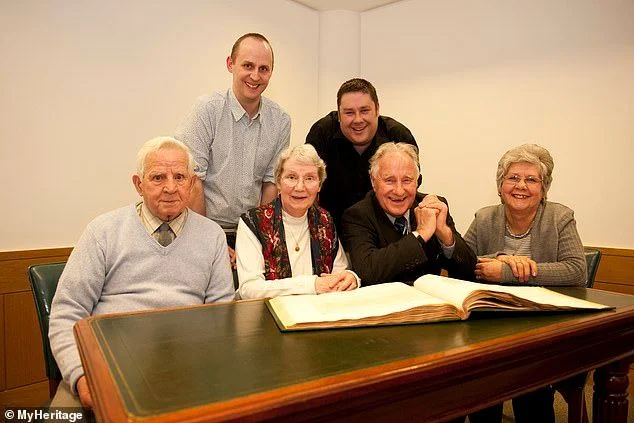
"She also asks him to keep the letter private. Their descendants, previously traced through MyHeritage, were connected to the couple through later generations, and some shared reflections when they learned of their link to the letter."
The discovery is part of the broader "Paston Letters" collection, an extensive archive of 15th-century English private correspondence offering unparalleled insight into the domestic and public lives of the era. Brews' entanglement with the Paston family, whose lineage climbed from peasantry to aristocracy, adds another layer to this historical narrative. One particularly poignant observation from the correspondence notes that "every bird chooses itself a mate" on Saint Valentine's Day, a sentiment Brews used to underscore her yearning for a union with John. Subsequent generations of the Brews and Paston families, linked through genealogical research, have reportedly reacted with interest upon learning of their ancestral connection to this rediscovered personal drama.
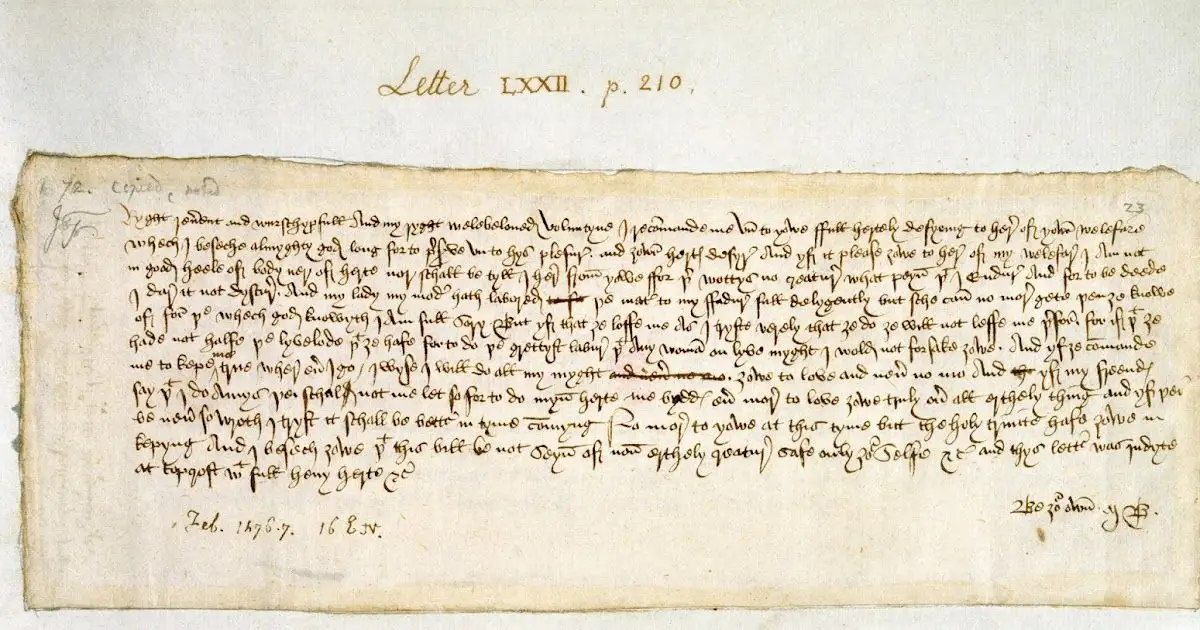
The ability of AI to meticulously decipher such a fragile document underscores a new frontier in historical research. This particular application moves beyond mere data processing to reconstruct the emotional resonance of past human experiences, providing a tangible connection to the hopes and anxieties of individuals separated by centuries. The letter's revelation arrives as researchers continue to explore the emotional stakes embedded within medieval marriage contracts, a field now illuminated by such technological breakthroughs.
Read More: Chrome mimeHandler API lets extensions handle file types