


Tesla has committed to a $25 billion capital expenditure plan for 2026, marking a deliberate departure from its history as primarily an automotive manufacturer. This transition, confirmed in today's earnings reports, directs massive resources toward artificial intelligence (AI), autonomous robotaxis, and the Optimus humanoid robot project, even as the company's core electric vehicle (EV) segment faces stagnation.
The company projects negative free cash flow for the remainder of 2026 to fund this infrastructure, including the construction of a dedicated Optimus manufacturing facility at the Austin factory and a significant expansion of AI compute capacity.
Financial Tensions and Hardware Realities
While Tesla exceeded first-quarter expectations with an earnings per share (EPS) of $0.41—surpassing the consensus of $0.36—market confidence remains jagged. The decision to increase spending from $9 billion in 2025 to $25 billion this year has triggered scrutiny regarding the firm's immediate profitability.
Read More: Tesla Shareholders Vote To Keep Elon Musk As CEO On Nov 6
Key points of contention regarding the shift:
Hardware Limitations: CEO Elon Musk admitted that existing Hardware 3 systems lack the capacity for unsupervised Full Self-Driving (FSD). Plans are being discussed to convert these units to Hardware 4, raising questions about logistics and cost.
Supply Chain Stakes: To fuel these ambitions, Tesla is aggressively pursuing its own silicon pipeline. Delays in 2nm chip yields or failures in the Terafab initiative could result in billions in stranded assets.
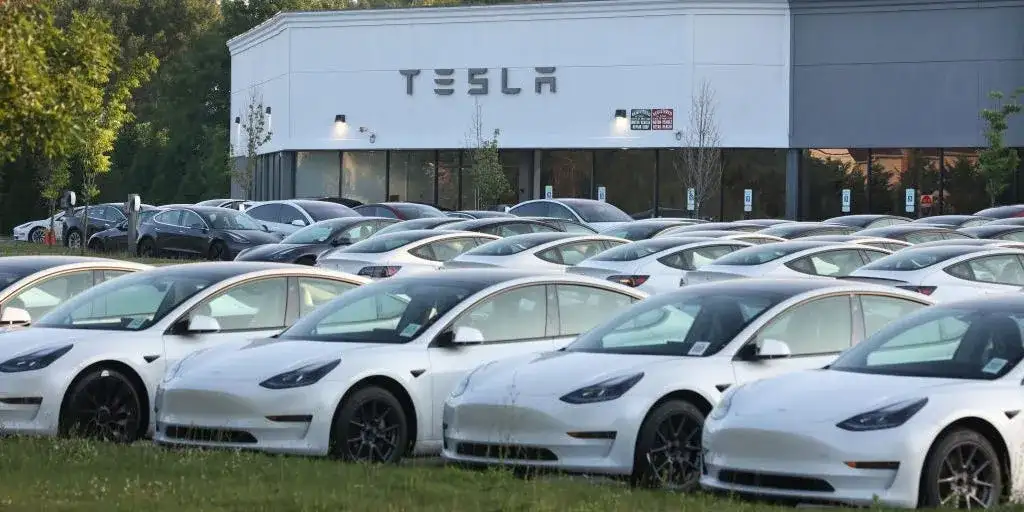
Inventory Growth: Global days of supply reached 27 days in Q1, up from 15 in the previous quarter, signaling a cooling demand in the traditional vehicle sector.
"I think probably unsupervised FSD or Robotaxi revenue will not be super material this year, but I do think it'll be material probably in a significant way next year," Musk stated during the earnings call.
The Context of the Transition
For years, Tesla was valued primarily as an auto stock with a premium attached to its technological promise. Today, the company is effectively de-emphasizing its core revenue generators—the Model 3, Y, S, X, and Cybertruck—in favor of a long-term play on robotics and automation.
The narrative has split into two eras. In the past, the firm's growth was driven by vehicle deliveries. In the current era, the company faces a reality where revenue from regulatory credits is dropping and demand in key markets remains sensitive. Musk continues to divide his attention between Tesla, SpaceX, and xAI, creating a unique management structure that both facilitates internal cross-pollination of technology and intensifies concerns over focus.
As the company enters this capital-intensive phase, the central question for market participants is no longer about the quarterly vehicle delivery count, but whether the projected AI and robotics infrastructure can justify the massive depletion of liquid capital.
Read More: AI Decodes 540-Year-Old Love Letter from Margery Brews


