The government acknowledged a stark reality in the Rajya Sabha this week: more than 93,000 positions remain unfilled across the Central Armed Police Forces (CAPFs) and Assam Rifles. This significant deficit, equating to approximately 8.5% of the total sanctioned strength, points to an ongoing struggle in maintaining full operational capacity within these critical security bodies.
The sheer number of vacancies underscores a persistent staffing shortage. While the government asserts that these forces continue to perform their duties effectively through "optimal resource utilisation" and by streamlining recruitment processes, the scale of the deficit raises questions about the long-term sustainability of current operational demands. The lack of personnel has been noted in specific forces tasked with vital border security and internal security roles, including the Border Security Force (BSF), Indo-Tibetan Border Police (ITBP), and Sashastra Seema Bal (SSB).

Forces Grapple with Unfilled Roles
The reported vacancies are not evenly distributed. The Central Reserve Police Force (CRPF), the largest paramilitary force primarily responsible for internal security and assisting state police, faces a considerable shortfall of 27,400 posts. The Central Industrial Security Force (CISF), tasked with protecting industrial installations and airports, also shows a substantial deficit of 28,342 vacancies.
Read More: Acting DNI Pulte Fires Dozens of Intelligence Officials Starting Thursday
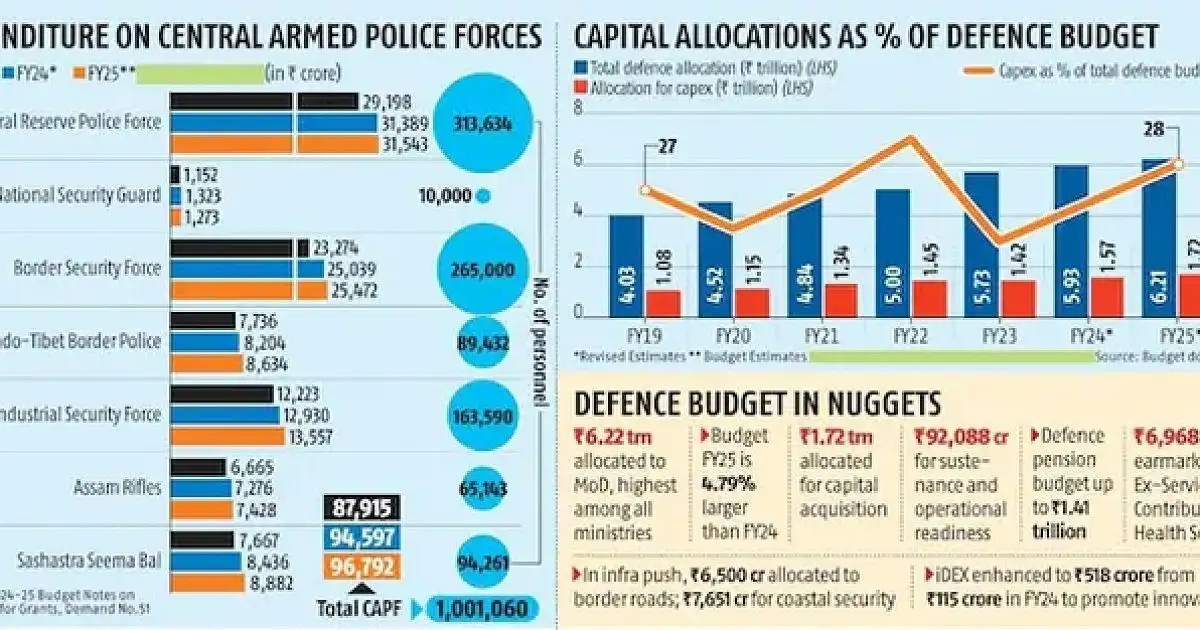
Other forces with significant vacancies include:
Border Security Force (BSF): 14,531 posts vacant.
Indo-Tibetan Border Police (ITBP): 12,333 posts vacant, guarding sensitive borders with China.
Sashastra Seema Bal (SSB): 6,784 posts vacant, guarding Nepal and Bhutan borders.
Assam Rifles: 3,749 posts vacant, involved in border security with Myanmar and anti-insurgency operations.
Government's Response: Continuous Recruitment and Streamlining Efforts
The government maintains that filling these vacancies is a "continuous process." Measures are reportedly underway to expedite recruitment through agencies like the Union Public Service Commission (UPSC) and the Staff Selection Commission (SSC). These efforts include:

Annual recruitment drives for Constable (General Duty) posts via SSC.
Appointing nodal forces to coordinate recruitment for key positions.
Utilizing Radio Frequency Identification (RFID) technology during physical tests to improve efficiency.
Lowering cut-off marks and relaxing physical efficiency tests for ex-Agniveers in specific categories to accelerate induction.
Welfare and Legal Entanglements
Beyond recruitment numbers, discussions in the Rajya Sabha also touched upon the welfare of CAPF personnel. The government highlighted the establishment of the Welfare and Rehabilitation Board (WARB) to support retired personnel and their families, including the next of kin of deceased or disabled members. However, a significant legal point remains unresolved: the Delhi High Court's 2023 ruling treating CAPF personnel as "Armed Forces of the Union of India" is currently sub-judice before the Supreme Court. This legal ambiguity could have implications for personnel benefits and service conditions.
Read More: Karnataka government stops 56,432 jobs over internal reservation demand
Broader Context: Attrition and Recruitment Challenges
While the government asserts that operational capabilities are not compromised, the persistent vacancies point to broader challenges within the CAPFs. These include ongoing retirements, operational attrition, and the sheer scale of recruitment required to fill the ranks. The government's strategy to address shortfalls involves not only accelerating recruitment but also ensuring that recruitment processes are "time-bound," particularly for non-general duty cadres. Data also indicated a decline in suicides, fratricides, and voluntary retirements between 2021 and 2025, although tens of thousands of personnel resigned or took voluntary retirement during the same period.