A novel method has unearthed month-to-month climate fluctuations previously obscured, offering a more granular understanding of the environmental factors underpinning a devastating famine in 1830s Japan.
Researchers have devised a way to interpret daily weather descriptions from historical journals, reconstructing solar radiation patterns with unprecedented detail. This breakthrough allows for a clearer picture of how swift, sometimes dramatic, shifts in climate directly influenced rice prices and, by extension, societal stability.
The study, published recently, moves beyond traditional reliance on proxy data for climate reconstruction. Instead, it employs a framework that analyzes weather entries in old diaries and observational logbooks. This allows for the estimation of solar radiation on a daily and monthly basis. The reconstructed climate data, when overlaid with historical rice price records, begins to reveal a complex interplay where even short-term weather anomalies played a significant role in the unfolding crisis.
Deeper Dives into Data
The significance lies in the precision of the reconstructed climate data. Previous analyses often relied on broader, less specific climate indicators. This new approach leverages the descriptive richness of contemporary accounts.
Read More: St. Augustine's ideas on justice help explain US politics
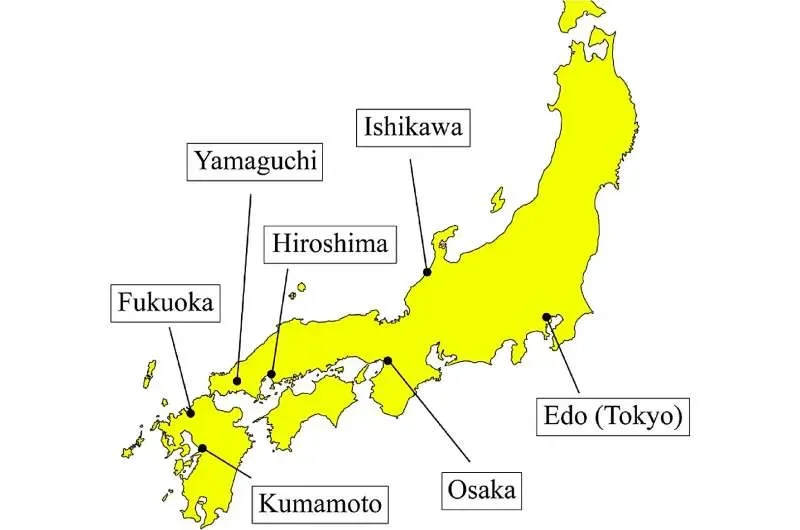
The method draws upon diaries from across Japan, providing a nationwide perspective on weather events.
It integrates these historical accounts with modern meteorological observations from the Japan Meteorological Agency (JMA).
This fusion of disparate data sources allows for the estimation of solar radiation, a critical factor directly linked to crop yields.
Beyond the Climate
While the climate’s hand is now more visible, the researchers acknowledge that famines are rarely monolithic. Other factors, often interwoven with environmental pressures, contribute to the broader societal impact.
Trade dynamics: Fluctuations in the availability and price of rice were inherently linked to market forces.
Typhoons and extreme weather: Beyond general solar radiation, specific weather events could decimate crops.
Government intervention: Policy decisions and relief efforts, or their absence, shaped the severity of the famine.
Social unrest: As food security eroded, instances of riots and social disturbances often followed.
The current research focuses on painting a clearer climate canvas, understanding that this is one crucial layer in a much larger historical tapestry. The interplay between climate variability, rice prices, and the societal repercussions remains a subject of ongoing inquiry.
Historical Context
The 1830s in Japan were a period marked by significant environmental and social challenges. The famine, known as the Tenpo famine (though the research focuses on the broader 1830s period), was a severe event that underscored the vulnerability of the population to agricultural failures. Traditional studies have pointed to volcanic activity and broader climatic shifts, but the monthly resolution provided by this new framework offers a more dynamic and perhaps more accurate representation of the immediate pressures faced by communities. The reliance on rice as a staple crop meant that any disruption to its production had amplified consequences.
Read More: Amazon Land Use Changes Cause Disease Clusters in Brazil