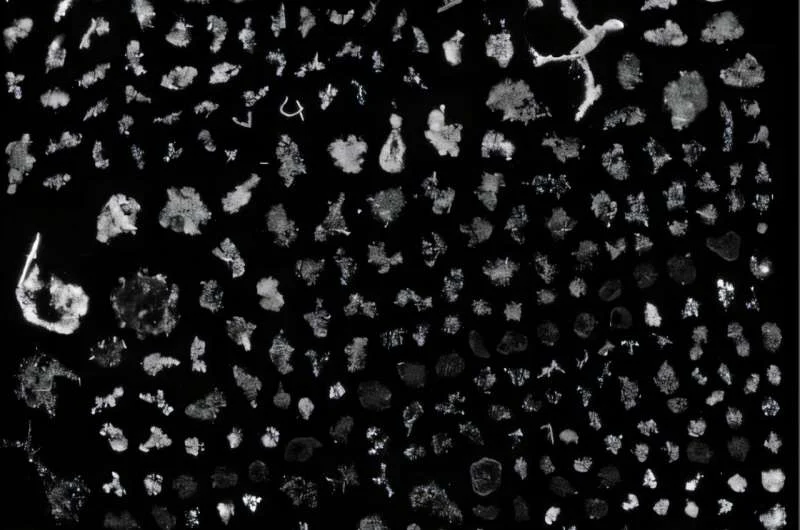
Vast quantities of carbon, vital to regulating global temperatures, are ferried to the ocean depths by sinking organic particles, a process known as marine snow. Despite its critical role, the precise dynamics of this phenomenon remain surprisingly obscure, with recent findings revealing counterintuitive behaviors that necessitate a rethink of current climate change projections and pollution modeling.
The descent of 'marine snow'— particles of dead organic matter resembling snowflakes — to the seafloor is a poorly understood sedimentation process. This journey transports significant carbon from the ocean surface, where it dissolves from the atmosphere, to the ocean's abyss. For five decades, its importance for understanding climate change has been clear, yet the specifics of marine snow's behavior have remained elusive.
Unexpected Sinking Speeds
Recent investigations highlight a startling departure from expected physical principles. In stratified ocean fluids, where layers differ in density, porous particles comprising marine snow can exhibit unexpected sinking speeds. This counterintuitive behavior, where smaller particles can sometimes sink faster than larger ones, challenges conventional understanding and is linked to alterations in particle density caused by salt diffusion as they descend through these stratified layers. This effect was notably observed in research from Brown University and the University of North Carolina at Chapel Hill.
Read More: Midwest Air Quality Hazardous: Stay Indoors
Collision Dynamics and Carbon Sequestration
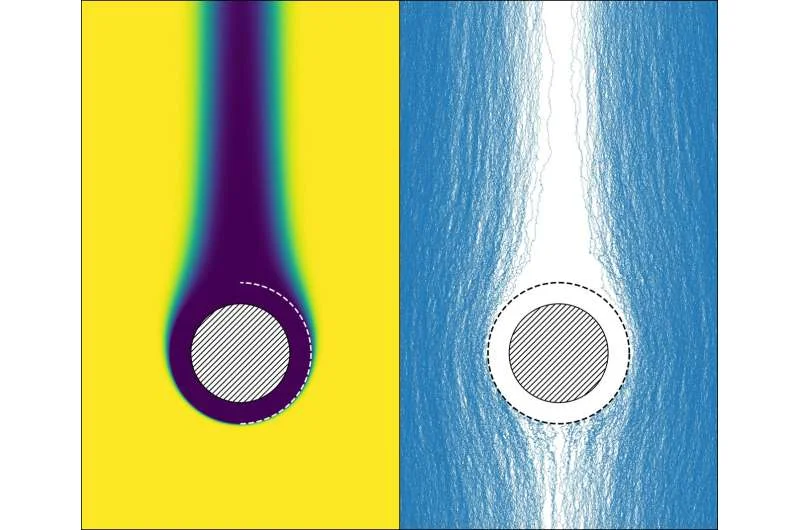
Further complexity arises from the collision and aggregation dynamics of these particles. Studies emphasize that both diffusion, driven by Brownian motion, and advection, the sweeping motion of sedimentation, jointly influence how frequently these particles encounter each other. Understanding these combined forces is crucial for accurately modeling carbon sequestration processes in the ocean. Researchers, including those from the Institute of Oceanology, Polish Academy of Sciences, advocate for integrated models that account for these interacting forces to better predict oceanic carbon storage under shifting climate conditions.
Broader Implications
The implications of these discoveries extend beyond climate science. Grasping how particle porosity and interactions with stratified fluids influence sinking behavior can refine pollution models and inform strategies aimed at preserving marine ecosystems. Future research aims to incorporate variables such as particle 'stickiness,' water turbulence, and environmental heterogeneity—factors that also critically shape marine snow dynamics but are challenging to quantify. Integrating these elements into comprehensive models is seen as vital for informing mitigation strategies and policy decisions related to climate change and oceanic health.
Read More: New Peppermint Genes Found at UC Davis Could Change Flavor
Background:
Marine snow, a term describing the constant shower of organic detritus from the upper layers of the water column to the deep ocean, has been a subject of scientific inquiry for decades. This 'snow' comprises dead plankton, fecal matter, dust, and other particulate organic matter. Its significance lies in its role as a primary mechanism for the biological carbon pump, a process that sequesters atmospheric carbon dioxide into the deep ocean. The efficiency of this pump is directly influenced by the rate and manner in which marine snow aggregates and sinks. Recent studies, like those published in the 'Journal of Fluid Mechanics,' are beginning to provide a more nuanced, and sometimes surprising, picture of the physics governing this vital oceanic process.