Micro-Lasers Offer Precise Force Measurement Within Cells
New, flexible micro-lasers, tiny enough to fit inside living cells, can now measure forces with a high degree of precision. These devices, described as "whispering gallery mode lasers," work by trapping light within a small, dye-doped elastomer bead. This trapped light circulates and amplifies, producing a coherent laser beam.
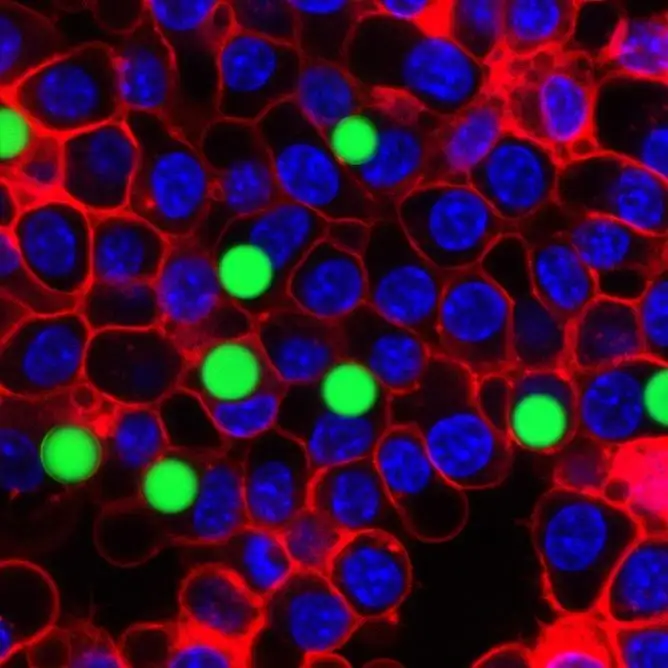
The key innovation lies in how these microscopic lasers respond to external pressure. Researchers found that the spectral properties of the light emitted by these micro-lasers change directly in proportion to the force applied, allowing for measurements up to 50 nanonewtons. To confirm this, they used an atomic force microscope to apply known pressures to single microbeads while observing the emitted light. Initial tests within living cells indicate these micro-lasers remain stable under typical cell culture conditions for several days.
Lasers as Cellular Barcodes and Therapeutic Tools
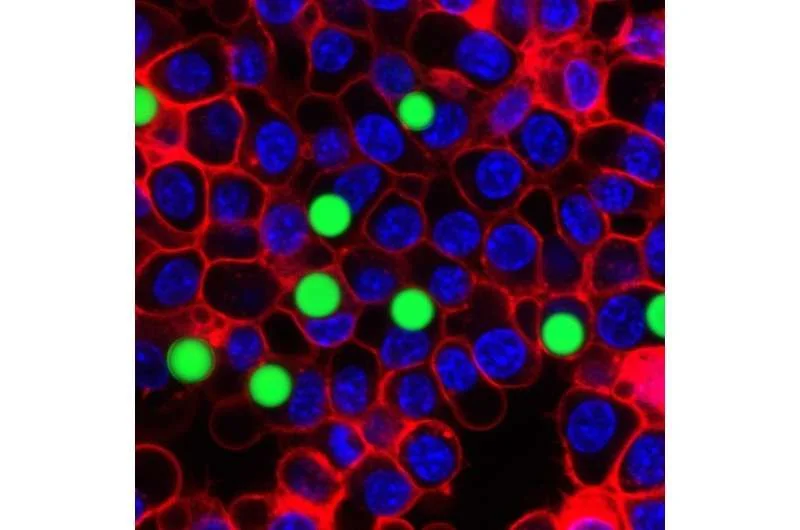
Beyond force sensing, the development of lasers within cells opens avenues for other applications. Researchers suggest that with careful design, these cell-based lasers could potentially tag up to a trillion cells uniquely, each emitting a distinct light signature like a microscopic barcode. This capability could significantly advance our understanding of cellular processes and aid in medical diagnoses.
Read More: Heated Rocks Capture CO2 1000s of Times Faster
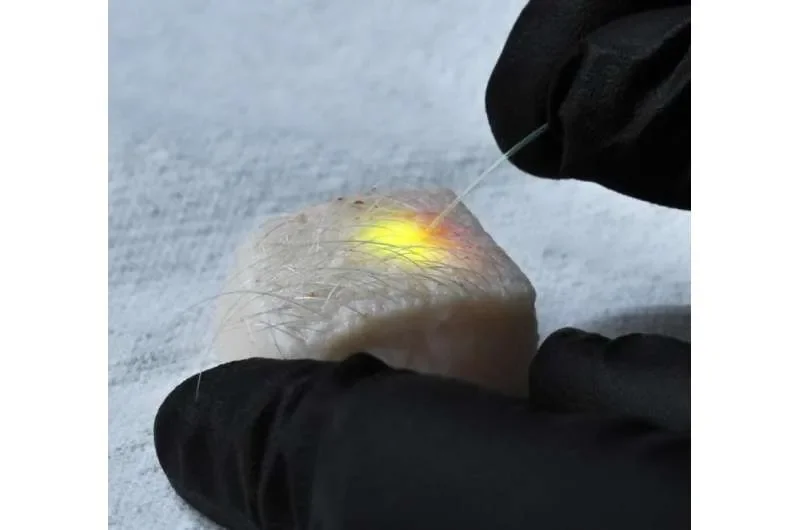
The potential also extends to therapies. These "cell lasers" could serve as delivery mechanisms, for instance, to activate light-sensitive drugs precisely at a target site, offering a method to combat microbes or cancerous cells. This approach promises more targeted and potentially less invasive treatments.
A Shifting Landscape in Cellular Research
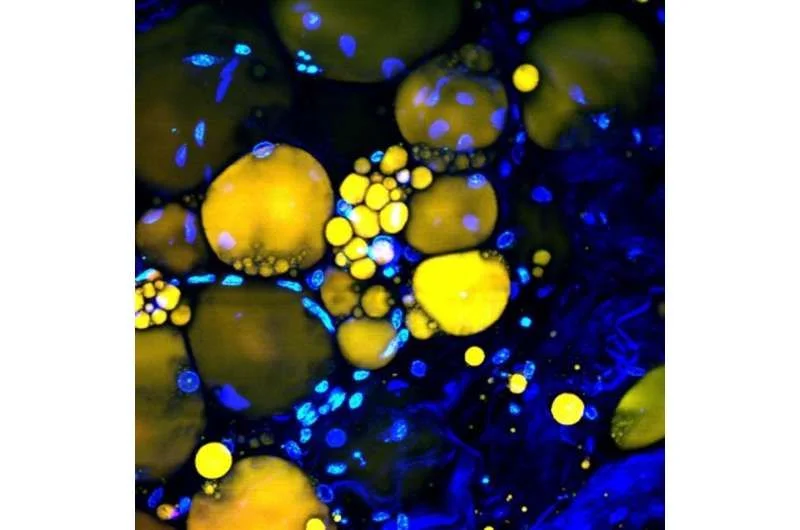
This advancement represents a significant step in equipping biological systems with advanced optical tools. The concept of creating lasers within living cells has been explored using various materials, including lipid cells and even pig-skin-derived structures.
Previous research has also focused on using laser particles, distinct from lasers made from cells, as biocompatible probes. These particles, capable of emitting laser light, have been shown to produce a much wider range of distinguishable colors (around 400 in one study) compared to traditional fluorescent probes, enabling more complex cell tagging and tracking, particularly in mimicking tumor growth.
Read More: Big Tech AI Spending Increases Costs for Investors in April 2026
The ability to observe and manipulate cellular functions at such a granular level has been a long-standing goal in biology. These tiny, self-contained lasers offer a novel pathway to achieving that, with implications ranging from fundamental biological discovery to the development of next-generation medical interventions.