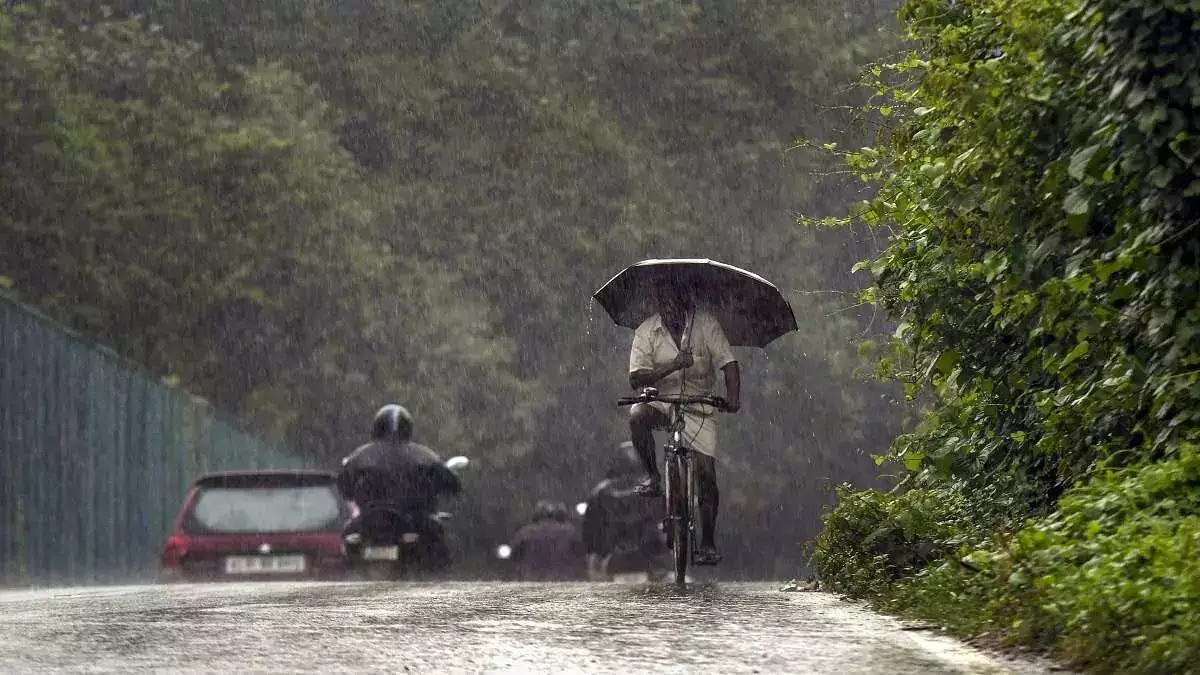
Current weather prediction models struggle with hyperlocal accuracy, relying on data from distant sources, while efforts are underway to refine localized forecasting.
National Weather Service forecasters are grappling with a fundamental challenge: the information used to predict storms impacting your immediate vicinity often originates hundreds, if not thousands, of miles away. This reliance on broader data sets means that sudden, intense weather events occurring over small geographic areas can elude detection until they are upon us.
Supercomputers, the engines of modern meteorology, process vast amounts of data.

This data streams from a wide array of sources, including satellites, weather balloons, Doppler radar, lightning detection networks, ocean buoys, and ground-level weather stations.
The sheer scale of these inputs, while essential for understanding large-scale atmospheric patterns, can dilute the precision needed for localized predictions.
The result is a system that, while effective for broader weather trends, often falls short when confronted with rapidly developing, geographically confined phenomena like microbursts or sudden tornado intensifications.
The pursuit of more accurate, real-time forecasts is not new. Researchers are actively seeking ways to bridge this gap.
An expansion of the existing weather station network is being considered.
This expansion would introduce new capabilities, allowing for near-instantaneous measurements of conditions such as snowfall rates, fire weather risks, and air quality.
The aim is to bring forecasting capabilities closer to the ground, directly to the communities that depend on timely and specific weather information. This initiative seeks to mitigate the risks associated with being caught off guard by rapidly evolving severe weather.
The Problem of Distance
The current paradigm of weather forecasting, while sophisticated, operates on a scale that can be problematic for immediate local impacts. The data fed into prediction models paints a picture of weather systems moving across continents and oceans. This broad strokes approach means that the nuances of local topography and microclimates, which can dramatically influence storm behavior, are often secondary. When a storm intensifies unexpectedly over a specific town or neighborhood, the data points from weather stations further afield might not capture that sudden shift. This delay in recognizing localized intensification can have critical implications for issuing timely and effective warnings.
Read More: Mumbai Red Alert July 2026 Causes School Closures and Train Delays
Towards Hyperlocal Precision
The proposed enhancements aim to rectify this by augmenting the existing infrastructure.
The goal is to establish a denser network of sensors, capable of capturing highly localized weather phenomena.
This would include specialized equipment to monitor conditions relevant to specific regional concerns, such as real-time snowfall accumulation in mountainous areas or critical fire weather indices in drought-prone regions.
The aspiration is for a forecasting system that is not just predictive, but proactive and finely tuned to the immediate environment of those it serves. This is a significant undertaking, requiring investment and innovation to achieve.

.png)