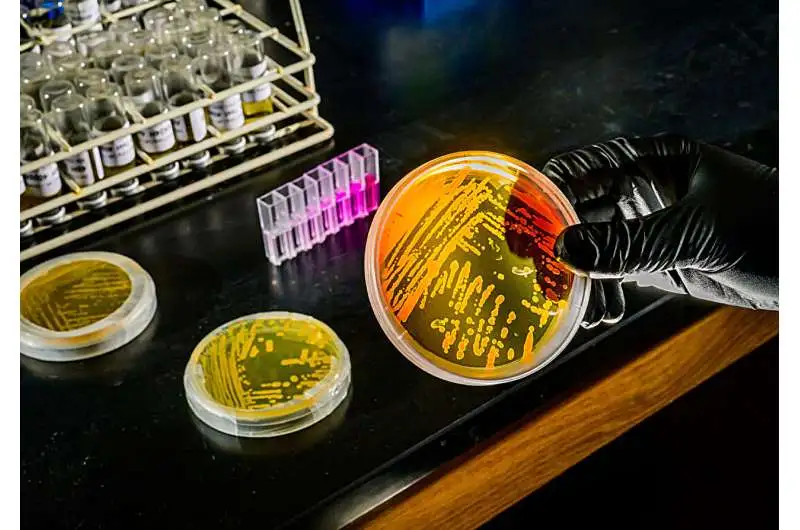
The deep ocean, once thought insulated, is experiencing warming waters, potentially altering the iron metabolism of vital archaea like Nitrosopumilus maritimus. This shift could reshape ocean nutrient distribution, according to recent research published in Proceedings of the National Academy of Sciences. Researchers highlight that these iron-dependent ammonia-oxidizing archaea, which play a significant role in ocean nutrient cycles, appear surprisingly adaptable to warmer, nutrient-poor conditions.
A forthcoming expedition from Seattle to Hawaii will aim to validate these findings in real-world conditions, focusing on the interplay between temperature and metal limitations on natural archaeal populations. The study suggests that the deep ocean's perceived stability is an illusion, with warming directly impacting the organisms that govern fundamental oceanic processes. This challenges previous assumptions about the deep sea's insulation from surface climate changes.
The microbe in question, Nitrosopumilus maritimus, obtains energy by oxidizing ammonia. Its reliance on iron, a trace metal, means that changes in iron availability, driven by altered ocean chemistry due to warming, could have cascading effects. Understanding these adaptations is posited as crucial for predicting how marine ecosystems will navigate ongoing climate shifts.
Read More: Tohorā Diet Study Boosted by New Zealand Beach Find
The research points to a potential, albeit unconfirmed, role for these microbes in mitigating some impacts of a warming climate, though the exact mechanisms and extent of this influence remain under investigation.
Contextualizing the Shift
Previous scientific understanding held that deeper ocean waters were largely shielded from surface temperature fluctuations. However, recent observations indicate a warming trend extending into these depths. This warming, driven by broader climate change and intensified by marine heatwaves, poses a threat to the intricate chemical and biological equilibrium of the oceans.
Read More: Ancient Plankton Shells Show How Arctic Climate Changed
The adaptability of Nitrosopumilus maritimus to warmer, less nutrient-rich environments suggests a proactive biological response. However, the implications for the availability of essential trace metals, particularly iron, are still being explored. This area of inquiry is central to ongoing scientific efforts to understand oceanic biogeochemical cycles.
The scientific endeavor involves multiple funding sources, including the National Science Foundation, the Simons Foundation, and the National Natural Science Foundation of China, underscoring the international interest in this complex issue. Researchers are preparing for fieldwork to gather empirical data that can confirm or refine the initial experimental conclusions.
Nitrosopumilus maritimus was initially identified in a marine fish tank at the Seattle Aquarium. Its metabolic processes, specifically chemolithoautotrophy, are central to its function within the ocean's nitrogen cycle. The study’s implications extend to forecasting the broader responses of marine ecosystems to persistent climate change.
Read More: Deep Isopods Survive Years Without Food Using Gene Tricks