The Lingering Residue: A Calculated Wait
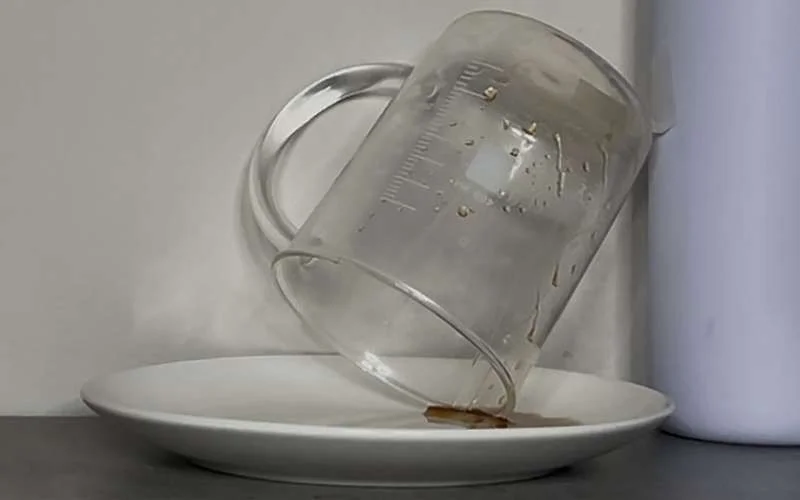
Physicists Jay Tang and Thomas Dutta have applied complex fluid mechanics principles to determine the optimal time to wait for residual liquid to drain from common kitchen containers, a calculation that yields an answer of approximately 15 minutes for many scenarios. This research, which leverages the nineteenth-century 'Navier-Stokes equations', bridges the gap between abstract scientific inquiry and the mundane realities of household chores, particularly concerning the persistent drips from items like ketchup bottles, oil dispensers, and even the dreaded cast iron wok. The findings suggest a precise, scientifically-derived duration for maximizing product extraction and minimizing waste, moving beyond anecdotal efforts to dislodge the final, stubborn drops.
The impetus for this study emerged from disparate, yet relatable, kitchen-based frustrations. While Dutta recalled his grandmother's relentless efforts to empty cartons and containers, Tang, a biophysics professor at Brown University, faced his own quandary regarding the residual water in a washed cast iron wok. Their collaborative work, detailed in the journal 'Physics of Fluids', used computer simulations to model the behavior of viscous liquids. This scientific rigor was applied to various substances, revealing that while low-viscosity fluids like water and milk drain in mere seconds, thicker substances such as olive oil demand a wait of around nine minutes. Notably, the notoriously viscous cold maple syrup could take several hours to fully dispense. The 15-minute figure appears to be a generalized optimal point derived from these models, offering a pragmatic solution for a common domestic vexation.
Read More: Summer AC Settings: Save Money by Raising Thermostat
From Woks to Bacteria: Unexpected Applications
The practical implications of this research extend beyond mere culinary efficiency. The 'Navier-Stokes equations', the foundational mathematical tools employed, describe the motion of viscous fluids and have been instrumental in modeling phenomena from weather patterns to blood flow. For Tang, whose primary research often involves the biophysics of bacteria on wet surfaces, the derived calculations offer a new avenue for understanding how organisms interact with residual moisture on surfaces, potentially informing further studies into bacterial dynamics and growth. This interdisciplinary connection highlights how seemingly simple domestic queries can unlock more profound scientific insights, demonstrating the pervasive nature of fluid dynamics in both everyday life and specialized research fields.
Read More: Indigenous Data Rights Now Key in Conservation Genomics
The research process itself involved a Ph.D. candidate, Thomas Dutta, conducting experiments and developing the computer simulations. Collaborating with his professor, Jay Tang, the duo translated intricate equations into tangible, actionable advice. The study implicitly questions the efficiency of our usual hurried attempts to empty containers, suggesting a period of passive draining could be more effective than vigorous shaking or prolonged tilting. This calculated pause, while seemingly minor, reflects a broader engagement with optimizing everyday processes through scientific understanding.
Read More: Flat-Top Grills Offer Easier Outdoor Cooking and Cleaning in 2026