The United States is accelerating plans to place a nuclear reactor on the Moon, signaling a renewed focus on lunar exploration and potential resource utilization. This initiative is unfolding within a context of increasing global competition, with several nations and private entities setting ambitious goals for lunar presence and development. The successful deployment of a lunar nuclear power source could offer a reliable energy supply for human habitats and aid in unlocking the Moon's resources.
Context: A New Frontier and an Old Technology
The push for lunar nuclear power is seen as a direct extension of geopolitical rivalries on Earth, framing the Moon as a new arena for technological competition. NASA, in particular, has issued directives to fast-track these efforts.
Timeline: Reports indicate a growing urgency, with accelerated plans and specific target years for lunar reactor deployment.
Key Players: The United States (NASA) is a primary driver, alongside other nations like Russia and China, who are also collaborating on lunar reactor plans. Private companies are also involved in ambitious lunar programs.
Goals: Beyond supporting human habitats and extending mission durations, the development of lunar nuclear power is linked to ambitions for mineral development and establishing a long-term human presence on the Moon.
Evidence: Powering Lunar Ambitions
Multiple sources highlight the critical role nuclear power is expected to play in future lunar endeavors and the efforts underway to achieve it.
Read More: Artemis II astronauts launch to Moon orbit for first time in 53 years
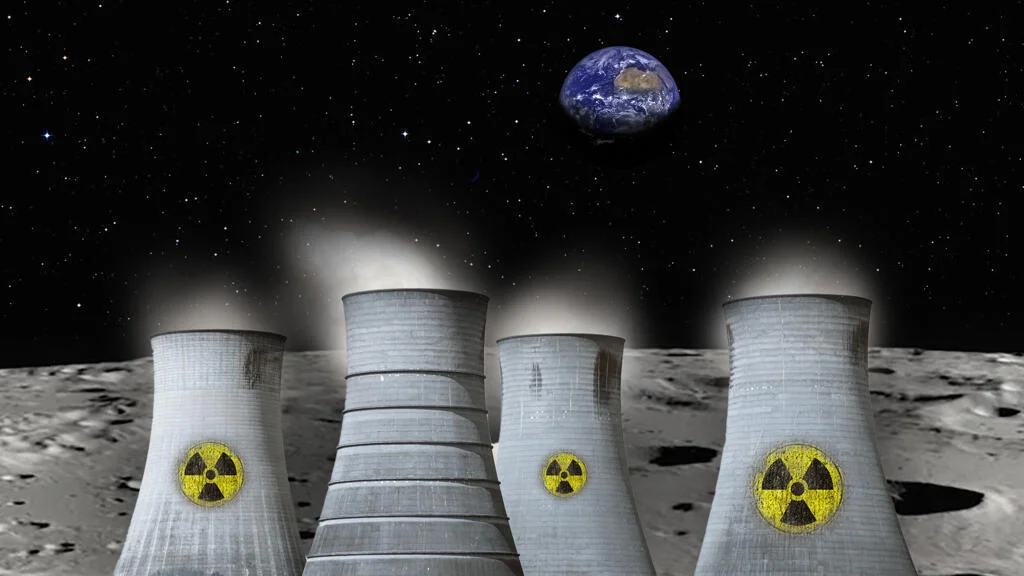
Enabling Technology: Nuclear power is identified as a key technology for sustained human presence on the Moon, offering a power source that is not reliant on sunlight.
Historical Precedent: Nuclear power has a history in U.S. space missions, though contemporary plans involve more substantial reactor deployments.
Competitive Landscape: The pursuit of lunar nuclear capabilities is described as a "new space race," with the U.S. aiming to gain an advantage over competitors like China and Russia.
Deep Dive: Technical Hurdles and Strategic Drivers
The prospect of lunar nuclear power is driven by both technological necessity and strategic competition. However, significant challenges must be addressed for successful implementation.
The Strategic Imperative: A Powering Advantage
The U.S. initiative to deploy a lunar nuclear reactor is strongly linked to its broader space exploration goals and a desire to lead in this emerging domain.
Resource Unlocking: A consistent power supply is considered essential for unlocking the Moon's resources, a potential key to future space-based economies.
Permanent Bases: Nuclear reactors are viewed as fundamental for establishing permanent human bases on the lunar surface, extending beyond short-term missions.
Geopolitical Extension: The technological race on the Moon is explicitly tied to geopolitical competition, with nations seeking to assert leadership through advanced space capabilities.
Infrastructure Bottlenecks: Beyond the Science
While the science behind space nuclear power is understood, a significant barrier exists in the necessary infrastructure for testing and development.
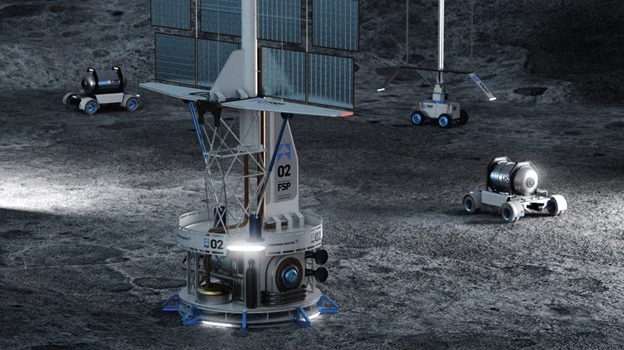
Testing Facilities: The U.S. reportedly lacks adequate vacuum-capable facilities for testing full fission-lander systems, a crucial step before lunar deployment.
Complexity in Testing: Testing nuclear propulsion systems requires added complexity that current infrastructure may not fully support.
Sense of Urgency: Despite these infrastructure limitations, there is a palpable sense of urgency to advance space nuclear systems.
Lunar Environment: A Novel Challenge
The Moon itself presents unique environmental factors that reactor designers must contend with.
Reduced Gravity: The Moon's lower gravity poses engineering challenges.
Radiation: Cosmic radiation on the lunar surface is a significant factor to consider for system longevity and safety.
Micrometeors and Atmosphere: The lack of atmosphere and the presence of micrometeors add further layers of complexity to system design and protection.
Expert Analysis: The Promise and Peril of Lunar Power
Experts acknowledge the potential of nuclear power for lunar missions while also highlighting the need for careful consideration of safety and technological readiness.
"Nuclear power is emerging as a key, enabling technology for sustained human presence on the moon."— Power Magazine
"Prof Fitzpatrick says questions still remain about safety."— Sky News
"The U.S. lacks a nuclear compatible, vacuum-capable facility large enough to test a full fission-lander system."— SpaceNews
"The technology race on the Moon is an extension of the geopolitical fight on Earth."— Firstpost
Conclusion: Navigating the Lunar Nuclear Landscape
The United States' drive to deploy a nuclear reactor on the Moon is a strategic response to evolving global ambitions in space exploration. This push is supported by the recognized capabilities of nuclear power to facilitate long-term lunar presence and resource utilization. However, the path forward is marked by substantial challenges, including the need for specialized testing infrastructure and adaptation to the Moon's unique environmental conditions. The success of these endeavors will depend on overcoming these technical hurdles while navigating the intricate dynamics of international space competition.
Read More: AI Startups Change Consulting Business Data and Strategy in 2024
Sources Used:
Power Magazine: "A New Space Race—The U.S. Looks to Lunar Nuclear Power" (Published: 2 minutes ago)
Link: https://www.powermag.com/a-new-space-race-the-u-s-looks-to-lunar-nuclear-power/
SpaceNews: "The space nuclear power bottleneck — and how to fix it" (Published: 8 hours ago)
Link: https://spacenews.com/the-space-nuclear-power-bottleneck-and-how-to-fix-it/
Nuclear Engineering International: "The new space race" (Published: Jan 15, 2026)
Link: https://www.neimagazine.com/analysis/the-new-space-race/
Firstpost: "A new space race: Why US is rushing plans for a nuclear reactor on the Moon" (Published: Aug 5, 2025)
Sky News: "The new space race? NASA accelerates plan to put nuclear reactor on the moon" (Published: Aug 6, 2025)
France24: "Space race: US aims to beat out China and Russia with nuclear reactor on the Moon" (Published: Aug 6, 2025)
Oliver Wyman: "Ensuring US Leadership In The Nuclear Space Race" (Seen on: Bing)
American Nuclear Society (ANS): "The race to put a nuclear reactor on the moon" (Published: Nov 14, 2025)
Link: https://www.ans.org/news/2025-11-14/article-7542/the-race-to-put-a-nuclear-reactor-on-the-moon/