

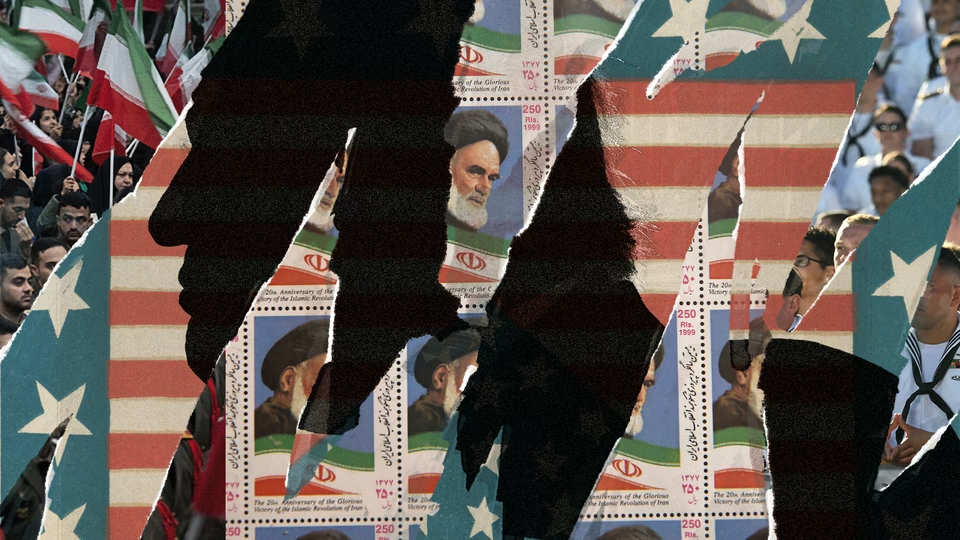
The United States and Israel have launched strikes against Iran, ostensibly to curtail its nuclear ambitions, a move that occurred without explicit approval from Congress. This action has sharply divided lawmakers, with efforts underway to limit the president's ability to sustain military action abroad without legislative consent. The justifications for these strikes remain contested, with earlier pronouncements suggesting Iran's nuclear program was already crippled, creating a muddled rationale for escalated conflict.

The initiation of hostilities appears to have bypassed the traditional "rally around the flag" effect often seen during crises. Unlike previous conflicts that historically see a surge in public support for the president, this engagement with Iran seems to have begun with little initial public backing. This is consistent with a broader, observed decline in American public willingness to commit troops to foreign wars in recent years.
Read More: Dubai appeal questioned as global tensions rise and South Asians rethink plans

Lawmakers like Senator Kaine have called for immediate congressional votes on resolutions aimed at reasserting legislative authority over military engagements. Representative Jim Himes and Representative Ro Khanna are reportedly advancing measures to curb the president's unilateral power in initiating prolonged military actions, highlighting a deep rift between the executive and legislative branches. The duration and ultimate outcome of this conflict are presented as being contingent on factors beyond the immediate control of the US and Israel, implying a complex geopolitical landscape.

This current military posture stands in contrast to previous claims by President Trump regarding the resolution of various international conflicts. While Trump has asserted success in ending numerous "un-endable wars," including in regions like Kosovo and Serbia, or even purportedly between Egypt and Ethiopia (a claim noted as factually dubious), his current actions in Iran suggest a divergence from a path of de-escalation. The effectiveness and indeed the very existence of these past "resolutions" are questioned, with some agreements being more akin to ceasefires than definitive peace accords.
Read More: Chinese Officials Avoid Reporters During Beijing Meeting Amid Economic Slowdown

The backdrop to these events includes a documented downward trend in public support for deploying US troops internationally. This lack of public appetite for foreign military intervention, coupled with challenges in military recruitment, may be influencing broader strategic considerations. While Trump has been involved in negotiations concerning other theaters like Gaza and Ukraine, indications suggest that significant segments of the public, including some within the Republican base, remain unsupportive of further troop deployments. The notion of prolonged wars losing public support over time appears to be a recurring theme, yet in this instance, significant support may not have materialized from the outset.