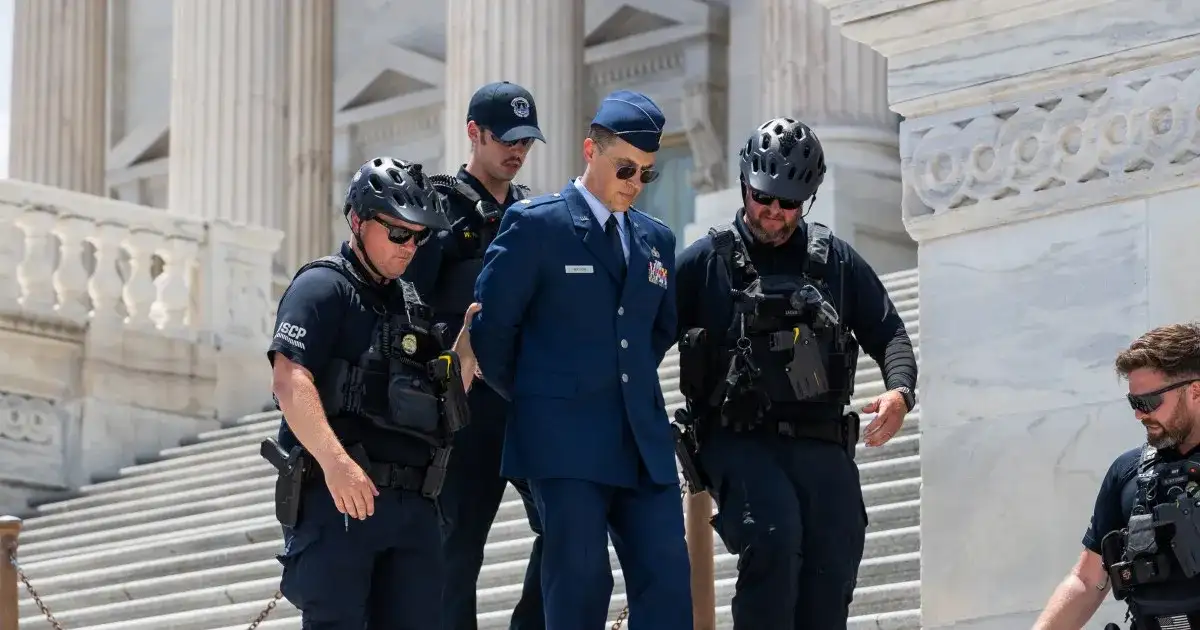
An active-duty US Air Force major, identified as Jason Watson, was arrested Wednesday on the steps of the US Capitol. The detention occurred following a speech where he publicly advocated for the impeachment and removal of President Donald Trump and Vice President JD Vance.

The immediate aftermath saw Capitol Police confirm the arrest, noting that public demonstrations on the House steps typically require accompaniment by a member of Congress. Charges against Watson, filed as "Crowding, Obstructing, and Incommoding," were later dismissed by a DC superior court official, with no further case expected. This places Watson in a unique position, having been arrested for a protest while on what was described as "leave from his commission post in Poland."
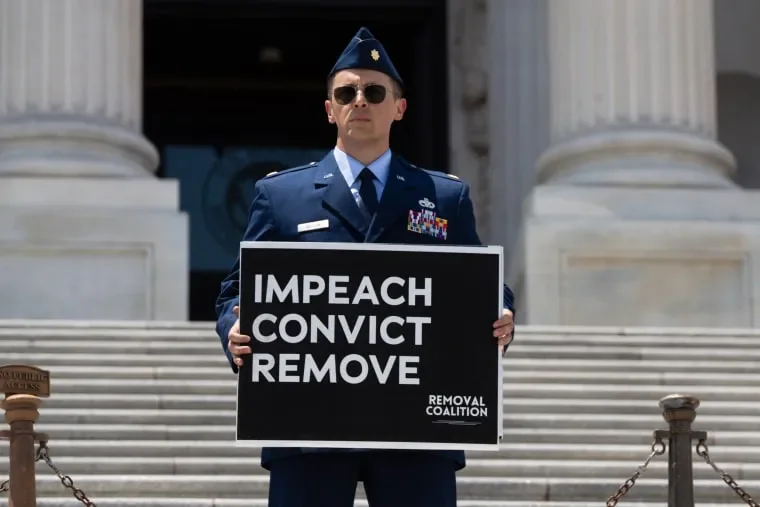
Watson, a logistics readiness officer, appeared in uniform during the demonstration. His public call for impeachment cited the administration's alleged "abuse of power and defiance of court orders," and a belief that the greatest threat to the nation's democratic republic was internal. A representative from Texas, Al Green, was present at the event and later posted on social media in support of Watson's actions.
Read More: Taiwan Holds Nantou County Drills to Prepare for State Collapse
The incident raises questions about the intersection of military service and political dissent. While demonstrations are permitted in other areas of the Capitol grounds, the House steps have specific regulations. Watson's arrest, brief detention, and subsequent release highlight a complex legal and procedural situation.

BACKGROUND:The protest and subsequent arrest come at a time when discussions around presidential accountability and the role of public service members in political discourse remain prominent. Reports indicate that public sentiment, as reflected in some polling data mentioned, suggests a segment of the population believes grounds exist for impeachment proceedings against President Trump, citing issues such as corruption, self-enrichment, and abuse of power. Watson's actions, while potentially carrying military repercussions, were framed by supporters as a stand against perceived "unprecedented abuses of power."