A significant weather system, driven by an influx of Arctic air, has prompted multiple weather warnings across the United Kingdom. These warnings, primarily issued by the Met Office, indicate a heightened risk of snow and ice impacting various regions from Thursday evening through the weekend, potentially leading to travel disruptions and hazardous conditions. The UK's Health Security Agency has also issued cold weather alerts in response to the anticipated plummeting temperatures.

Persistent Cold Snap and Forecasted Precipitation
The current weather pattern is characterized by a sustained period of cold Arctic air across the UK. This has led to the issuance of several yellow weather warnings for snow and ice by the Met Office.
The initial warnings covered Scotland and northern England, extending until midday on Friday.
A further yellow warning for snow in northern England and most of Scotland commenced on Saturday evening and is scheduled to last until Sunday morning.
Northern Ireland has also been subject to an ice warning, in effect from Friday evening to Saturday morning.
The warnings indicate that snow accumulations are largely expected on higher ground, with amounts of 2–5 cm possible above 200 metres, and potentially up to 10 cm in some areas above 300 metres.
In addition to snow, ice is identified as a hazard, with the potential for icy patches on untreated roads, pavements, and cycle paths.
Public Health and Safety Advisory
In response to the severe weather forecast, the UK's Health Security Agency has issued yellow alerts for colder weather. These alerts are specifically in place for northern England and the Midlands, with a stated duration until Monday morning. The warnings highlight the possibility of injuries resulting from slips and falls on icy surfaces.
Read More: Delhi-NCR Weather Changes: Dust, Wind, and Rain Alert This Weekend
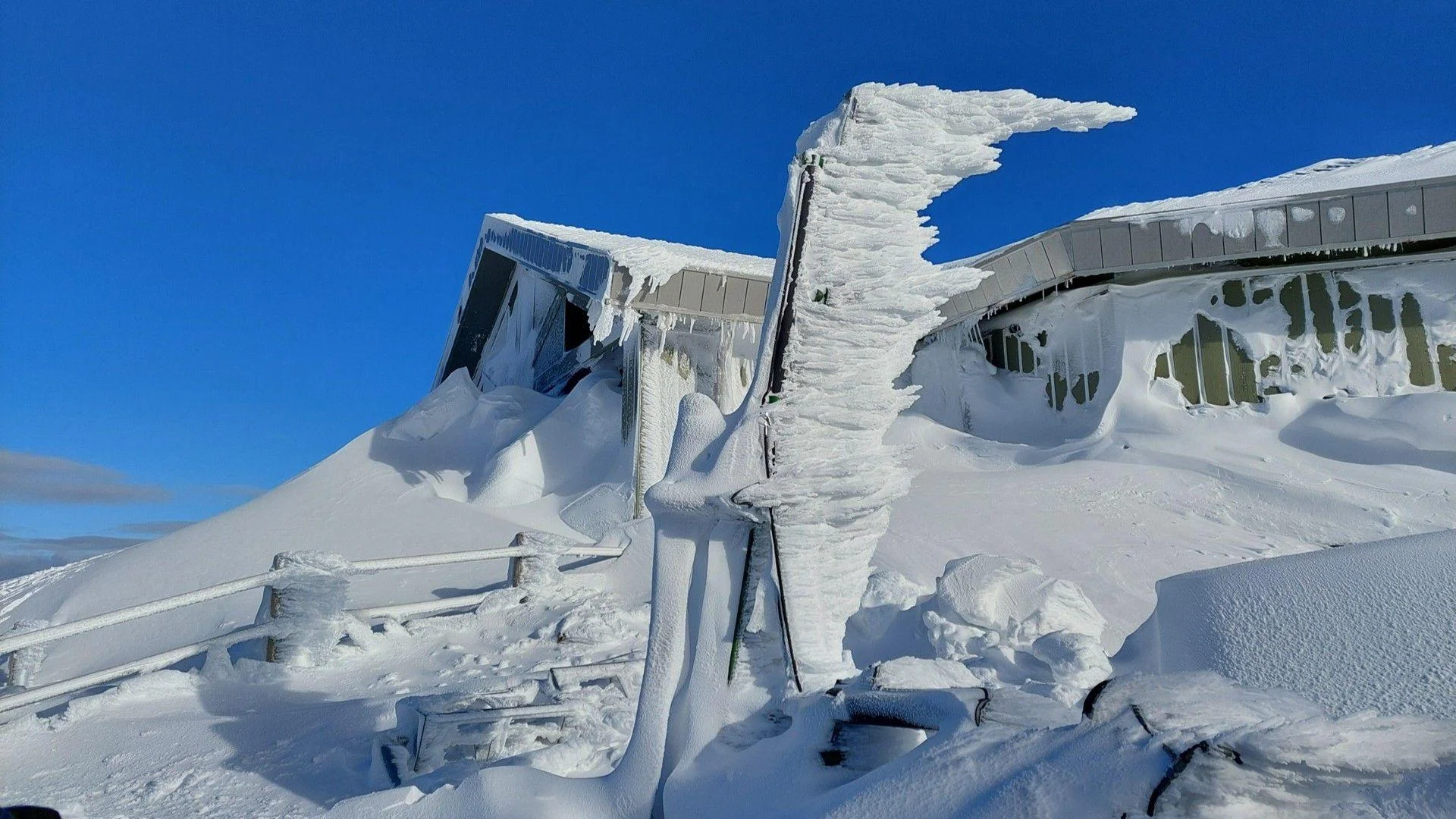
Regional Impact and Temporal Scope of Warnings
The weather warnings are not uniformly distributed but are concentrated in specific areas and span across several days.
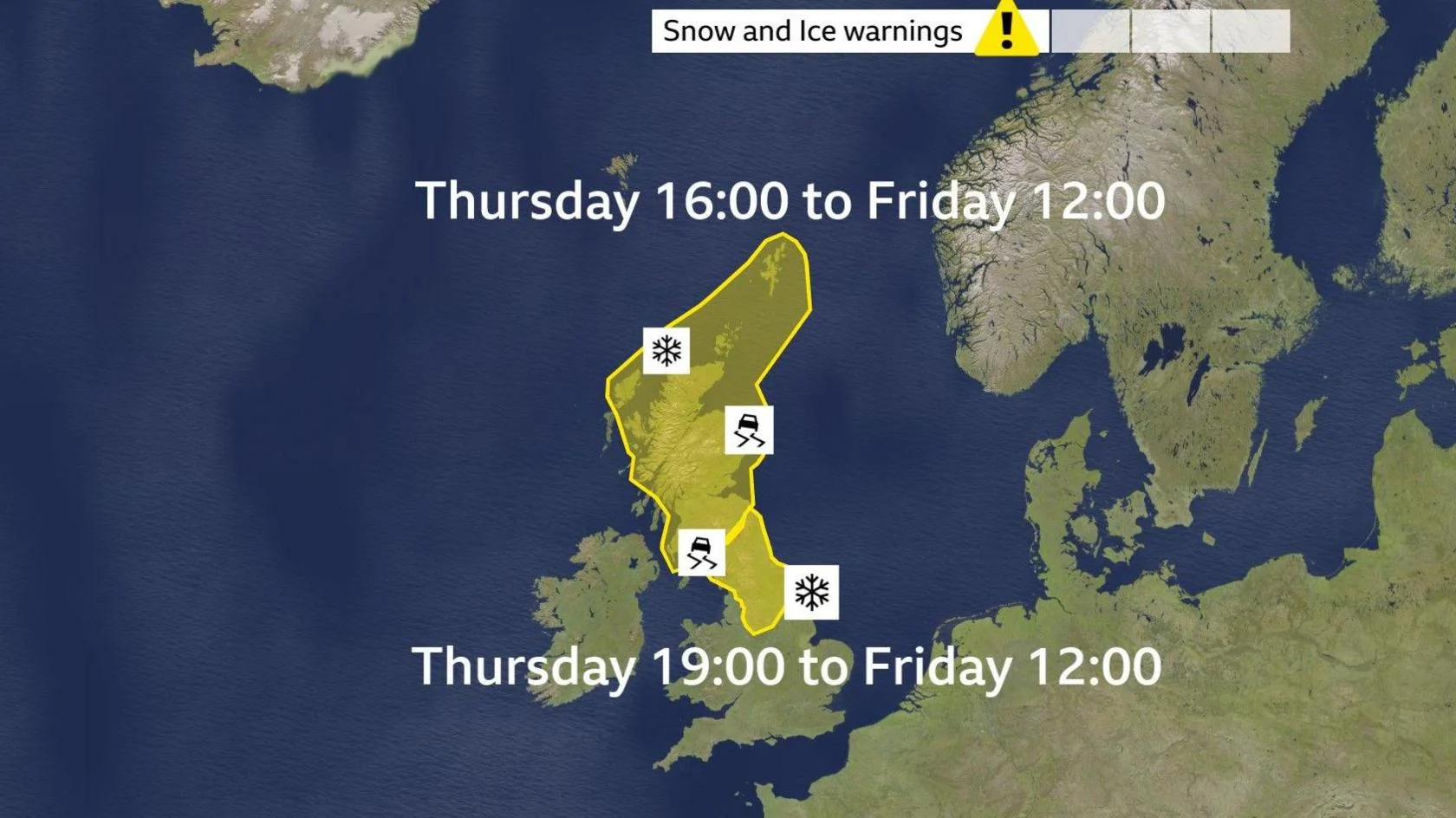
Scotland and Northern England: These regions have been consistently under yellow warnings for snow and ice, with new warnings for Saturday evening into Sunday.
Northern Ireland: An ice warning was issued for Friday evening into Saturday morning.
Other UK Regions: While snow warnings are primarily focused north, a separate ice warning has been issued for most of England and Wales. Some reports also indicate broader coverage, with yellow snow and ice warnings extending to areas including the East Midlands, West Midlands, North East, North West, South East, South West, East of England, Yorkshire and the Humber, and London, remaining in place until Monday.
Environmental Conditions and Meteorological Factors
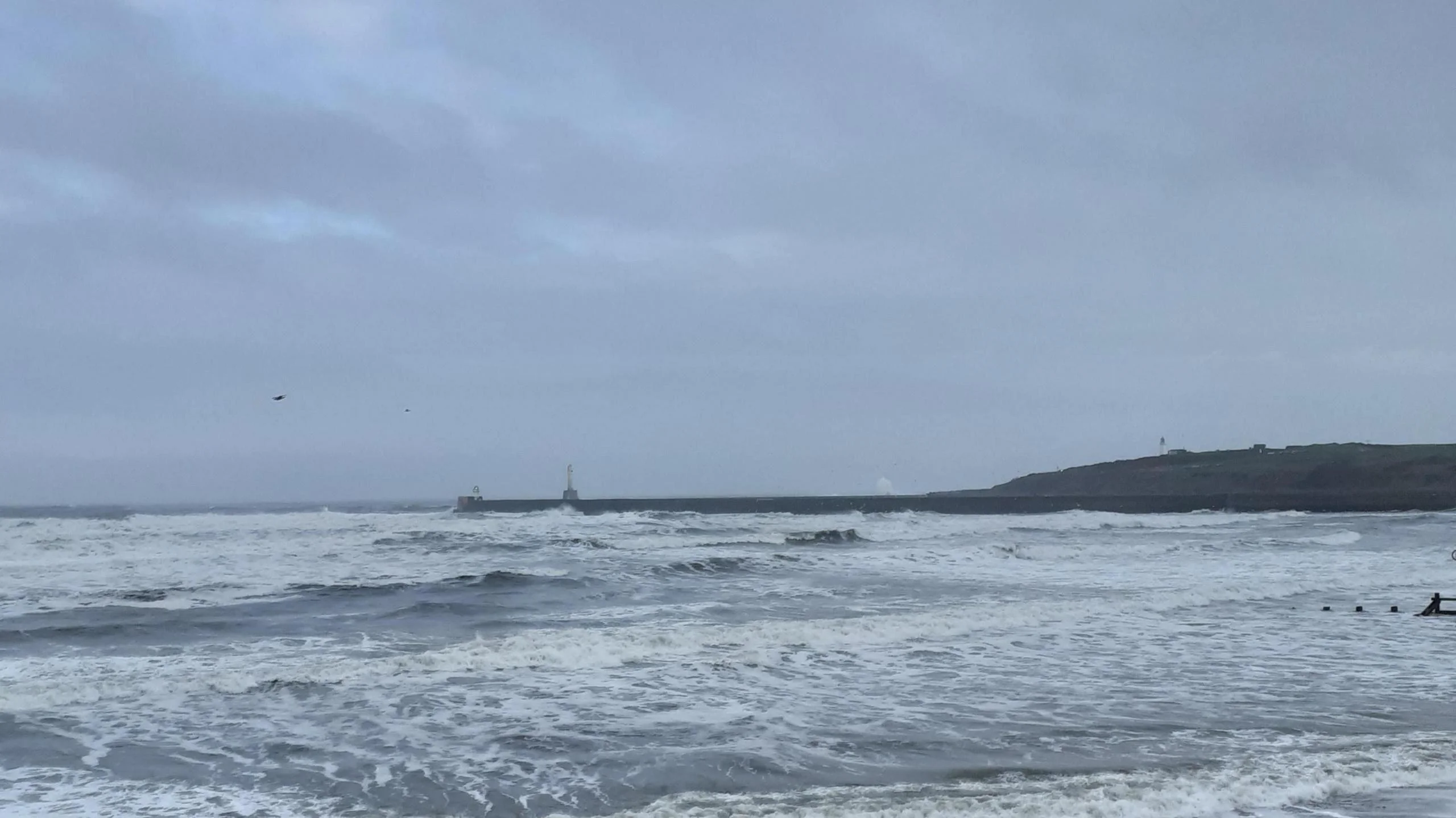
The overarching meteorological driver for these warnings is the persistent Arctic airmass that continues to affect the UK. This cold air is contributing to sub-zero temperatures, with some forecasts suggesting temperatures barely scraping above zero on Saturday. The weather system is also associated with the potential for rain and strong winds, particularly as a weather front moving from the west is expected to impact northern areas on Sunday. Interestingly, alongside these warnings, some areas, such as Aberdeen, have recently experienced a prolonged period of sunshine after weeks of grey skies, a contrast to the current wintry outlook.
Expert Analysis and Observations
The Met Office's warnings are the primary source of official information regarding the anticipated snow and ice. Their issuance reflects an assessment of potential impacts on daily life and infrastructure. The timing and geographical spread of these warnings are crucial for individuals and authorities to prepare accordingly.
Read More: Why UK business leaders want to use AI to stop economic decline in 2024
Conclusion and Further Considerations
The current meteorological situation necessitates ongoing vigilance due to widespread snow and ice warnings across the UK. The sustained presence of Arctic air, coupled with forecasted precipitation, indicates a high probability of hazardous conditions, particularly for travel. The public health alerts underscore the risks associated with slips and falls on icy surfaces. Authorities and residents in affected areas should closely monitor Met Office updates for any changes to these warnings and advisories.
Sources Used:
The Independent: https://www.independent.co.uk/news/uk/home-news/england-met-office-snow-scotland-arctic-b2919828.html - Article focuses on the extension of yellow weather warnings for snow and ice across Scotland and northern England into the weekend, detailing specific timings.
BBC Weather: https://www.bbc.co.uk/weather/articles/clyx2x85qdvo - Reports on an incoming Arctic blast with snow and ice warnings, also noting cold weather health alerts issued by the UK's Health Security Agency for northern England and the Midlands.
Sky News: https://news.sky.com/story/cold-weather-health-alert-issued-as-met-office-warns-of-snow-and-ice-13506958 - Details new snow and ice warnings across large parts of the UK, including separate warnings for Scotland and northern England, and ice warnings for most of England and Wales, alongside cold weather health alerts.
BBC News: https://www.bbc.com/news/live/c626jd20r1vt - Provides live updates on UK weather, including mention of the sun appearing in Aberdeen after a prolonged period of darkness, but also notes snow in parts of the north-east of Scotland.
Met Office: https://www.metoffice.gov.uk/about-us/news-and-media/media-centre/weather-and-climate-news/2026/more-warnings-for-snow-and-ice-before-%E2%80%98multi-hazard%E2%80%99-event-thursday-into-friday - Official statement detailing continued Arctic airmass and multiple warnings for snow and ice, including amber warnings for northern Scotland and yellow warnings for snow in parts of England and Wales.
YourWeather.co.uk: https://www.yourweather.co.uk/news/forecasts/snow-forecast-met-office-issues-snow-and-ice-warnings-across-scotland-and-northern-england.html - Reports on Met Office Yellow warnings for snow and ice across Scotland and northern England from Thursday evening to Friday midday, with expected accumulations on higher ground.
BBC News: https://www.bbc.com/news/articles/c1jednyk611o - Highlights that snow and ice warnings are expected to last throughout the weekend and beyond across much of the UK, covering Scotland, England, Wales, and Northern Ireland, with specific regional alert details.
Met Office Weather Warnings: https://weather.metoffice.gov.uk/warnings-and-advice/uk-warnings - Direct link to Met Office warnings and advice, explicitly mentioning potential injuries from slips and falls on icy surfaces and icy patches on untreated roads.