

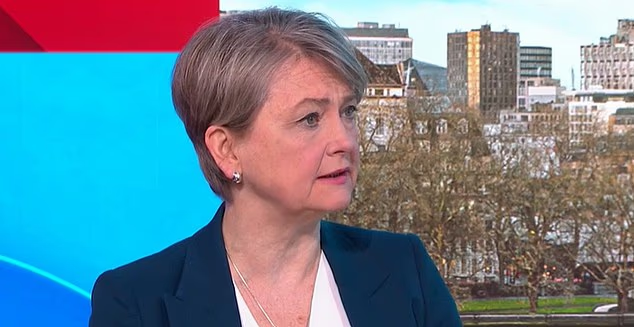
President Donald Trump has publicly declared that the United Kingdom's military assistance, specifically its aircraft carriers, is not required for ongoing operations in Iran, asserting that the United States has "already won" the conflict. This statement, delivered via social media, signifies a stark rupture in trans-Atlantic diplomacy, with Trump warning that the US will "remember" the perceived lack of support from what he termed "our once great ally." The remarks follow Prime Minister Keir Starmer's decision not to commit UK forces to offensive actions against Iran, a stance that has garnered internal Labour support.
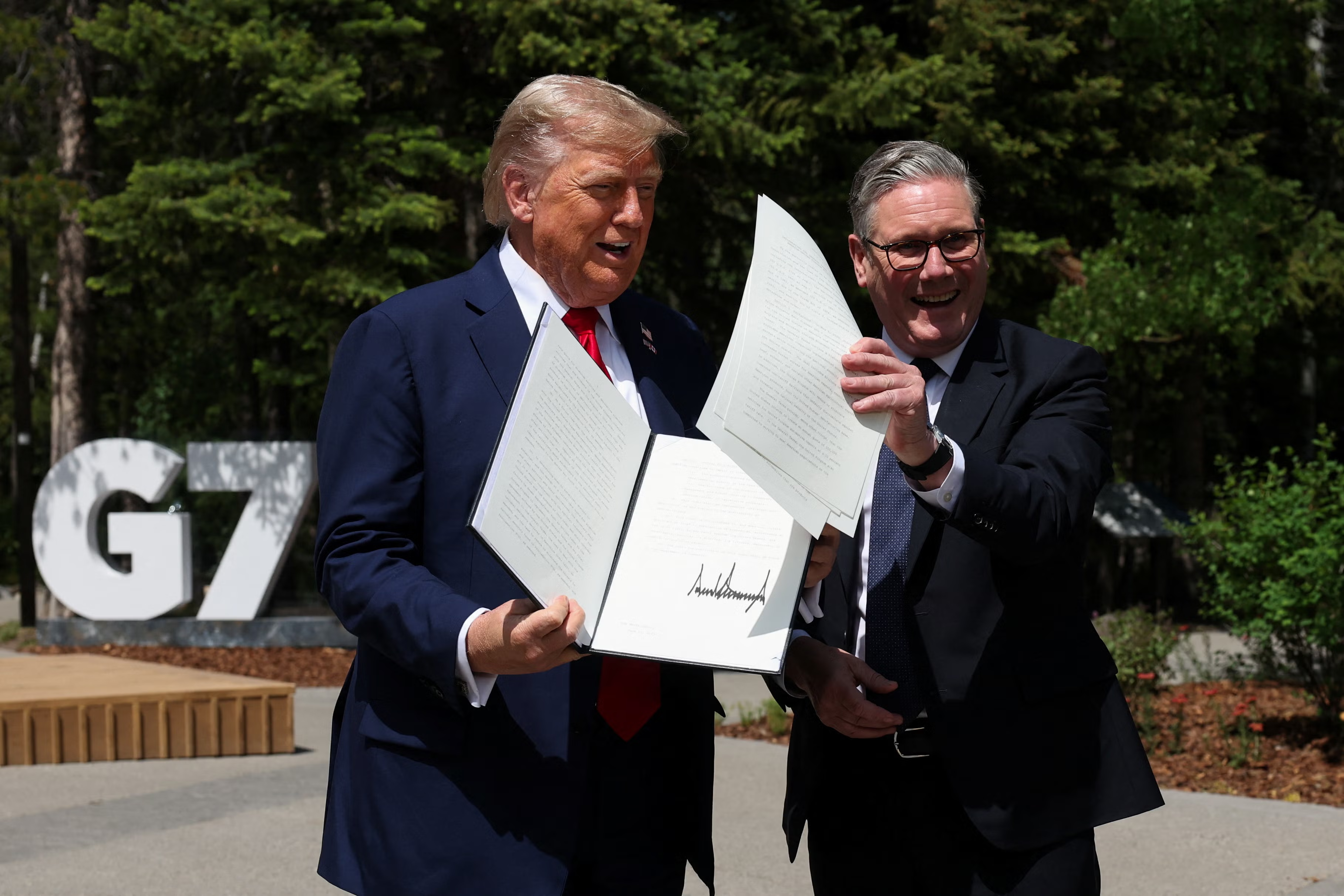
Trump's direct message to Starmer, conveyed through his Truth Social platform, indicated a critical rift, suggesting the Prime Minister was seeking to join a conflict already concluded. This public rebuke casts a shadow over the traditionally close ties between the two nations, especially as the US and Israel continue their military operations. Starmer, on his part, has sought to manage the diplomatic fallout, with Labour MPs backing his cautious approach, deeming offensive action against Iran not in the UK's national interest.
Read More: Nagaland NPF rejects 'Vande Mataram' song as alien to Naga identity
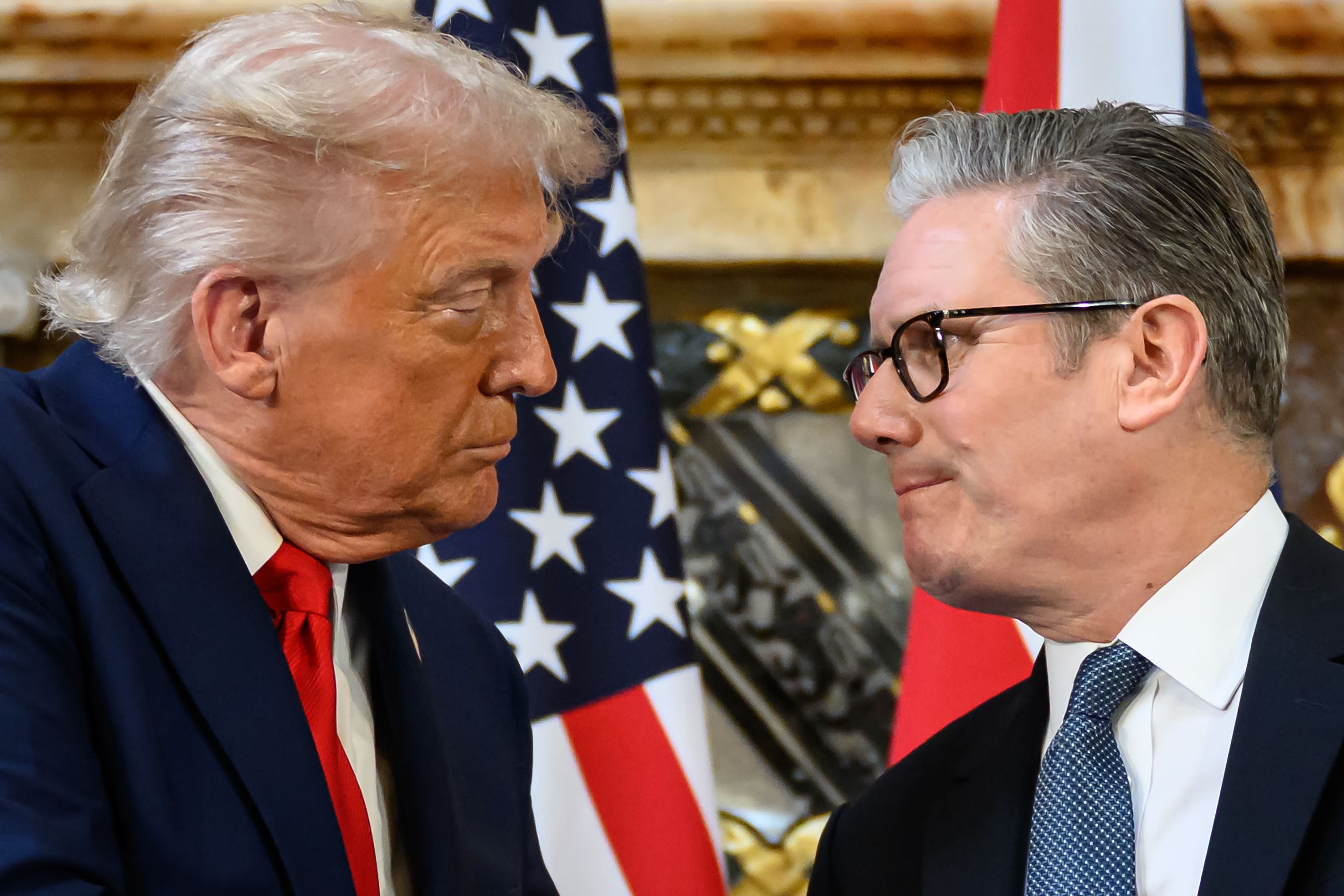
The disagreement centres on the UK's refusal to participate in initial airstrikes, with the British government previously stating a lack of belief in "regime change from the skies." This has led to significant criticism from Trump, who has signaled that the US will not forget this divergence in policy. Reports indicate that Nigel Farage, leader of Reform UK, has been meeting with the Trump administration at Mar-a-Lago, potentially furthering critiques of the current UK government.

DIPLOMATIC EFFORTS AND PUBLIC OPINION
Prime Minister Starmer reportedly engaged in direct communication with President Trump to address the growing tension. However, this effort to mend relations appears to have yielded little positive outcome, given Trump's subsequent public pronouncements. Labour figures, such as Emily Thornberry, have drawn parallels between Starmer's current position and that of Robin Cook, who resigned under Tony Blair over the UK's involvement in the Iraq War, underscoring the gravity with which some within the party view the situation.
Read More: Australia Considers Defensive Military Help for Gulf Nations Amid Iran Tensions
While Starmer's stance against Trump's aggressive posture has been met with approval from some Labour MPs, suggesting he is aligning with public sentiment, the overall impact on the 'special relationship' remains a significant concern. The diplomatic overtures, including Starmer's prior efforts to cultivate a reputation as a skilled negotiator with Trump, appear to have been overshadowed by this latest confrontation.
HISTORICAL CONTEXT AND RECENT DEVELOPMENTS
The United States and Israel initiated military actions against Iran last weekend. The UK government, under Starmer's leadership, has maintained a position of non-participation in these offensive maneuvers, opting instead for a more measured diplomatic approach. This divergence has intensified scrutiny on the long-standing alliance, often referred to as the "special relationship," between the US and the UK.
= = The conflict in Iran, and the UK's response, has exposed a fundamental disagreement between President Trump and Prime Minister Starmer. = = Starmer himself has publicly refrained from criticizing Trump prior to this incident, highlighting the unusual nature of the current discord. The situation underscores a complex geopolitical moment where differing national interests and strategic priorities are testing established international partnerships.
Read More: Republicans change immigration talk before elections because voters are unhappy